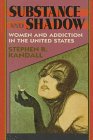
In 1989 Jennifer Johnson was convicted of delivering a controlled substance to a minor. That the minor happened to be Johnson's unborn child made her case all the more complex, controversial and ultimately historical. Stephen R. Kandall, a neonatologist and paediatrician, testified as an expert witness on Johnson's behalf. The experience caused him to wonder how one disadvantaged black woman's case became a prosecutorial battlefield in the war on drugs. This book is the product of Kandall's search through the annals of medicine and history to learn how women have fared in this conflict and how drug-dependent women have been treated for the past century and a half.
Includes bibliographical references (p. [307]-340) and index.
Tabla de contenidos provista por Syndetics
A Historical Perspective
The Drug Problem America's Response
The Harrison Anti-Narcotic Act
The Classic Era
The Second World War and After The 1960s
The 1970s Enlightened Treatment Opportunities and Prosecution
Today and Tomorrow
Notes
References
Index
Reseñas proporcionadas por Syndetics
Library Journal Review
Kandall, the chief of neonatology at Beth Israel Medical Center in New York and professor of pediatrics at Albert Einstein College of Medicine, traces public attitudes and legal and government policy toward licit and illicit drug addiction, particularly women's addictions, from the mid-19th century to the present. Kandall's thorough combing of clinic records, previous studies, government documents, medical texts, and news accounts yields several conclusions. For example, although public perception and treatment programs have tended to focus on male addiction, women addicts have always made up a significant portion of the addiction population. Kendall finds a link between female sexuality and drug use and demonstrates the inadequacy of past treatment for women. While the first several chapters are slow going, later chapters build on this material to summarize the history of women's addiction, note treatment failures, and suggest alternatives. Kandall makes a significant contribution that will be of interest not only to historians and women's studies programs but to medical and social-service professionals.Linda V. Carlisle, Southern Illinois Univ., Edwardsville (c) Copyright 2010. Library Journals LLC, a wholly owned subsidiary of Media Source, Inc. No redistribution permitted.
CHOICE Review
Although the historical literature is replete with references to drug use by males, female drug-users have remained largely invisible. This book reduces that discrepancy by providing a comprehensive historical examination of women, drug use, and addiction. The book is not simply an epidemiological essay; rather, it exposes the interrelationship of women, drug use, medicine, and politics. It is all the more impressive because of the dearth of historical information on the subject; it was necessary for the authors to conduct their research using a variety of often obscure sources. The study is organized by historical period, commencing with 19th-century drug use by women. Subsequent chapters include a discussion of substance-using women during the early 20th century, WW II, and the 1960s and 1970s, a time when, because of the women's movement, drug use by women lost some of its invisible qualities. The book concludes with a section on current issues. This is the weakest part; the authors could not adequately address the complexity of issues in the space allocated. All levels. M. A. Norton-Hawk Northeastern University
Booklist Review
Taking a historical approach to the problem of women and addiction, Kandall begins by examining the ways in which nineteenth-century physicians overmedicated their female patients. He also traces society's changing attitudes toward drugs, from general tolerance to the beginnings of antidrug legislation shortly before World War I. From the "classic era" of drug enforcement in the 1920s, through World War II and its aftermath, into the drug culture of the 1960s, and up to the present day, Kandall traces the evolution of a national drug policy, examines the link between drugs and crime, surveys the kinds of drugs that were prevalent, and discusses treatment options. He is also careful to point out that, though illegal drugs tend to get the most publicity, there is continued abuse of legal, prescription drugs as well. This careful, well-documented survey will be of special interest to anyone seeking a historical perspective on the complex problems of women and drugs. --Mary Ellen Quinn
Substance and shadow
APA
Kandall S. R., . (1996). Substance and shadow: women and addiction in the United States. Cambridge, Mass: Harvard University Press.
Chicago
Kandall Stephen R, . 1996. Substance and shadow: women and addiction in the United States. Cambridge, Mass: Harvard University Press.
Harvard
Kandall S. R., . (1996). Substance and shadow: women and addiction in the United States. Cambridge, Mass: Harvard University Press.
MLA
Kandall Stephen R, . Substance and shadow: women and addiction in the United States. Cambridge, Mass: Harvard University Press. 1996.