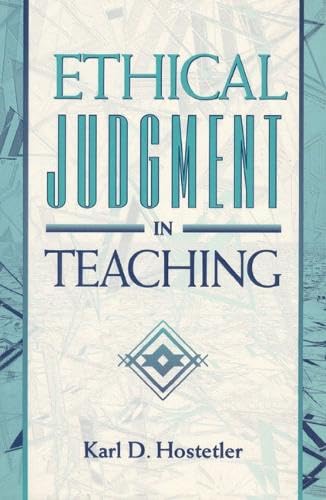

Ethical judgment in teaching Karl D. Hostetler [editor].
Detalles de publicación: Boston Allyn and Bacon c1997.Descripción: x, 229 p. 24 cmISBN:- 0205174086
- 174/.93711 20
- LB1779 .H67 1997
| Imagen de cubierta | Tipo de ítem | Biblioteca actual | Biblioteca de origen | Colección | Ubicación en estantería | Signatura topográfica | Materiales especificados | Info Vol | URL | Copia número | Estado | Notas | Fecha de vencimiento | Código de barras | Reserva de ítems | Prioridad de la cola de reserva de ejemplar | Reservas para cursos | |
|---|---|---|---|---|---|---|---|---|---|---|---|---|---|---|---|---|---|---|
| Libro | Biblioteca Encarnación Valdés Colección General bev | 174.93711 E84 (Navegar estantería(Abre debajo)) | Disponible | 80000001950107 |
Descripciones mejoradas de Syndetics:
This book is about helping teachers think carefully and knowledgeably about ethics in teaching, and to encourage them to talk to other people about it. Each chapter in the body of this text is organized around a pair of basic ethical concepts: freedom and discipline, self and others, communities near and far, excellence and equality, unity and diversity, and faith and truth. Each of these chapters begins with a realistic case, which provide a vehicle for readers to see how the concepts come up in concrete situations. Following each chapter case are two essays by two different contributing writers who put themselves in the position of deciding how to approach the case. The idea is for them to model ethical judgment and to give readers a glimpse into how thoughtful people may agree or disagree on the same case. The writers continue to respond to each other's reactions throughout the chapter, in order to show how constructive criticism of other people's viewpoints and the ability to provide feedback can help people learn from each other in a civil manner. This book presents a wider range of theoretical perspectives than its competitors, while offering actual exchanges of viewpoints between informed educators. The discussion is more philosophically sophisticated, and encourages readers to think critically and to incorporate theory into actual judgment. It aims to show the importance, as well as the limitations, of making judgment a cooperative activity among people. For professionals working in the field of education.
Includes bibliographical references.
Tabla de contenidos provista por Syndetics
- Acknowledgments
- 1 Introduction
- Case
- Why Ethical Judgment?
- Why Ethical Judgement?
- The Plan of the Book
- 2 Freedom and Discipline
- Case
- Reflections on "Freedom and Discipline
- "Showdown
- Is It Really Freedom and Discipline?
- First Reading and Thoughts
- Second Reading and Thoughts
- Andre's Response through My Voice
- Notes
- Further Reflections on "Freedom and Discipline
- "Beyond Freedom and Discipline
- Right On, Nick
- Discussion
- Freedom as an Ethical Value
- Conversation and Argument
- Conclusion
- 3 Self and Others
- Case
- Reflections on "Self and Others
- "Lucy's Dilemma
- Her Self in Compromise: Carving a New Path of Integrity
- Confronting Voices and Choices: Matters of Inclusion in Ethical Deliberation
- To Comply or Not?
- Creating a New Path of Integrity
- Further Reflections on "Self and Others
- "Thinking with Dilafruz Williams about Self and Others
- Thinking with Nel Noddings about Self and Others
- Significant Others
- Dealing with the Voice of the Community Majority
- Addressing the Question of Morale
- Discussion
- The Interests of Self and of Others
- The Self and Ethical Point of View
- Integrity and Compromise
- Conclusion
- 4 Communities Near and Far
- Case
- Reflections on "Communities Near and Far
- "Principles, Politics, and Prudence
- Principles
- Politics
- Prudence
- Postscript
- Living the Life of a Teacher: Reflections on Stan's Dilemma
- Communities Near and Far
- Lone Wolf
- Beginnings, Middles, and Ends
- Living the Life of a Teacher
- Further Reflections on "Communities Near and Far
- "An Addendum to "Principles, Politics, and Prudence"
- Teaching and Trust
- Discussion
- 5 Excellence and Equality
- Case
- Reflections on "Excellence and Equality
- "Literacy Learning as Moral Learning: Excellence vs
- Equality?
- A Different Understanding of
- Excellence: Spelling Tests or Literacy Learning
- Equality through Competition or Community?
- Excellence, Equality, and the Scope of Connie's Concerns
- Alternative Interpretations
- Two Arguments for a Wider Scope
- Thinking about the Next Steps
- Further Reflections on "Excellence and Equality
- "More than a Rejoinder to
- Response to
- Discussion
- Excellence
- Dignity and Simple Equality
- Honor and Complex Equality
- Conclusion
- 6 Unity and Diversity
- Case
- Reflections on "Unity and Diversity
- "Unity and Diversity: An Interpretation
- Unity, Diversity, and Identity
- Exploring the Context
- Framing the Moral Questions
- Conclusion
- Further Reflections on "Unity and Diversity
- "Unity and Diversity: A Response to Emily Robertson
- Response to
- Community and
- Discussion
- A Communitarian View
- The Liberal View
- Cultural Relativism and Ethical Plurality
- Conclusion
- 7 Faith and Trust
- Case
- Reflections on "Faith and Trust
- "Ethics, Education, and the Creation/Evolution Controversy
- Advice to
- "Teaching" Evolution in the Schools
- Further Reflections on "Faith and Trust
- "Faith, Truth, and Philosophy
- A Response to Alven Neiman
- A Reply to Harvey Siegel
- Philosophy and Science in Education
- Discussion
- Is "Truth" a Legitimate Idea?
- Is "Truth" an Educational Ideal?
- Conclusion
- 8 Of Cables and Cobwebs: Some Closing Thoughts on Ethical Judgment in Teaching
- Why Ethics?
- Ethical Judgment
- The Role for Philosophy
- Of Cables and Cobwebs
- The Ethical Teacher
- 9 Additiona