Imagen de Amazon.com

Portada de Syndetics
Imagen de OpenLibrary
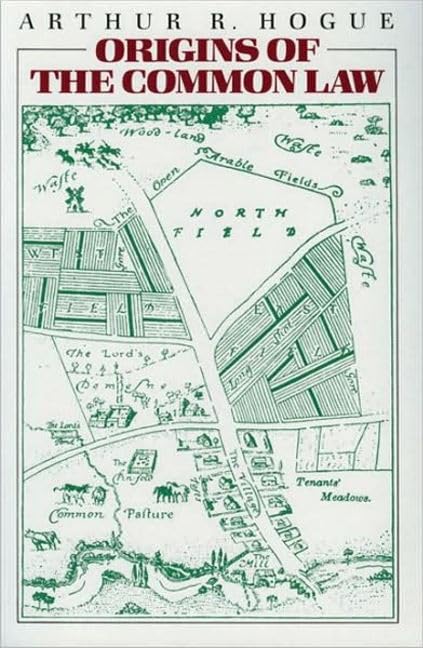
Origings of the common law by Arthur R. Hogue.
Detalles de publicación: Indianapolis, IN Liberty Fund 1985, c1966.Descripción: xvi, 271 p. 26 cmISBN:- 086597053X
- KD 671 .H63 1999
| Imagen de cubierta | Tipo de ítem | Biblioteca actual | Biblioteca de origen | Colección | Ubicación en estantería | Signatura topográfica | Materiales especificados | Info Vol | URL | Copia número | Estado | Notas | Fecha de vencimiento | Código de barras | Reserva de ítems | Prioridad de la cola de reserva de ejemplar | Reservas para cursos | |
|---|---|---|---|---|---|---|---|---|---|---|---|---|---|---|---|---|---|---|
| Libro | Biblioteca de Derecho Mons. Fremiot Torres Oliver Colección General biblioteca derecho | KD 671 .H63 1985 (Navegar estantería(Abre debajo)) | Disponible | 70000000641238 |
Total de reservas: 0
Descripciones mejoradas de Syndetics:
Written for the beginning student as well as the experienced scholar, this introductory analysis of the origin and early development or the English common law provides and excellent grounding for the early study of legal history. Between 1154, when Henry II became king, and 1307, when Edward I died, the common law underwent spectacular growth. The author begins with a discussion of the relationship between the early rules of common law and the social order they serve during this period and concludes with an extended commentary on the durability and continued growth of the common law in modern times.
Reprint. Originally published: Bloomington : Indiana University Press, 1966.
Includes bibliographical references and index.
Tabla de contenidos provista por Syndetics
- Preface(p. xiii)
- Chapter 1 Introduction: Social Change and the Growth of the Common Law(p. 3)
- Law As The Bond Of Civil Society(p. 3)
- Growth Of The Writ System(p. 15)
- Part 1 The Political Scene
- Chapter 2 Royal Centralization and Absolutism(p. 33)
- Henry II: Supreme Administrator Of The Realm(p. 34)
- Richard The Lionhearted: Absent King(p. 45)
- John: Irresponsible Absolutist(p. 45)
- Chapter 3 Royal Prerogative and the Community of the Realm(p. 56)
- Henry III: Dupe Of Alien Counselors(p. 57)
- Edward I: "Hammer Of The Scots" And Reluctant Constitutionalist(p. 67)
- Part 2 The Social Order
- Chapter 4 Free Tenures and Their Obligations(p. 85)
- The Theory Of The Body Politic(p. 86)
- Feudalism: Lord And Vassal(p. 91)
- Chapter 5 Unfree Tenures and Their Obligations(p. 114)
- The Marks Of Unfree Tenure(p. 116)
- Patterns Of Agrarian Life(p. 122)
- Seignorial Courts(p. 131)
- Officers Of Manorial Administration(p. 132)
- Public Duties Of The Vile(p. 135)
- Part 3 Legal Institutions
- Chapter 6 Courts of Angevin England to 1307(p. 145)
- The Evolution Of Courts(p. 147)
- Chapter 7 Chancery: Secretariat and Writ?Shop(p. 166)
- Chancery Officials(p. 177)
- Chancery Records(p. 180)
- Part 4 The Nature And Sources Of The Common Law
- Chapter 8 Sources of English Law in the Middle Ages(p. 185)
- What The Common Law Is Not(p. 186)
- What The Common Law Is(p. 188)
- The Nature Of Legal Custom(p. 190)
- Medieval Use Of Judicial Precedents(p. 200)
- Enactments And Statutes(p. 203)
- Forms Of Action: The Framework Of The Common Law(p. 209)
- Chapter 9 Enactments of Edward I(p. 216)
- Regulation Of Creditors And Debtors(p. 218)
- Regulation Of Estates In Land(p. 227)
- Regulation Of Purchase And Sale Of Free Tenures(p. 234)
- Conclusion: The Medieval Legacy
- Chapter 10 From Medieval Law to Modern Law(p. 241)
- The Vitality Of The Common Law(p. 241)
- The Continuing Growth Of Common Law(p. 247)
- Expansion Of The Common Law(p. 249)
- The Legacy Of The Middle Ages(p. 251)
- A Glossary for Laymen(p. 255)
- Index(p. 259)