Reseñas proporcionadas por Syndetics
Library Journal Review
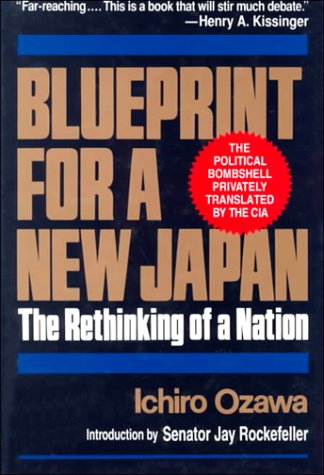
Ozawa is one of the political leaders who masterminded the 1993 fall from power of Japan's Liberal Democratic Party, which had dominated the government since 1955. In this book, widely read in Japan, he spells out his ideas for a broadly based reform of Japanese political and social life, intended to revolutionize his country in the years ahead. Concentrating on three main areas (political reform, Japan's role in international affairs, and the reform of Japanese society), Ozawa argues for what amounts to revolutionary new directions in all three areas, ranging from the decentralizing of Japan's highly centralized political system, to a more active and dynamic Japanese role in international peacekeeping efforts, to the engendering of greater individualism and independent thinking among his country's citizenry. Both for Ozawa's provocative ideas and because of his influential status, this book is highly recommended for anyone interested in contemporary Japan.-Scott Wright, Univ. of St. Thomas, St. Paul, Minn. (c) Copyright 2010. Library Journals LLC, a wholly owned subsidiary of Media Source, Inc. No redistribution permitted.
Publishers Weekly Review
A bestseller in Japan, this sweeping manifesto sets forth a bold blueprint for the transformation of that country's economy, society and polity. Ozawa, leader of the Japan Renewal Party, was the main strategist behind the coalition government that took power last year, ending 38 years of conservative rule. He outlines steps to foster a two-party system and to strengthen the authority of the prime minister and cabinet, thereby shifting power from bureaucratic officials to politicians. He advocates that Japan play a more active role in international affairs, including U.N. military operations, and make a greater commitment to environmental protection and foreign aid. Japan, Ozawa stresses, should open its markets to foreign competition and work with the U.S. to promote global free trade. He would also privatize public corporations, reduce work hours, promote the participation of women in the workplace, revamp a conformist educational system and decentralize power, population and resources away from Tokyo. Ozawa's analysis will interest policymakers, business executives and Japan-watchers. (Sept.) (c) Copyright PWxyz, LLC. All rights reserved
Booklist Review
In 1993 Ozawa bolted from his corruption-plagued Liberal Democratic Party, hastening its fall from power after 38 years of uninterrupted rule. This reform program, then, bears close scrutiny from Japan-watchers, though it was written for the average Japanese citizen. That reader, cossetted by one of the most paternalistic governments anywhere, pays for his prosperity with a suffocating lack of personal or consumer freedom: domestically, Ozawa wants to inject laissez-faire into the economy, and devolve power from Tokyo to the prefectures. In foreign affairs, he offers the opposite but realistic idea that power must be concentrated in a reformed office of the prime minister. Right now, the nominal boss has little power in international matters; consequently, trade and security issues drift along without long-term guidance, as Japan's inaction during the Gulf War revealed. Setting a course toward opening Japan's domestic markets, freeing "salarymen" from corporate enslavement, and solidifying ties to the U.S., Ozawa's platform may yet raise its author to power, a scenario libraries should anticipate. ~--Gilbert Taylor