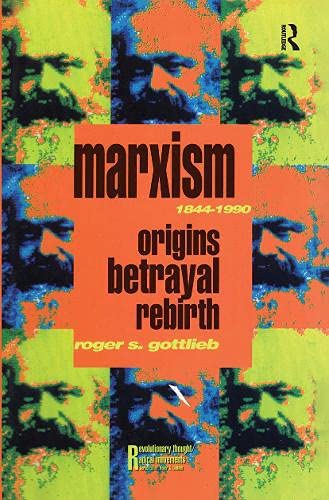
Imagen de portada de Amazon
Imagen de Amazon.com
Imagen de cubierta Syndetics
Portada de Syndetics
Imagen de OpenLibrary

Marxism, 1844-1990 origins, betrayal, rebirth Roger S. Gottlieb.

Por: Series Revolutionary thought/radical movementsDetalles de publicación: New York Routledge 1992.Descripción: xvii, 248 pISBN:
  • 0415906539 (HB : acid free paper)
  • 0415906547 (PB : acid free paper)
Tema(s): Clasificación LoC:
  • HX39.5 .G675 1992
Valoración
    Valoración media: 0.0 (0 votos)
Existencias
Imagen de cubierta Tipo de ítem Biblioteca actual Biblioteca de origen Colección Ubicación en estantería Signatura topográfica Materiales especificados Info Vol URL Copia número Estado Notas Fecha de vencimiento Código de barras Reserva de ítems Prioridad de la cola de reserva de ejemplar Reservas para cursos
Libro Biblioteca Encarnación Valdés Colección General bev 335.4 G686m (Navegar estantería(Abre debajo)) Disponible 80000001876112
Total de reservas: 0

Descripciones mejoradas de Syndetics:

Is Marxism really dead, or can it play a positive role in creating a just and fulfilling society? This study responds to these questions with an assessment of Marxism from its origins to the present day. It provides an overview of the content, strengths and weaknesses of Marx's own work.

Spine title: Marxism.

Includes bibliographical references (p. 235-244) and index.

Reseñas proporcionadas por Syndetics

CHOICE Review

Gottlieb's book was written with general readers rather than specialists in mind. This aim is achieved to a remarkable extent, as the author provides a sympathetic but critical examination of the subject. He begins with a fresh overview and candid critique of traditional Marxism, followed by a keen analysis of positivist Marxism in European social democracy, and capped by a look at Rosa Luxemburg's concern with working-class political development. The latter was bypassed in social democratic capitulation to capitalism and crushed in the postrevolutionary terror of Soviet communism. Marxism's death in the triumph of Stalinism was not final for Gottlieb, who argues for its rebirth through Western Marxism and socialist-feminism. Part 4 opens with a strong case for the continuing relevance of recent Marxist analyses of the capitalist system. Chapter 8 is a less coherent, somewhat hurried critical commentary on various "radical critics" such as Giddens and Aronowitz. Gottlieb's last chapter offers a provocative discussion of the effects of anger in the politics of social change and of spiritual sources of meaning that, properly understood, might advance a nonsectarian Left that is ecologically attuned by "global consciousness" as well as class consciousness. Public through graduate collections. H. G. Reid; University of Kentucky
Compartir
logopucpr-y-vive

Contáctanos

¡Queremos saber de ti!

Tel. 787.841.2000 Ext. 1801

bibliotecavaldes@pucpr.edu

⁣Búscanos en las redes

© 2026 Desarrollado por Ignite Online • All Rights Reserved • Powered by Koha.