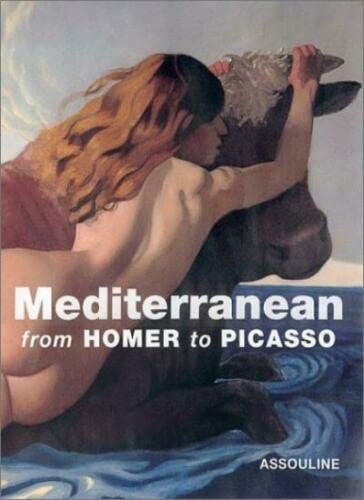

Mediterranean from Homer to Picasso Xavier Girard.
Detalles de publicación: New York Assouline Publishing c2001.Descripción: 239 p. ill. (some col.) 31 cmISBN:- 2843232457
- 909.09822 G517m I 21
- D973 .G535 2000
| Imagen de cubierta | Tipo de ítem | Biblioteca actual | Biblioteca de origen | Colección | Ubicación en estantería | Signatura topográfica | Materiales especificados | Info Vol | URL | Copia número | Estado | Notas | Fecha de vencimiento | Código de barras | Reserva de ítems | Prioridad de la cola de reserva de ejemplar | Reservas para cursos | |
|---|---|---|---|---|---|---|---|---|---|---|---|---|---|---|---|---|---|---|
| Referencia | Biblioteca Encarnación Valdés Sala de Referencia bev | 909.09822 G517m I (Navegar estantería(Abre debajo)) | Disponible | 80000002251109 |
Descripciones mejoradas de Syndetics:
"What is the Mediterranean? A thousand and one things at the same time. Not just one landscape, but innumerable landscapes. Not one sea, but a series of seas. Not one civilization, but civilizations piled up one upon the other." (Fernand Braudel) This is all true, but the great paradox of the Mediterranean is that, despite the fact that the region is so varied, it presents itself as a single, coherent image, a system where everything blends together as one unified entity. In order to explain this paradoxical cohesion, the author leads us on an exploration of the many different features that make up the geographical, philosophical and, cultural identity of the Mediterranean. In particular, a quest is set for those elements that constitute what Roland Barthes referred to, in speaking of Cy Twombly's work, as the "Mediterranean effect."
Includes bibliographical references (p. 236-[239]).