
| Imagen de cubierta | Tipo de ítem | Biblioteca actual | Biblioteca de origen | Colección | Ubicación en estantería | Signatura topográfica | Materiales especificados | Info Vol | URL | Copia número | Estado | Notas | Fecha de vencimiento | Código de barras | Reserva de ítems | Prioridad de la cola de reserva de ejemplar | Reservas para cursos | |
|---|---|---|---|---|---|---|---|---|---|---|---|---|---|---|---|---|---|---|
| Libro | Biblioteca Encarnación Valdés Colección de Puerto Rico | 155.633 P974 (Navegar estantería(Abre debajo)) | Disponible | 80000001728610 |
Descripciones mejoradas de Syndetics:
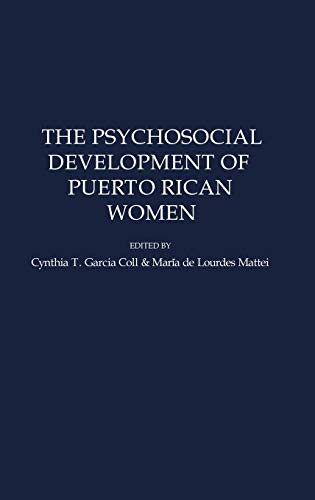
This collection of original papers explores the psychological and social development of the Puerto Rican woman from a lifespan developmental perspective. Using a wide range of methodologies and perspectives, the book addresses important issues of growth and development, among them cultural constructs of womanhood, adaptation to school, early pregnancy, sexuality, migration, autonomy, family interaction, and aging. Choice
This collection of original papers explores the psychological and social development of the Puerto Rican woman from a lifespan developmental perspective. Using a wide range of methodologies and perspectives, the book is organized around the major developmental stages: childhood and adolescence, adulthood, and growing old. An ideal supplemental text for courses in the psychology of women, Puerto Rican studies, and cross-cultural psychology, the book addresses important issues of growth and development, among them cultural constructs of womanhood, adaptation to school, early pregnancy, sexuality, migration, autonomy, family interaction, and aging.
The book begins with an introductory section that examines the social, demographic, and cultural variables that affect Puerto Rican women and provides a historical and social context for understanding the profound changes experienced by the Puerto Rican people in recent decades. In the section of childhood and adolescence two chapters look at how Puerto Rican girls learn the American student role and the problems of adolescent pregnancy respectively. The following group of papers explore developmental issues during adulthood, with separate chapters on the effects of social background on the expression of female sexuality, the implications of cross-cultural transitions, the role of the single female head of household, the conflict between autonomy and social networks, and the problems of elderly Puerto Rican women. Taken together, these essays offer a spirited contribution to the women's studies curriculum.
Includes bibliographical references.
Tabla de contenidos provista por Syndetics
- Preface
- A Critical Inquiry into the Life and Work of
- Cultural Constructions of Women by Contemporary
- Authors Childhood and Adolescence From Home to School
- Learn to Be Students in the United States
- Adolescent Pregnancy and Childbearing: Psychosocial Consequences during the Postpartum Period Adulthood and Growing Old Developmental
- Issues during Adulthood: Redefining Notions of Self, Care, and Responsibility among a Group of Professional Puerto Rican Women
- An Exploratory Study of the Expression of Female Sexuality: The Experience of Two Groups of Puerto Rican Women from Different Social Backgrounds
- Puerto Rican Women's Cross-Cultural Transitions: Developmental and Clinical Implications
- Dual Discipline Role of the Single Puerto Rican Woman Head of Household
- A Contradiction in Ties: Autonomy and Social Networks of Adult Puerto Rican Women Elderly Puerto Rican Women in the Continental United States
- Index
Reseñas proporcionadas por Syndetics
CHOICE Review
This collection presents a diversity of dilemmas faced by many Puerto Rican women at various periods in their life cycle. Psychosocial issues are presented, using methodologies that range from literary analysis of short stories and biographies to statistical analysis. Major developmental stages are analyzed and all significant topics in the experience of Puerto Rican women are discussed and nicely woven into a cohesive theme. Migration, displacement, acculturation, the erosion of traditional social structures, the phenomenon of single-headed households, and the modifications imposed on the traditional mother role are perceptively treated. The collection is exciting in the wealth of knowledge it offers, especially to those attentive to the sparse but growing literature on Hispanic women. Strongly recommended for graduate and undergraduate students, particularly for those interested in issues of gender and ethnicity. -E. Bastida, Pan American UniversityNotas de autor provistas por Syndetics
CYNTHIA T. GARCIA COLL has been a faculty member at Brown University since 1981 in the Pediatrics and Psychology Departments. Since 1983 she also holds a honorary appointment at the Department of Pediatrics at the University of Puerto Rico Medical School, where she has been conducting research since 1982. Dr. Garcia Coll's main research interests are on the inter-play between biology and sociocultural influences on human development.
MARIA DE LOURDES MATTEI is an Associate faculty member at Antioch/New England School of Professional Psychology and Adjunct Associate Professor at the Smith School of Social Work. She is a psychotherapist and consultant in private practice in Western Massachusetts and has been associated with the Gandara Mental Health Center since 1983.