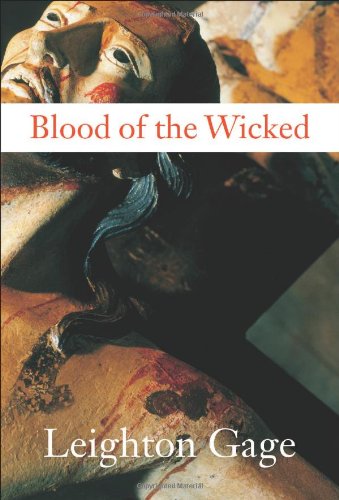
Imagen de portada de Amazon
Imagen de Amazon.com
Imagen de cubierta Syndetics
Portada de Syndetics
Imagen de OpenLibrary

Blood of the wicked Leighton Gage.

Por: Detalles de publicación: New York Soho Press c2008.Descripción: 324 p. 20 cmISBN:
  • 9781569474709
  • 1569474702
Tema(s): Clasificación CDD:
  • 813/.6 22
Clasificación LoC:
  • PS3607.A3575 B56 2008
Información de serie: Haga clic para abrir en una nueva ventana
Valoración
    Valoración media: 0.0 (0 votos)
Existencias
Imagen de cubierta Tipo de ítem Biblioteca actual Biblioteca de origen Colección Ubicación en estantería Signatura topográfica Materiales especificados Info Vol URL Copia número Estado Notas Fecha de vencimiento Código de barras Reserva de ítems Prioridad de la cola de reserva de ejemplar Reservas para cursos
Libro Biblioteca Encarnación Valdés Colección General bev 813.6 G132b (Navegar estantería(Abre debajo)) Disponible 80000002527094
Total de reservas: 0

Descripciones mejoradas de Syndetics:

" Blood of the Wicked manages to pack a huge amount into a spare three hundred pages; power politics, petty violence, sexual scandal, saintly courage, staggering poverty and obscene wealth. A book that makes you care about its large cast of characters, even when you know that they are going to die--frequently horribly. This is a novel as rich and complex as Brazil itself, with villains who make you want to spit, and heroes whose goodness is heartbreaking."--Rebecca Pawel, Edgar Award-winning author of Death of a Nationalist

In the remote Brazilian town of Cascatas do Pontal, where landless peasants are confronting the owners of vast estates, the bishop arrives by helicopter to consecrate a new church and is assassinated.

Mario Silva, chief inspector for criminal matters of the federal police of Brazil, is dispatched to the interior to find the killer. The pope himself has called Brazil's president; the pressure is on Silva to perform. Assisted by his nephew, Hector Costa, also a federal policeman, Silva must battle the state police and a corrupt judiciary as well as criminals who prey on street kids, the warring factions of the Landless League, the big landowners, and the church itself, in order to solve the initial murder and several brutal killings that follow. Justice is hard to come by. An old priest, a secret liberation theologist, finally metes it out. Here is a Brazil that tourists never encounter.

Leighton Gage is married to a Brazilian woman and spends part of each year in Santana do Parnaiba, Brazil, and the rest of the year in Florida and Belgium. This is his first novel.

Extracto provisto por Syndetics

Chapter One SOMETHING TOOK THE HELICOPTER and shook it like a jackal worrying a carcass. The bishop gripped the aluminum supports on either side of his seat and hung on for dear life. "Clear air turbulence," the pilot observed laconically, and resumed chewing his gum. " Merda! " the bishop muttered. He regretted the vulgarity as soon as he'd said it. "What's that, Your Excellency?" The bishop's eyes darted to his right. In his fear and discomfort, he'd forgotten the microphones, forgotten the headphones, forgotten that the man could hear every word he said. And what if he had? Was it not true? Was the helicopter not a merda, a great stinking, steaming merda? And who was the pilot, anyway? What had he ever done in his blessed life other than to learn how to fly the merda? How dare he criticize a man who might, God willing, be a future prince of the Church? The pilot, whose name was Julio, and who wasn't criticizing anyone, had been distracted by a flock of vultures wheeling in graceful curves over the approaching river. He honestly hadn't heard what the bishop had said. He opened his mouth to repeat the question, then shut it again when he saw the cleric's mouth set into a thin line. Julio had a paunch, sweat stains under the arms of his khaki shirt, and a habit of chewing gum with his mouth open, all of which Dom Felipe Antunes, the Bishop of Presidente Vargas, found distasteful. But it was nothing in comparison to Dom Felipe's distaste for the helicopter. The bishop glanced at his watch, wiped his sweaty palms on his silk cassock, and resumed a death grip on the aluminum supports. Forty-seven blessed minutes in the air. Forty-seven minutes. "It won't be long now, Your Excellency." Was that amusement in the man's voice? Was he enjoying himself? Did he think fear was funny? On the floor beneath Dom Felipe's feet there was a thin (he was sure it was thin) window of Plexiglas. He tried to avoid looking down, but some perverse instinct kept drawing his eyes back to that dreadful hole in the floor. They were over the river now, sand bars protruding through chocolate-colored foam. The sand looked as hard as the rock-strewn banks. Do helicopters float? A rowboat drifted in mid-river, two fishermen aboard, a huge net piled high between them. They looked up at him, shielding their eyes against the morning sun. One waved. Reflexively, Dom Felipe waved back. Then a flash, like the strobe on a camera, caused him to snap his head upward and seek the source of the light. Far ahead of him, beyond the bug-flecked windshield, the flash came again. He squinted and . . . yes, there it was. Sunlight of an almost blinding intensity reflected off an expanse of glass. It couldn't be anything other than the Great Window. And that meant that the brand-new church of Nossa Senhora dos Milagres was in sight. The window was almost five meters in diameter and had come all the way from the Venetian island of Murano at a cost of almost 200,000 reais, not including the shipping, which, together with the insurance, had amounted to R$30,000 more. When the sun hit it just right--as it was doing now--the window would cast rays of glorious blue light all along the nave of the new church. Dom Felipe made a conscious effort to hold that image, focusing on the blue light, as if it were a meditation. But then the pitch of the engine changed, dragging him back into his dreadful reality. The Lord is my shepherd. . . . A landing spot had been marked out: a Christian cross in stones the size of golf balls, and just as white. A rectangle of sere grass surrounded it, hemmed by dusty palm trees. Yellow plastic tape ran from tree to tree, holding back the crowd. Men in the gray uniforms of the State Police were stationed at intervals along the length of the tape, their backs to the cross, keeping the landing area clear. The crowd started moving like a living thing. Signs of welcome were raised. Others, already aloft, were turned to face the approaching helicopter. White and brown faces looked upward. And there were banners, too. Dom Felipe bit his lip in vexation. The banners were red, blood red, the unmistakable standards of the Landless Workers' League. The league seldom missed an opportunity--no matter how inappropriate--to turn a gathering into a political event. The bishop knew that. Still, he'd been hopeful that, in this case, the consecration of the new church . . . There was the slightest of jolts as the helicopter's skids met the grass. It's over! Hail Mary, full of grace. . . . Never again. Julio pulled a lever and threw a switch. The engine died. Above the swish of air from the still-spinning rotor blades Dom Felipe could hear, for the first time, the cheers of the crowd. He took off his headset, handed it to the pilot, and raised his right hand in benediction. Insolently, the red banners waved back at him. Dom Felipe suppressed an uncharitable thought and bent over to retrieve his miter, untangling the lappets before placing it on his head. Then he composed his features into a beatific smile and waited for the pilot to open his door. Julio, unaccustomed to ferrying bishops, finally seemed to realize what was expected of him. He removed his headset, skirted the nose of the aircraft, and reached Dom Felipe's side just as the bishop opened the door himself. Dom Felipe waved off the pilot's offered hand, put his feet on solid ground, and started searching the crowd for the face of his secretary, Father Francisco, the man who'd hatched the helicopter plot. If Francisco thinks I'm going back to Presidente Vargas the same way he got me here, he's got another think coming. I'll return by car, he'll have to find one, and it had better be one with air-conditioning. Francisco was nowhere in sight, but Gaspar Farias was. Dom Felipe could clearly see his corpulent body, wrapped in a black cassock, standing in the shadow of the vestibule. Involuntarily, the bishop scowled. A choir of adolescents dressed in identical cotton robes was standing against the tape, a rectangle of blue in the multicolored collage that made up the crowd. The children were close enough to read the bishop's scowl and seemed to be puzzled by it. With the skill born of practice, Dom Felipe forced a smile onto his lips. The youngsters' puzzlement vanished, replaced by beams of welcome. A woman in an identical robe, her back to the bishop, her face toward her charges, started to wave her arms and the children broke into song, their young voices murdering the English words, "Why do the nations . . ." Handel? A Protestant? Who in the world chose that? Dom Felipe raised his hand in another benediction and silently mouthed words of thanks, conserving his voice for the sermon and for the all-important interviews that were sure to follow. It was the dry season and, to make it worse, a great deal of construction was going on. From the air, the city of Cascatas do Pontal had seemed to be covered by a dome of red dust. He could feel some of that dust right now, abrading his neck where it met his collar, coating his lips, working its way into his throat. He'd need a carafe of water on the pulpit. Francisco could take care of that. Not Gaspar. Dom Felipe didn't want anything from Gaspar, didn't even want to talk to him. The bishop shifted his body to face another sector of the crowd and raised his arm. His silk sleeve slid downward, just enough to expose his watch. A practiced flick of his eyes confirmed that he wasn't early. He was a stylish seven minutes late. So where is the blessed reception committee? He didn't want to stand there looking like a fool, so he folded his hands under his chin, bowed his head, and offered a prayer. In recognizance of the solemn moment, the singing faded, and then stopped. The cheering abated. Dom Felipe kept his head down, and his eyes closed, until he heard the rustle of people working their way through the crowd. Then he lifted his head and unclasped his hands. Immediately the cheers erupted anew, and the singing started all over again, right from the beginning of the piece. One of the policemen grasped a segment of the yellow crowd tape and held it shoulder high. One by one, the members of the reception party slipped under it, seven men in all, and started crossing the empty space toward him. Cascatas do Pontal was an agricultural town, an informal place. The jackets and ties the men were wearing all looked new. Despite the welcoming smiles they'd plastered on their faces, the local dignitaries looked uncomfortable. All seven of them were red-faced and sweating in the heat. The bishop took an impulsive step toward them, and then stopped. They'll think it more dignified if I let them come to me . It was the last decision of Dom Felipe's life. WALTER ABENDTHALER snapped off another shot with the Pentax, advanced the film and reached for the motordriven Nikon. Some of his contemporaries liked the digital gear, and all of the kids used it, but not Walter. Walter preferred film. He was an old-fashioned kind of guy. Maybe too old-fashioned; at least that's what the agency art directors were telling him these days. A few lines on your face, a little gray in your hair, and they all thought you were over the hill. Scheisse! Why didn't they concentrate on his portfolio instead? His pictures clearly demonstrated that he had a better eye for angles than most of the young punks now getting into the business. But did they appreciate that? No, they didn't. Instead of focusing on his pictures, art directors had a tendency to focus on his gray hair. Walter would have been willing to bet good money-- something he happened to be short of at the moment, or he wouldn't have been in Cascatas at all--that not one of those overestimated punk kids, not even that Scheisskerl Chico Ramos, would have had the foresight to do what he'd done. He was on the church steps, almost in the vestibule, just below Gaspar Farias, the crow that ran the parish. (The black soutanes priests wore always reminded Walter of crows so that's what he called them.) That put Walter seventy-five meters from the helicopter, maybe even a little more, but that was the beauty of it, the action of a man who knew his business. The punk kids always tried to get in close, instead of letting the lens do it for them. And now, while they were all down there in the crush elbowing each other out of the way, Walter had a spot all to himself, high above the heads of the crowd. There was nothing, nothing at all, between him and the Chief Crow. He had an unimpeded view. Exactly as he'd forseen, Walter's medium-length telephoto, the 300mm, was the perfect lens for the job. His frame ran from slightly below the knees to the tip of the bishop's miter. Walter hit and released the shutter button. The Nikon clicked and whirred. Ha! Gotcha sneaking a peek at your watch. He'd save that one, maybe blow it up and put it in his portfolio. They'd never print it. Then it got boring: His Crowness bowed his head, concealing his face under his funny hat, and stood there for a long time doing absolutely nothing. Walter didn't bother to waste any film. At last the head came up and the kids started singing again, their high voices carrying well over the murmur of the crowd. Walter knew the music, a passage from the Messiah , and he hummed along, pleased with himself. The bishop took a few steps forward and stopped. Just to the cleric's left, Walter had the logotype, the whole logotype, solidly in the shot. The telephoto altered the perspective, brought the background closer, made the logo look even bigger than it was. The client would love it. Love it, because Walter's assignment wasn't to register the arrival of the bishop. It was to register the link between the Church and Fertilbras, Brazil's largest manufacturer of fertilizer. Providing this day's transportation was a publicrelations ploy for the company. Running the chopper cost them 1,800 reais an hour, and they intended to get their money's worth by making sure that Walter's photos, the ultimate selection of which would be made by Fertilbras's chairman himself, appeared in every newspaper in the state of São Paulo. Or at least in those newspapers where Fertilbras's advertising budget gave them leverage with the editorial staff. In one of his sarcastic moments, of which there were many, Walter, no Catholic, had commented to his wife, Magda, that there was a similarity between what the Catholic Church and his client offered to the public. Magda hadn't laughed, so he'd had to explain: "The Church peddles bullshit, another form of fertilizer. Get it?" She still hadn't laughed. Magda was from Zurich and had the same sense of humor as her parents: none at all. The Chief Crow had turned out to be as handsome in the flesh as he was in the photos Walter had seen. Dom Felipe was still young, well under sixty, but his abundant, carefully coifed hair was already a snowy white. Colored, for sure. His eyebrows are still dark. Unfortunately, the 300mm didn't bring Dom Felipe close enough to display the blue eyes that women were prone to gush about. Walter hoped for better luck when the bishop got his act together and moved toward him. The guy's got charisma, I'll give him that. Looks like he has a poker up his ass. Stands more like a soldier than a priest. Walter momentarily took the viewfinder away from his eye and glanced at the film counter. Six. Thirty shots left on the roll. He switched off the automatic focus and made a minor adjustment. Uh-oh. A cloud slipped between Walter's subjects and the sun. He had to open up. One, no, two stops. Two whole stops! Scheisse! It was playing hell with his depth of field. If the bishop moved any further away from the background, Walter was going to have to choose between staying sharp on either the man or the logotype. And that was, as the English put it, Hobson's choice: no goddamned choice at all. Unless the sun came back from behind that fucking cloud, the link he was supposed to capture would be gone, and he'd have one unhappy client. Walter saw blurry movement on the bottom left of his frame. He lowered the camera to check it out, and then clapped the viewfinder back to his eye. The reception committee. He left the focus where it was. The group was getting sharper and sharper as it approached the bishop. Then one of them stepped right between Walter and the logotype. In a spasm of anger, Walter pressed the shutter. A fraction of a second later, a hole appeared in the front of Dom Felipe's cassock. The shutter stayed open long enough to register both the entry wound and the red mist that spurted into the air behind the bishop's back. A less-experienced man, one of those young punks, might have started looking around to see where the shot had come from. But not Walter Abendthaler. Walter, old pro that he was, kept his finger on the shutter button. The motor drive kept advancing. The shutter opened and closed, opened and closed, capturing shot after shot. In successive frames, the bishop took a step backward, looked down at his chest, sunk to his knees, and pitched forward onto the ground. And then, in the very last exposure before the film ran out, the top of his head seemed to explode. The crowd was horrified. Walter Abendthaler was ecstatic. He was damned near positive he'd captured the very moment of the bullet's impact. Excerpted from Blood of the Wicked by Leighton Gage All rights reserved by the original copyright owners. Excerpts are provided for display purposes only and may not be reproduced, reprinted or distributed without the written permission of the publisher.

Reseñas proporcionadas por Syndetics

Library Journal Review

Brazil. The name conjures up a seductive image of a bikini-clad girl dancing the samba along a Rio beach. But it is also a country with deep-rooted social and political problems, where less than one percent of the population owns half the arable land, where the wealthy live in gated, guarded luxury while the poor are crammed into squalid favelas, or shantytowns, and where corrupt local police enforce their own laws. Against this backdrop, Gage, who lived in Brazil for many years, sets his debut mystery, a gripping and brutal tale of murder and vengeance. When a sniper's bullet cuts down a bishop in an agricultural town in the state of Sao Paulo, Chief Inspector Mario Silva of the Brazilian Federal Police is ordered to investigate. Was the bishop, who disapproved of liberation theology, assassinated by a radical priest seeking to redistribute land to the poor, or was he killed by powerful landowners offended by his sermon condemning the recent gruesome murder of an activist and his family? The body count rises, as Silva and his team find their probe hampered by crooked cops, ambitious reporters, and missing witnesses. Sensitive readers, be warned: there are graphic scenes of horrific violence. But Gage's inspector is a fascinating character, a man who once dispensed his own brand of Brazilian justice now charged with upholding the law of the land. Highly recommended.-Wilda Williams, Library Journal (c) Copyright 2010. Library Journals LLC, a wholly owned subsidiary of Media Source, Inc. No redistribution permitted.

Publishers Weekly Review

At the start of Gage's bloody debut, Chief Insp. Mario Silva is asked by his boss, the director of the Brazilian Federal Police, to solve the murder of Bishop Dom Felipe Antunes, who was assassinated at a church consecration in the remote Brazilian town of Cascatas. However, tensions between landowners and the Landless Workers' League embroil Silva in local politics when he must put equal resources into solving the disappearance of a local landowner's son, Orlando Muniz Junior. Priestly pedophilia, kidnappings and more murders punctuate the escalation of the conflict between landowners and reformers, while Silva also grapples with his personal demons, having tracked down and killed both his father's and brother-in-law's murderers. By the end of this brutal novel, it's hard to care who killed whom. It's also a miracle that Silva, who seems increasingly ineffectual, survives the mayhem. This ultraviolent mystery is not for the faint of heart. (Jan.) (c) Copyright PWxyz, LLC. All rights reserved

Booklist Review

In the opening pages of Gage's emotionally charged debut, Brazilian Chief Inspector Mario Silva is dispatched from police headquarters in Brasilia to rural Cascatas do Pontal to investigate the assassination of Bishop Dom Felipe Antunes. Unlike his predecessor, Bishop Antunes was unsympathetic to the Landless Workers' League, an organization that advocates, not always peacefully, for equal distribution of land among rich and poor. (A similar group actually exists in Brazil.) A long history of strife between wealthy landowners and the league prompts Chief Inspector Silva and his policeman nephew, Hector, to tread very carefully as they gather clues in the case. Then, when a crackerjack local journalist on the verge of breaking a seemingly unrelated story is found with her throat slit, Silva and his partner are forced to extend their stay in the sticks. Chief Inspector Silva, a seasoned cop determined to avenge his father's brutal murder, is the most engaging among a cast of broadly drawn characters. Gage, a part-time resident of Brazil, vividly evokes a country of political corruption, startling economic disparity, and relentless crime, both random and premeditated.--Block, Allison Copyright 2007 Booklist

Notas de autor provistas por Syndetics

Leighton Gage was born on May 13, 1942. He wrote the Chief Inspector Mario Silva Investigation series. The last book, The Ways of Evil Men, will be published in early 2014. He died from pancreatic cancer on July 26, 2013 at the age of 71.

(Bowker Author Biography)

Compartir
logopucpr-y-vive

Contáctanos

¡Queremos saber de ti!

Tel. 787.841.2000 Ext. 1801

bibliotecavaldes@pucpr.edu

⁣Búscanos en las redes

© 2026 Desarrollado por Ignite Online • All Rights Reserved • Powered by Koha.