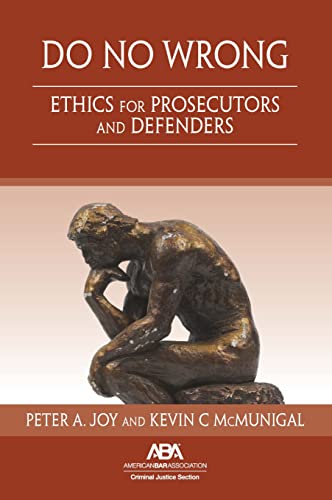

Do no wrong ethics for prosecutors and defenders Peter A. Joy and Kevin C. McMunigal.
Detalles de publicación: Chicago ABA Criminal Justice Section c2009.Descripción: xv, 217 p. 23 cmISBN:- 9781604422696 (pbk.)
- 1604422696 (pbk.)
- 345.73/05 22
- KF 9619 .J69 2009
| Imagen de cubierta | Tipo de ítem | Biblioteca actual | Biblioteca de origen | Colección | Ubicación en estantería | Signatura topográfica | Materiales especificados | Info Vol | URL | Copia número | Estado | Notas | Fecha de vencimiento | Código de barras | Reserva de ítems | Prioridad de la cola de reserva de ejemplar | Reservas para cursos | |
|---|---|---|---|---|---|---|---|---|---|---|---|---|---|---|---|---|---|---|
| Libro | Biblioteca de Derecho Mons. Fremiot Torres Oliver Colección General biblioteca derecho | KF 9619 .J69 2009 (Navegar estantería(Abre debajo)) | Disponible | 70000000849088 |
Descripciones mejoradas de Syndetics:
Do No Wrong: Ethics for Prosecutors and Defenders is designed to help provide guidance for resolving ethical issues such as: -How far may the prosecution or defense go in using religion in closing argument? -Does the defense lawyer or the client decide whether to raise an insanity defense or to present mitigation evidence? -Is the defendant entitled to Brady material prior to entering a plea bargain? -When may the defense introduce evidence of an alternate perpetrator or SODDI (the "some other dude did it") defense? A list of research resources appears at the end of each chapter. In addition to exploring ethical issues that prosecutors and defense attorneys routinely face, this book also examines emerging areas of ethics, such as lawyer involvement in client media campaigns, and ongoing policy debates over the proper roles for prosecution and defense counsel.
Includes bibliographical references and index.
pt. 1. Prosecution's role -- Are a prosecutor's responsibilities "special"? -- Why should prosecutors "seek justice"? -- New rules for scientific and exculpatory evidence? -- pt. 2. Defense counsel's role -- Has Gideon's promise been fulfilled? -- Inadequate representation and wrongful convictions -- pt. 3. Criminal practice and the media -- Trial by media : arguing cases in the court of public opinion -- Clients, lawyers, and the media -- The role of lawyers in client media campaigns -- pt. 4. Client autonomy -- Client autonomy and choice of counsel -- Counsel or client : who's in charge? -- pt. 5. Conflicts of interest -- The Supreme Court and defense counsel conflicts -- Campaign pledges to prosecute -- pt. 6. Investigation and discovery -- To tape or not to tape : secret recording -- Brother's keeper : must you protect opponent's confidentiality? -- Anticontact rules in criminal investigations -- Destroying documents -- Implicit plea agreements and issues of disclosure -- pt. 7. Plea negotiations -- Disclosing exculpatory material in plea negotiations -- Corporate privilege waivers in plea negotiations -- pt. 8. Preparation for trial -- Witness preparation : when does it cross the line? -- The alternative perpetrator strategy -- pt. 9. Litigation ethics -- Prosecutors pursuing inconsistent prosecutions -- "Thou shalt not use religion in closing argument".
Tabla de contenidos provista por Syndetics
- Acknowledgments(p. xi)
- About the Authors(p. xiii)
- Introduction(p. xv)
- PArt 1 Prosecution's Role(p. 1)
- Chapter 1 Are a Prosecutor's Responsibilities "Special&Idquo;?(p. 3)
- Few Ethics Rules Specifically Address Prosecutors(p. 3)
- Prosecutors Often Subject to Same Rules as Other Lawyers(p. 5)
- Berger v. United States(p. 5)
- Extraordinary Remedies(p. 6)
- Model Rule 3.8(p. 7)
- When Are a Prosecutor's Duties Distinct?(p. 9)
- Conclusion(p. 10)
- Resources for Chapter 1(p. 10)
- Chapter 2 Why Should Prosecutors "Seek Justice&Idquo;?(p. 13)
- Rationales for Treating Prosecutors Differently(p. 14)
- The Government's Overarching Interest in Justice(p. 14)
- Protecting Against Abuse of Power(p. 15)
- Asymmetry of Resources(p. 15)
- Public Confidence in the Justice System(p. 16)
- Promotes Open Government(p. 16)
- Risks of Injustice(p. 17)
- Conclusion(p. 17)
- Resources for Chapter 2(p. 18)
- Chapter 3 New Rules for Scientific and Exculpatory Evidence?(p. 19)
- Scientific Evidence(p. 19)
- Exculpatory Evidence(p. 23)
- Resources for Chapter 3(p. 24)
- Part 2 Defense Counsel's Role(p. 27)
- Chapter 4 Has.Gideon's Promise Been Fulfilled?(p. 29)
- Crisis in Defense Systems(p. 29)
- Constitutional Standard for Adequate Assistance of Counsel(p. 31)
- The ABA's Ten Principles(p. 33)
- Conclusion(p. 34)
- Resources for Chapter 4(p. 34)
- Chapter 5 Inadequate Representation and Wrongful Convictions(p. 37)
- Causes of Wrongful Convictions(p. 37)
- Ethical Dimensions of Inadequate Representation(p. 38)
- Remedying the Imbalance of Resources(p. 40)
- Conclusion(p. 41)
- Resources for Chapter 5(p. 41)
- Part 3 Criminal Practice and the Media(p. 43)
- Chapter 6 Trial by Media: Arguing Cases in the Courtof Public Opinion(p. 45)
- Should Public Comment by Lawyers Be Regulated?(p. 45)
- Protecting Trials(p. 46)
- Protecting Clients(p. 47)
- Protecting the Public(p. 47)
- History of Ethics Regulation(p. 48)
- Current Ethics Rules Regulating Pretrial and Trial Publicity(p. 49)
- Borderline Issues(p. 51)
- Conclusion(p. 52)
- Resources for Chapter 6(p. 52)
- Chapter 7 Clients, Lawyers, and the Media(p. 55)
- Access to the Jury Room(p. 55)
- Interviews with Clients and Recording Defense Preparation(p. 57)
- Lawyers Entering into Media Contracts(p. 57)
- Client Media Deals and Lawyer Ethics(p. 58)
- Competent Representation(p. 59)
- Confidentiality(p. 60)
- Conflict of Interest(p. 60)
- Prosecutorial Objections(p. 60)
- Conclusion(p. 61)
- Resources for Chapter 7(p. 61)
- Chapter 8 The Role of Lawyers in Client Media Campaigns(p. 63)
- Rewards and Risks(p. 63)
- Who Decides?(p. 64)
- Competence(p. 65)
- Conflict of Interest(p. 66)
- Vicarious Ethics Violations?(p. 66)
- Conclusion(p. 69)
- Resources for Chapter 8(p. 69)
- Part 4 Client Autonomy(p. 71)
- Chapter 9 Client Autonomy and Choice of Counsel(p. 73)
- Pro Hac Vice Admission(p. 74)
- Defense Counsel Conflicts(p. 75)
- The Pros and Cons(p. 75)
- Conclusion(p. 78)
- Resources for Chapter 9(p. 78)
- Chapter 10 Counsel or Client: Who's in Charge?(p. 79)
- Allocation of Authority(p. 79)
- Disputes over Means(p. 81)
- Acquiescing to Counsel's Decisions(p. 83)
- Conclusion(p. 85)
- Resources for Chapter 10(p. 86)
- Part 5 Conflicts of Interest(p. 87)
- Chapter 11 The Supreme Court and Defense Counsel Conflicts(p. 89)
- The Legal Standard(p. 89)
- The Facts(p. 90)
- The Conflict in Mickens(p. 90)
- The Court's Decision in Mickens(p. 92)
- Actual Conflict(p. 93)
- Adverse Impact?(p. 93)
- Conclusion(p. 95)
- Resources for Chapter 11(p. 95)
- Chapter 12 Campaign Pledges to Prosecute(p. 973)
- An Explicit Pledge to Prosecute(p. 97)
- What's Wrong with a Pledge to Prosecute?(p. 98)
- Political Distortion(p. 98)
- Decisions Made on Incomplete Information(p. 99)
- Constraining the Exercise of Prosecutorial Discretion(p. 100)
- An Implicit Pledge to Prosecute?(p. 100)
- Conclusion(p. 101)
- Resources for Chapter 12(p. 102)
- Part 6 Investigation and Discovery(p. 103)
- Chapter 13 To Tape or Not to Tape: Secret Recording(p. 105)
- The Pros and Cons(p. 105)
- The Law on Secret Recording(p. 106)
- The Ethics of Secret Recording(p. 107)
- Conclusion(p. 109)
- Resources for Chapter 13(p. 110)
- Chapter 14 Brother's Keeper: Must You Protect Opponent's Confidentiality?(p. Ill)
- Confidentiality Basics(p. 112)
- Obligation to Another Lawyer's Client(p. 112)
- Inadvertent Disclosure of Confidential Information(p. 113)
- The Cooperative Approach(p. 114)
- The Adversarial Approach(p. 114)
- Intermediate Positions(p. 115)
- An Array of Rationales(p. 116)
- Practical Implications(p. 117)
- Resources for Chapter 14(p. 118)
- Chapter 15 Anticontact Rule in Criminal Investigations(p. 119)
- The Rule(p. 119)
- Underlying Policies(p. 122)
- Prosecutors(p. 122)
- "Authorized by Law&Idquo; Exception(p. 123)
- Current Law(p. 124)
- Defense Counsel(p. 126)
- Conclusion(p. 127)
- Resources for Chapter 15(p. 127)
- Chapter 16 Destroying Documents(p. 129)
- Complexity Ambiguity and Variability(p. 130)
- Underestimating Reach and Impact(p. 131)
- Obstructing Access to Evidence; Wrongdoing by Employees(p. 132)
- Conclusion(p. 133)
- Resources for Chapter 16(p. 133)
- Chapter 17 Implicit Plea Agreements and Issues of Disclosure(p. 135)
- Legal Disclosure Obligation(p. 135)
- Ethical Disclosure Obligation(p. 136)
- Judicial Approaches to Implicit Plea Agreements(p. 137)
- Resources for Chapter 17(p. 140)
- Part 7 Plea Negotiations(p. 141)
- Chapter 18 Disclosing Exculpatory Material in Plea Negotiations(p. 143)
- History(p. 144)
- Ethical Disclosure Obligation(p. 144)
- Implicit Brady Waivers(p. 146)
- Why Require Disclosure of Exculpatory Information During Plea Negotiations?(p. 146)
- Knowledge(p. 147)
- Sincerity(p. 149)
- Brady Disclosure as a Remedy(p. 151)
- Current Law(p. 151)
- United States v. Ruiz(p. 152)
- Implicit Waiver after Ruiz(p. 155)
- Implications of Brady Waivers(p. 156)
- Conclusion(p. 158)
- Resources for Chapter 18(p. 158)
- Chapter 19 Corporate Privilege Waivers in Plea Negotiations(p. 161)
- Corporate Attorney-Client Privilege(p. 162)
- Competence(p. 162)
- Conflict of Interest(p. 164)
- Brother's Keeper(p. 164)
- A Compromise(p. 165)
- Resources for Chapter 19(p. 166)
- Part 8 Preparation for Trial(p. 167)
- Chapter 20 Witness Preparation: When Does It Cross the Line?(p. 169)
- Virtues and Vices(p. 169)
- Ethical Rules(p. 170)
- Practical Concerns(p. 171)
- Preparing a Witness(p. 173)
- Resources for Chapter 20(p. 173)
- Chapter 21 The Alternative Perpetrator Strategy(p. 175)
- "Plan B&Idquo;(p. 176)
- To Use or Not to Use Plan B(p. 177)
- Critiques of Plan B(p. 177)
- Falsity(p. 178)
- Fairness(p. 179)
- Evidentiary Limits on Plan B(p. 180)
- Conclusion(p. 182)
- Resources for Chapter 21(p. 182)
- Part 9 Litigation Ethics(p. 185)
- Chapter 22 Prosecutors Pursuing Inconsistent Prosecutions(p. 187)
- Advancing Inconsistent Theories of Prosecution(p. 187)
- A Prosecutor's Options(p. 189)
- Why Do Prosecutors Do It?(p. 189)
- The Pursuit of Inconsistent Prosecutions(p. 190)
- Ethical Requirements for Prosecutors(p. 191)
- Possible Limits on Inconsistent Prosecutions(p. 192)
- Conclusion(p. 195)
- Resources for Chapter 22(p. 195)
- Chapter 23 "Thou Shalt Not Use Religion in Closing Argument&Idquo;(p. 197)
- The Bounds of Argument(p. 197)
- Religious References and Misconduct(p. 199)
- Reversible Error?(p. 201)
- Invited Response(p. 202)
- Two Lessons(p. 203)
- Conclusion(p. 204)
- Resources for Chapter 23(p. 204)
- Table of Cases(p. 207)
- Index(p. 211)