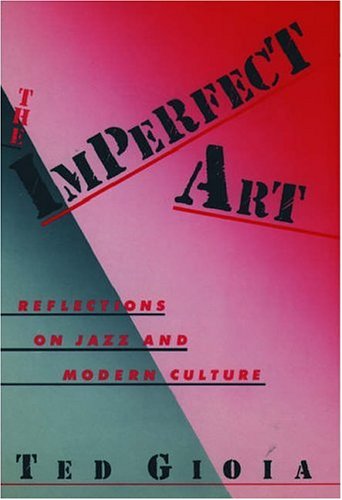

The imperfect art reflections on jazz and modern culture Ted Gioia.
Detalles de publicación: New York Oxford University Press 1988.Descripción: vi, 152 pISBN:- 0195053435 (alk. paper)
- 785.42/09 19
- ML3506 .G56 1988
| Imagen de cubierta | Tipo de ítem | Biblioteca actual | Biblioteca de origen | Colección | Ubicación en estantería | Signatura topográfica | Materiales especificados | Info Vol | URL | Copia número | Estado | Notas | Fecha de vencimiento | Código de barras | Reserva de ítems | Prioridad de la cola de reserva de ejemplar | Reservas para cursos | |
|---|---|---|---|---|---|---|---|---|---|---|---|---|---|---|---|---|---|---|
| Libro | Biblioteca Encarnación Valdés Colección General bev | 785.4209 G495i (Navegar estantería(Abre debajo)) | Disponible | 80000001304115 |
Descripciones mejoradas de Syndetics:
By the 1930s, the radio and phonograph had transformed the experience of music in America from unique, live performances to the repetitive playing or broadcasting of records. In an age of mechanical reproduction, music was everywhere, but as Ted Gioia points out in this brilliant new volume, its impact was watered down, debased. It had become, in Erik Satie's words, "furniture music." Jazz, according to Gioia, stands opposed to this dehumanizing trend, emphasizing improvisation and the human element (the performer) over the work of art. Taking a wide-ranging approach rare in jazz criticism, Gioia draws upon fields as disparate as literary criticism, art history, sociology, and aesthetic philosophy as he places jazz within the turbulent cultural environment of the 20th century. The book can be read on several levels: as a history of jazz and a study of its major figures; as a critique of major schools of thought, such as minimalism, deconstruction, and primitivism; as an attempt to define precise standards of good and bad in jazz; and as a meditation on the possibility of improvised art. Gioia argues that because improvisation--the essence of jazz--must often fail under the pressure of on-the-spot creativity, jazz should be seen as an "imperfect art" and judged by an "aesthetics of imperfection," which he outlines in a key chapter. Incorporating the thought of such seminal thinkers as Walter Benjamin, José Ortega y Gasset, and Roland Barthes, The Imperfect Art is a feast for the thoughtful jazz afficionado, filled with vivid portraits of the giants of jazz and with startling insight into this vital musical form and the interaction of society and art.
Includes index.
Bibliography: p. 141-147.