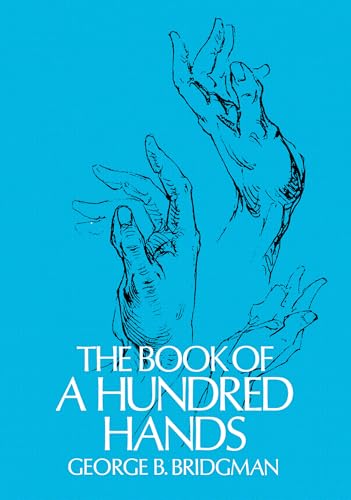

The book of a hundred hands.
Detalles de publicación: New York Dover Publications [1971, c1920]Descripción: 173 p. illus. 24 cmISBN:- 048622709X
- 704.94/2
- NC774 .B7 1971
| Imagen de cubierta | Tipo de ítem | Biblioteca actual | Biblioteca de origen | Colección | Ubicación en estantería | Signatura topográfica | Materiales especificados | Info Vol | URL | Copia número | Estado | Notas | Fecha de vencimiento | Código de barras | Reserva de ítems | Prioridad de la cola de reserva de ejemplar | Reservas para cursos | |
|---|---|---|---|---|---|---|---|---|---|---|---|---|---|---|---|---|---|---|
| Libro | Biblioteca Encarnación Valdés Colección General bev | 704.942 B852b (Navegar estantería(Abre debajo)) | Disponible | 80000000857956 |
Descripciones mejoradas de Syndetics:
Mr. Bridgman states unequivocally in his introduction that before preparing this book he had "not discovered a single volume devoted exclusively to the depicting of the hand." Apparently Mr. Bridgman has appreciated what few others have felt -- the human hand's great capacity for expression and the care that the artist must take to realize it. The hand changes with the age of the person, is shaped differently according to sex, reflects the type of work to which it is put, the physical health, and even the emotions of the person. To represent these distinguishing features, to capture the expressiveness of a particular pair of hands, the artist must understand the construction, anatomy, formation, and function of the hand.
There is probably no better instructor to turn to for this understanding than Mr. Bridgman, a well-respected artist who for nearly 50 years lectured and taught at the Art Students League of New York. In this volume, a full text is accompanied by many illustrations depicting virtually every aspect and posture of the human hand. He first considers the back view of the hand, the wrist bones, the tendons, the muscles, the hand bones, the arch, and the veins; and then those of the palm. Throughout he pictures the musculature at work beneath the surface of the skin. He continues by showing how the muscles operate on the thumb side and on the little finger side when each is the center of force; how the thumb and fingers are constructed, their freedom of movement, joints, and complete anatomy as well as views of them straight, bent, and flexed; how the knuckles are formed, what shapes the fist can take and how flexible it can be; and he concludes with illustrations of the total movement, either turning or rotary, of the hand in its various positions.
The 100 illustrations the author has selected perfectly define the regions of the hand so that any artist, beginning or experienced, will increase his mastery of it. Better rendering of the human hand is sure to add new expressiveness to your human figures along with new forcefulness and new interest.