
Economic analysis and policy background readings for current issues [by] Myron L. Joseph, Norton C. Seeber [and] George Leland Bach.
Detalles de publicación: Englewood Cliffs, N.J. Prentice-Hall [1963]Descripción: xiv, 511 p. 24 cmISBN:- 0132229013
- 330.9/04
- HC59 .J6 1971
| Imagen de cubierta | Tipo de ítem | Biblioteca actual | Biblioteca de origen | Colección | Ubicación en estantería | Signatura topográfica | Materiales especificados | Info Vol | URL | Copia número | Estado | Notas | Fecha de vencimiento | Código de barras | Reserva de ítems | Prioridad de la cola de reserva de ejemplar | Reservas para cursos | |
|---|---|---|---|---|---|---|---|---|---|---|---|---|---|---|---|---|---|---|
| Libro | Biblioteca Encarnación Valdés Colección General bev | 330.82 J83e3 (Navegar estantería(Abre debajo)) | Disponible | 80000000372196 |
Descripciones mejoradas de Syndetics:
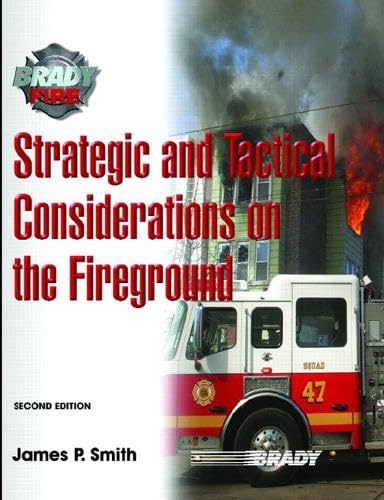
The author's over 40 years of experience contributes to the real-life approach of this text, blending theory with personal experience. Strategic and Tactical Considerations on the Fireground uses a systems approach to guide you through the process of problem identification and solution response. From planning to incident scene control, this text provides knowledge that can be applied to a variety of complex fire situations. This updated and expanded second edition includes an additional 25% of new material on Health Care and High Risk Populations and Commercial, Technical Operations, and Industrial Occupancies as well as scenarios, case studies, and website references to further enhance student learning.
Includes bibliographical references.
Tabla de contenidos provista por Syndetics
- Chapter 1 Preparation Training
- Preincident Planning Needed Fire Flow
- The Fire Officer Command Presence
- Chapter 2 Management Tools Incident Scene
- Management Incident Scene Control Status Reports
- Chapter 3 Decision Making Incident Scene
- Decision Making Size-Up Strategy, Tactics, and Tasks Modes of Fire Attack
- Chapter 4 Company Operations Engine
- Company Operations Truck Company Operations
- Chapter 5 Building Construction
- Fire-Resistive Construction
- Noncombustible/Limited Combustible Construction
- Ordinary Construction
- Heavy Timber Construction
- Frame Buildings Timber Truss Lightweight Building Components
- Chapter 6 Building Collapse and Scene Safety
- Building Collapse Wall Collapse
- Collapse Search Safety
- Chapter 7 Special Situations and Occupancies
- Basement and Cellar
- Fires Garden Apartments Row Houses and Town Houses
- Renovated Buildings Hotels Vacant Buildings
- Chapter 8 Health Care and High Risk Populations Hospitals Nursing Homes and Assisted
- Living Facilities
- Mass Casualty
- Incidents Houses of Worship
- Penal Institutions Public Assembly Buildings Schools
- Chapter 9 Commercial and Industrial
- Commercial Buildings and Warehouses
- Strip Malls Enclosed Shopping Malls Lumberyards High-Rise Buildings
- Chapter 10 Technical Operations Hazardous Materials and the Initial
- Responder Tank Farm/Refinery Fires Terrorism Incidents
Extracto provisto por Syndetics
Notas de autor provistas por Syndetics
James P. Smith was appointed to the Philadelphia Fire Department on June 29, 1966. He was promoted to lieutenant on December 18, 1972; to captain on December 30, 1974; to battalion chief on August 3, 1981; and to deputy chief on June 27, 1987. Deputy chief is the highest fire department civil service position. Chief Smith reports to the deputy commissioner.
He has worked on both engine and ladder companies and in every section of the city. He has served as director of the Philadelphia Fire Academy. In this role, he was the departmental Safety Officer and responded on multiple alarm fires performing the Safety Officer's function.Additional areas of responsibility included the research and planning unit.
Chief Smith has been associated with the National Fire Academy in Emmitsburg, Maryland, since 1982. He is a graduate of the prestigious Executive Fire Officer's Program and is an adjunct instructor. He has developed and taught many programs.
He has lectured throughout the United States on incident management, safety, church fires, building construction, building collapse, strategy and tactics, incident management, tank farm fires, and high-rise firefighting.