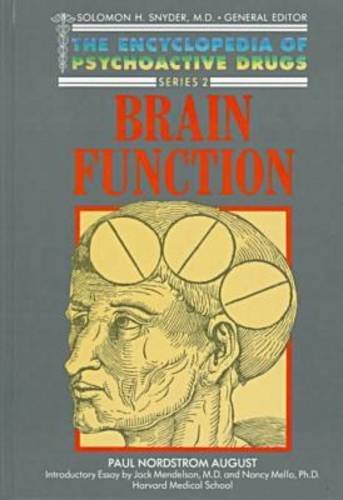
Imagen de portada de Amazon
Imagen de Amazon.com
Imagen de cubierta Syndetics
Portada de Syndetics
Imagen de OpenLibrary

Brain function Paul Nordstrom August.

Por: Series The Encyclopedia of psychoactive drugs. Series 2 Detalles de publicación: New York Chelsea House c1988.Descripción: 123 p. illISBN:
  • 1555462049
Tema(s): Clasificación CDD:
  • 612/.82 19
Clasificación LoC:
  • QP376 .A94 1988
Resumen: Explains how the human brain works with various regions of the central nervous system and how psychoactive drugs may alter their normal functions.
Valoración
    Valoración media: 0.0 (0 votos)
Existencias
Imagen de cubierta Tipo de ítem Biblioteca actual Biblioteca de origen Colección Ubicación en estantería Signatura topográfica Materiales especificados Info Vol URL Copia número Estado Notas Fecha de vencimiento Código de barras Reserva de ítems Prioridad de la cola de reserva de ejemplar Reservas para cursos
Referencia Biblioteca Encarnación Valdés Sala de Referencia bev 362.29 E56 V.26 (Navegar estantería(Abre debajo)) Disponible 80000000641871
Total de reservas: 0

Descripciones mejoradas de Syndetics:

Explains how the human brain works with various regions of the central nervous system and how psychoactive drugs may alter their normal functions.

Includes index.

Bibliography: p. 112-113.

Explains how the human brain works with various regions of the central nervous system and how psychoactive drugs may alter their normal functions.

Reseñas proporcionadas por Syndetics

Booklist Review

Although this is a part of the publisher's Encyclopedia of Psychoactive Drugs series, information on how drugs affect the brain seems almost an afterthought here. Rather, August focuses on the structure and function of the brain in an investigation that makes good basic science support material. Using comparisons and other types of examples successfully, August explains the principal parts of the nervous system, looking at how information is processed by the brain to produce a variety of sensations and physical responses (voluntary and involuntary) and how the brain governs emotions, instinct, and memory. Separately, August explains in simple terms how the brain functions to enable people to read, write, and converse, and in a final, brief section, he describes in abbreviated terms some of the more common brain dysfunctions-epilepsy, schizophrenia, stroke, and Alzheimer's disease. An appended glossary will help readers deal with the scientific nomenclature used throughout. Illustrated with photographs and diagrams; index and further readings appended. No notes. Gr. 9-12. SZ. 612'.82 Brain / Brain-Effect of drugs on / Psychotropic drugs / Drugs [CIP] 87-7989
Compartir
logopucpr-y-vive

Contáctanos

¡Queremos saber de ti!

Tel. 787.841.2000 Ext. 1801

bibliotecavaldes@pucpr.edu

⁣Búscanos en las redes

© 2026 Desarrollado por Ignite Online • All Rights Reserved • Powered by Koha.