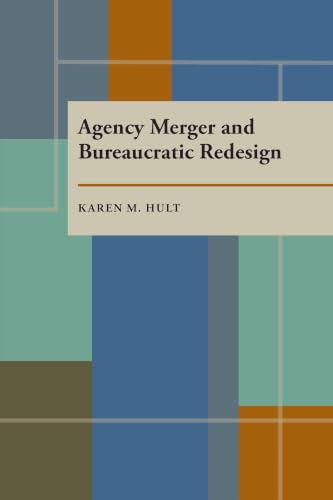
Imagen de portada de Amazon
Imagen de Amazon.com
Imagen de cubierta Syndetics
Portada de Syndetics
Imagen de OpenLibrary

Agency merger and bureaucratic redesign Karen M. Hult.

Por: Series Pitt series in policy and institutional studiesDetalles de publicación: Pittsburgh, Pa. University of Pittsburgh Press c1987.Descripción: xii, 219 p. 25 cmISBN:
  • 082293549X
Tema(s): Clasificación CDD:
  • 353/.073 19
Clasificación LoC:
  • JK469 1987
Valoración
    Valoración media: 0.0 (0 votos)
Existencias
Imagen de cubierta Tipo de ítem Biblioteca actual Biblioteca de origen Colección Ubicación en estantería Signatura topográfica Materiales especificados Info Vol URL Copia número Estado Notas Fecha de vencimiento Código de barras Reserva de ítems Prioridad de la cola de reserva de ejemplar Reservas para cursos
Libro Biblioteca Encarnación Valdés Colección General bev 353.073 H917a (Navegar estantería(Abre debajo)) Disponible 80000000494883
Total de reservas: 0

Descripciones mejoradas de Syndetics:

Since the expansion of public programs in the 1960s, charges of bureaucratic inefficiency, unresponsiveness, and red tape have been rampant. The response has often been extensive reorganization in an effort to change the source of control, carry out specific missions, and to achieve greater inter-agency cooperation. Karen M. Hult examines why these restructurings often fail, through three case studies: the U.S. Department of Housing and Urban Design (HUD); the Minnesota Department of Energy, Planning, and Development; and the Minneapolis Community Development Agency. Hult's study assesses the usefulness of mergers and reorganizations as a policy tool, and offers a valuable contribution to the study of public management and organization design.

Includes index.

Bibliography: p. 195-213.

Reseñas proporcionadas por Syndetics

CHOICE Review

Hult examines three governmental reorganizations that involved administrative consolidation. These are, in 1965-68, creation of the US Department of Housing and Urban Development (HUD), and in 1981-83, of the Minneapolis Community Development Agency and the Minnesota Department of Energy, Planning, and Development. Hult classifies the HUD merger as ``interdependent'' (combining different but related units), the Mminneapolis case as ``coordinative'' (similar operations were consolidated), and the Minnesota merger as the ``garbage can'' type (unrelated functions were put together). Hult concludes that, contrary to the cynical views of reorganization held by some political scientists, administrative rearrangement can materially change things. Although the creation of the Minnesota department did not have much important impact, the Minneapolis merger expanded city council control of community development programs and the establishment of HUD assisted in making federal housing programs more social welfare oriented. Hult believes that although consolidation does not have the effects claimed by early public administration theorists, it can be a catalyst for positive change. Based mainly on interviews and archival data and attuned to organization theory, the book explicates numerous dependent and independent variables and theoretical propositions. In attempting to replace theology by science in the study of reorganization, the author overstructures the analysis and attempts too hard to trace causality, and by restricting herself to mergers, she narrows the scope of the investigation. Graduate collections.-C.T. Goodsell, Virginia Polytechnic Institute & State University

Notas de autor provistas por Syndetics

Karen M. Hult is professor of political science at Virginia Polytechnic Institute and State University.
Compartir
logopucpr-y-vive

Contáctanos

¡Queremos saber de ti!

Tel. 787.841.2000 Ext. 1801

bibliotecavaldes@pucpr.edu

⁣Búscanos en las redes

© 2026 Desarrollado por Ignite Online • All Rights Reserved • Powered by Koha.