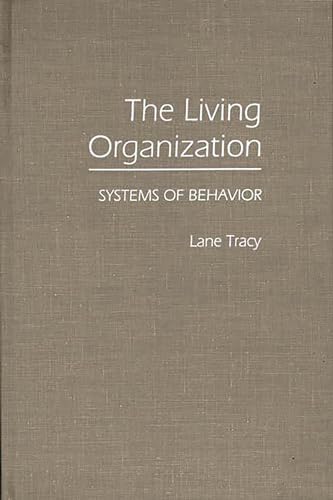

| Imagen de cubierta | Tipo de ítem | Biblioteca actual | Biblioteca de origen | Colección | Ubicación en estantería | Signatura topográfica | Materiales especificados | Info Vol | URL | Copia número | Estado | Notas | Fecha de vencimiento | Código de barras | Reserva de ítems | Prioridad de la cola de reserva de ejemplar | Reservas para cursos | |
|---|---|---|---|---|---|---|---|---|---|---|---|---|---|---|---|---|---|---|
| Libro | Biblioteca Encarnación Valdés Colección General bev | 302.35 T761l (Navegar estantería(Abre debajo)) | Disponible | 80000000317365 |
Descripciones mejoradas de Syndetics:
The focus on the dynamic nature of organizations as living systems is instructive and worthy of consideration. The book provides a unique perspective on the variables that influence the effectiveness of today's organizations. Advanced undergraduates and up.
Choice
Describing his book as a disciplined excursion through the world of organizations, Tracy has developed a unique approach to the study of organizational behavior. Using James G. Miller's living systems theory as his framework, the author describes organizations as living--displaying the same basic function, structures and processes as a plant or animal. The Living Organization gives us a milti-level picture of the workings of organizations. The three levels--individual, group, and organization--work simultaneously. Diverging from current theory, the author asks us to treat these levels concurrently, not sequentially. He uses the same set of basic concepts for all three levels.
The reader will be stimulated by the interesting juxtaposition of topics in this book. Topics, normally unrelated, form unusual combinations reflecting the author's basic theme that all the topics of organizational behavior are more closely linked than previously realized. This book is excellent reading. It takes a giant step toward providing the field of organizational behavior with a theoretical backbone. Utilizing the living systems approach to its fullest, The Living Organization integrates the field of organizational behavior at its three systematic levels and it links these concepts and theories so that connections between needs and motivation and between decision-making and leadership are made clear.
Includes index.
Bibliography: p. [197]-206.
Tabla de contenidos provista por Syndetics
- Preface
- Systems Concepts and Organizational Behavior Structure and Process Values, Purposes, Goals, and Attitudes
- The Need Concept Need Fulfillment and Stress Information Processing and Communication Motivation Power and Influence Leadership Processes Models of Leader Effectiveness Exchange and Conflict between Systems New Perspectives on People and Organizations
- Bibliography
- Index