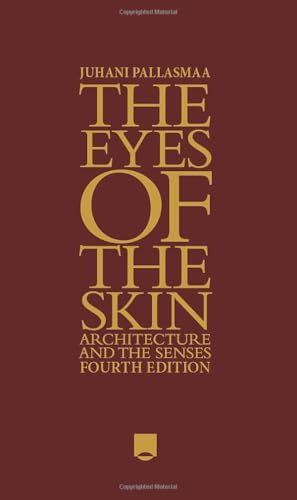

The eyes of the skin : architecture and the senses. / Juhani Pallasmaa. txt
England : John Wiley & Sons, 2024Edición: Fourth editionDescripción: 104 pages : black and white illustrations ; 22 cmTipo de contenido:- text
- unmediaded
- volume
- 9781394200672
- NA2500 P35 2024
| Imagen de cubierta | Tipo de ítem | Biblioteca actual | Biblioteca de origen | Colección | Ubicación en estantería | Signatura topográfica | Materiales especificados | Info Vol | URL | Copia número | Estado | Notas | Fecha de vencimiento | Código de barras | Reserva de ítems | Prioridad de la cola de reserva de ejemplar | Reservas para cursos | |
|---|---|---|---|---|---|---|---|---|---|---|---|---|---|---|---|---|---|---|
| Libro Col. General CARIBET | CARIBET Biblioteca Arquitectura Colección General CARIBET | General NA2500 P35 2024 (Navegar estantería(Abre debajo)) | 1 | Disponible | 91000000754176 |
Descripciones mejoradas de Syndetics:
THE EYES OF THE SKIN
Explore the relationship between architecture and the sensory experience with the fourth edition of this groundbreaking work
First published in 1996, The Eyes of the Skin is a classic of architectural theory. It asks the far-reaching question why, when there are five senses, is one single sense--sight--so predominant in architectural culture and design? With the ascendancy of the digital and the all-pervasive use of the image electronically, the subject is all the more pressing and topical since the first edition's publication. Juhani Pallasmaa argues that the suppression of the other four sensory realms has led to the overall impoverishment of our built environment, often diminishing the emphasis on the spatial experience of a building and architecture's ability to inspire, engage and be wholly life enhancing.
For a student reading this text for the first time, The Eyes of the Skin is a revelation. It provides a fresh, compelling insight into architectural culture which continues to inspire more than a quarter-century after its initial publication.
The fourth edition of The Eyes of the Skin also features:
The author's latest views on the emphasis of place, unfocused perception and existential experience Updates and clarifications throughout, to reinforce how our sense of self in the world remains our most important sense with the greatest architectural impact An updated Foreword that touches on the current understanding of the seminal importance of the existential senseThe Eyes of the Skin is a must-read for all architecture students, who will find its insights transformative.
Introduction Touching the World by Juhani Pallasmaa 2 --
Part One Vision and Knowledge 10 --
Critics of Ocularcentrism 14 --
The Narcissistic and Nihilistic Eye 16 --
Oral Versus Visual Space 17 --
Retinal Architecture and the Loss of Plasticity 20 --
An Architecture of Visual Space 24 --
Materiality and Time 25 --
The Rejection of Alberti’s Window 28 --
A New Vision and Sensory Balance 30 --
Part Two --
The Body in the Centre 33 --
Multi Sensory Experience 34 --
The Significance of the Shadow 39 --
Acoustic Intimacy 42 --
Silence, Time and Solitude 43 --
Spaces of Scent 46 --
The Shape of Touch 48 --
The Taste of Stone 50 --
Images of Muscle and Bone 51 --
Images of Action 54 --
Bodily Identification 55 --
Mimesis of the Body 56 --
Spaces of Memory and Imagination 60 --
An Architecture of the Senses 61 --
The Task of Architecture 62 --
A Door Handle, A Handshake --
An introduction to Juhani Pallasmaa and his work by Peter Mackeith 64 --
Apertures 72 --
Poetics 81 --
Notes 88 --
Index 99 --
Picture Credits 103 --
"First published in 1996, The Eyes of the Skin is a classic of architectural theory. It asks the far-reaching question why, when there are five senses, is one single sense -- sight -- so predominant in architectural culture and design? With the ascendancy of the digital and the all-pervasive use of the image electronically, the subject is all the more pressing and topical since the first edition's publication. Juhani Pallasmaa argues that the suppression of the other four sensory realms has led to the overall impoverishment of our built environment, often diminishing the emphasis on the spatial experience of a building and architecture's ability to inspire, engage and be wholly life enhancing. For a student reading this text for the first time, The Eyes of the Skin is a revelation. It provides a fresh, compelling insight into architectural culture which continues to inspire more than a quarter-century after its initial publication. This fourth edition presents the author's latest views on the emphasis of place, unfocused perception, sensory issues, and existential experience. It also includes updates and clarifications throughout, to reinforce how our sense of self in the world remains our most important sense and has the greatest impact on today's architecture"-- Provided by publisher
Tabla de contenidos provista por Syndetics
- Foreword(vi)
- Introduction Touching the World(2)
- Part 1 Vision and Knowledge(10)
- Critics of Ocularcentrism(14)
- The Narcissistic and Nihilistic Eye(16)
- Oral Versus Visual Space(17)
- Retinal Architecture and the Loss of Plasticity(20)
- An Architecture of Visual Images(24)
- Materiality and Time(25)
- The Rejection of Alberti's Window(28)
- A New Vision and Sensory Balance(30)
- Part 2 The Body in the Centre(33)
- Multi-Sensory Experience(34)
- The Significance of the Shadow(39)
- Acoustic Intimacy(42)
- Silence, Time and Solitude(43)
- Spaces of Scent(46)
- The Shape of Touch(48)
- The Taste of Stone(50)
- Images of Muscle and Bone(51)
- Images of Action(54)
- Bodily Identification(55)
- Mimesis of the Body(56)
- Spaces of Memory and Imagination(60)
- An Architecture of the Senses(61)
- The Task of Architecture(62)
- A Door Handle, A Handshake
- An introduction to Juhani Pallasmaa and his work(64)
- Apertures(72)
- Poetics(81)
- Notes(88)
- Index(99)
- Picture Credits(103)