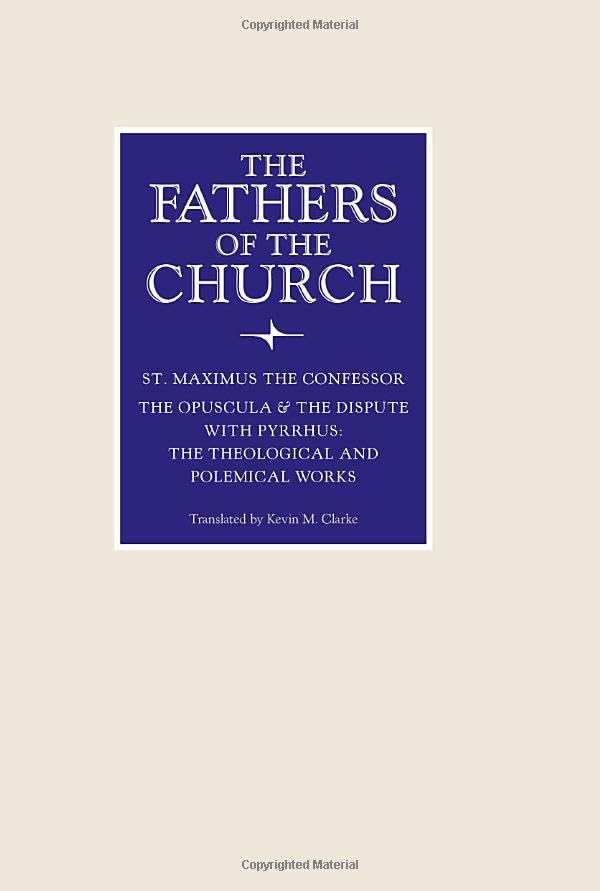

The Opuscula and the Dispute with Pyrrhus : the theological and polemical works / St. Maximus the Confessor ; translated by Kevin M. Clarke.
Idioma: Inglés Lenguaje original: Griego antiguo (hasta 1453) Series The Fathers of the church ; volume 151Editor: Washington, D.C. : The Catholic University of America Press, [2026]Descripción: 375 pagesTipo de contenido:- text
- unmediated
- volume
- 9780813240824
- 23 281
- BT212 .M39 2026
| Imagen de cubierta | Tipo de ítem | Biblioteca actual | Biblioteca de origen | Colección | Ubicación en estantería | Signatura topográfica | Materiales especificados | Info Vol | URL | Copia número | Estado | Notas | Fecha de vencimiento | Código de barras | Reserva de ítems | Prioridad de la cola de reserva de ejemplar | Reservas para cursos | |
|---|---|---|---|---|---|---|---|---|---|---|---|---|---|---|---|---|---|---|
| Libro | Biblioteca Encarnación Valdés Colección General bev | 281.1 F252 (Navegar estantería(Abre debajo)) | v. 151 | Disponible | 82000002671134 |
Descripciones mejoradas de Syndetics:
Maximus the Confessor (d. 662), regarded by certain of his contemporaries as a sword of division, has become a bridge between East and West in our time. He lived at a time of theological and political upheaval, coming under intense scrutiny from imperial authorities in the final decades of his life. His conflict with Constantinople led him to engage in a theological and polemical campaign to equip his associates around the Mediterranean to respond to certain innovative doctrines. Maximus saw these new teachings as disconnected from the thought of the approved Fathers and theologically linked with prior heresies.
This volume contains significant theological and polemical works? The Small Theological and Polemical Works , also known as the Opuscula , and the Dispute with Pyrrhus ?refuting monenergism and monotheletism, the notions that Christ had only one activity or only one will. The Small Theological and Polemical Works are offered here for the first time in a complete English translation, built upon critical scholarship from the past century with key additions from Sergey Epifanovich included. Regarded as the most iconic work associated with Maximus, the famed Dispute with Pyrrhu s, the deposed Patriarch of Constantinople, took place in Carthage in July 645. The record of this dialogue reflects Maximus?s mature Christology, while it is also a noteworthy prelude to his journey to Rome, where he worked with Pope Martin at the 649 Lateran Synod, uniting their voices and sealing their fates.
Includes bibliographical references and index.
"St. Maximus the Confessor is thought to have been born around 580 CE in the eastern Mediterranean area. After being physically tortured because of his theological writings, he died in exile in 662. In the writings of his that appear in this book, Maximus draws upon his extensive knowledge of Greek philosophy and the Bible in upholding his belief that Jesus had two natures, human and divine, and two wills, human and divine. His opponents, called Monotheletes, believed that Jesus had only one will, that is, a divine will only. Ancient Greek is the original language of the writings of Maximus"-- Provided by publisher.