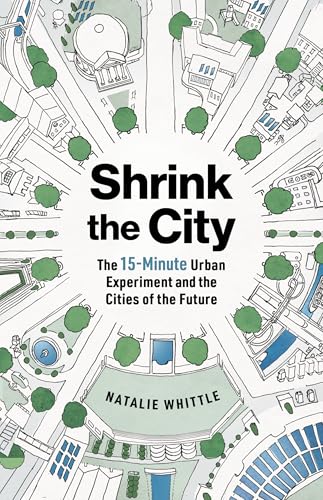

Shrink the city : the 15-minute urban experiment and the cities of the future. / Natalie Whittle. txt
Editor: New York : The Experiment, 2024Descripción: xv, 171 p. ; 20 cmTipo de contenido:- text
- unmediated
- volume
- 9781891011894
- 9781891011900
- Fifteen-minute city txt
- 23 307.1416
- HT166 W517 2024
| Imagen de cubierta | Tipo de ítem | Biblioteca actual | Biblioteca de origen | Colección | Ubicación en estantería | Signatura topográfica | Materiales especificados | Info Vol | URL | Copia número | Estado | Notas | Fecha de vencimiento | Código de barras | Reserva de ítems | Prioridad de la cola de reserva de ejemplar | Reservas para cursos | |
|---|---|---|---|---|---|---|---|---|---|---|---|---|---|---|---|---|---|---|
| Libro Col. General CARIBET | CARIBET Biblioteca Arquitectura Colección General CARIBET | General HT166 W517 2024 (Navegar estantería(Abre debajo)) | 1 | Disponible | 91000000753939 |
Descripciones mejoradas de Syndetics:
Cities define the lives of all those who call them home: where we go, how we get there, how we spend our time. But what if we rethink the ways we plan, live in, and move around our cities? What if we didn't need a car to reach the grocery store? What if we could get back the time we would have spent commuting and put it to other uses?
In this fascinating, carefully researched and reported book, longtime Financial Times journalist Natalie Whittle investigates the 15-minute city idea--its pros, cons, and its potential to revolutionize modern living.
From Paris, Melbourne, and Rotterdam to Charlotte, North Carolina, and Tempe, Arizona, cities worldwide are being guided by the 15-minute city's ideals--with varying results. By looking at these examples, Whittle considers:
what really happens when a city expands bike lanes and pedestrian areas--and disincentivizes long commutes which approaches to building affordable housing are actually effective how neighborhoods of varying wealth are affected by 15-minute city policies whether it's possible to convince car-owning city dwellers to replace their vehicles with other forms of transport.This timely book serves as a call to reflect on our cities and neighborhoods--and it outfits us with insights on how to make them more sustainable, safe, and welcoming.
Includes bibliographical references and index.
Preface: What Is a 15 - Minute City? ix --
Introduction: Have I Been Here Before? 1 --
1. A Tale of Several Parises 19 --
2. Handlebar Utopia 43 --
3. Cycling to What? Walking to What? 83 --
4. The Life Around the Corner 97 --
5. The New Victorians 119 --
6. Zone 17 137 --
7. Time and the City 149 --
Conclusion 157 --
Acknowledgments 159 --
Selected References and Bibliography 160 --
Index 162 --
About the Author 176 --
"Cities define the lives of all those who call them home: where we go, how we get there, how we spend our time. But what if we rethink the ways we plan, live in, and move around our cities? What if we didn't need a car to reach the grocery store? What if we could get back the time we would have spent commuting and put it to other uses? In this fascinating, carefully researched and reported book, longtime Financial Times journalist Natalie Whittle investigates the 15-minute city idea--its pros, cons, and its potential to revolutionize modern living. From Paris, Melbourne, and Rotterdam to Charlotte, North Carolina, and Tempe, Arizona, cities worldwide are being guided by the 15-minute city's ideals--with varying results. By looking at these examples, Whittle considers: what really happens when a city expands bike lanes and pedestrian areas--and disincentivizes long commutes which approaches to building affordable housing are actually effective how neighborhoods of varying wealth are affected by 15-minute city policies whether it's possible to convince car-owning city dwellers to replace their vehicles with other forms of transport. This timely book serves as a call to reflect on our cities and neighborhoods--and it outfits us with insights on how to make them more sustainable, safe, and welcoming"--Provided by publisher
Tabla de contenidos provista por Syndetics
- Preface: What is a 15-Minute City?(ix)
- Introduction: Have I Been Here Before?(1)
- 1 A Tale of Several Parises(19)
- 2 Handlebar Utopia(43)
- 3 Cycling to What? Walking to What?(83)
- 4 The Life Around the Corner(97)
- 5 The New Victorians(119)
- 6 Zone 17(137)
- 7 Time and the City(149)
- Conclusion(157)
- Acknowledgments(159)
- Selected References and Bibliography(160)
- Index(162)
- About the Author(176)