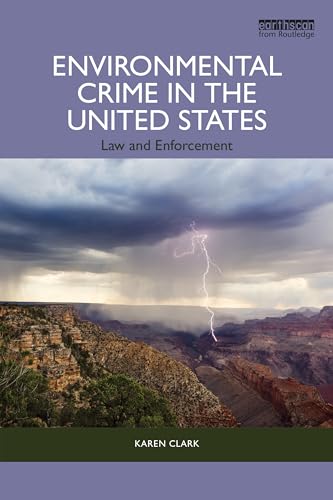

Environmental Crime in the United States : Law and Enforcement / Karen Clark
Editor: New York : Routledge, ©2024Edición: First EditionDescripción: 182 pages 24 cmTipo de contenido:- text
- unmediated
- volume
- 9781032148052
- Environmental Crime in the United States [Title of spine]
- HV 6403 .C53 2024
| Imagen de cubierta | Tipo de ítem | Biblioteca actual | Biblioteca de origen | Colección | Ubicación en estantería | Signatura topográfica | Materiales especificados | Info Vol | URL | Copia número | Estado | Notas | Fecha de vencimiento | Código de barras | Reserva de ítems | Prioridad de la cola de reserva de ejemplar | Reservas para cursos | |
|---|---|---|---|---|---|---|---|---|---|---|---|---|---|---|---|---|---|---|
| Libro | Biblioteca de Derecho Mons. Fremiot Torres Oliver Colección General biblioteca derecho | HV 6403 .C53 2024 (Navegar estantería(Abre debajo)) | c. 1 | Disponible | 70000000906520 |
Descripciones mejoradas de Syndetics:
Environmental Crime in the United States provides an introduction to the laws that govern environmental crime, how these laws are implemented and enforced, and the impact they have had since their passing in the twentieth century and their continued applications.
Environmental crimes such as wildlife trafficking, over-fishing, artisanal mining, and deforestation are lucrative contributors to a global illicit trade market and sources of cheap resources for corporations to exploit. This book presents a review of U.S.-based laws and regulations regarding such environmental crimes at the state and federal level, combined with examples of international convention or trade agreements which can be prosecuted within the United States. It examines attempts to modify these laws, the exceptions granted to prevent enforcement, and the ability of political and social groups to address inefficiencies of the laws or their implementations. Both criminal and administrative laws are reviewed to assess how laws governing the environment compare to other areas of law that seek to protect and improve social well-being and public health; this includes a review of how environmental crimes overlap with general crimes, and how these crimes fuel illicit commerce while strengthening international crime syndicates. Trends such as the actions taken by non-governmental organizations and other entities other than law enforcement to stop environmental crimes such as poaching will be explained, with a discussion of how environmental crimes spurn illicit markets and provide lucrative schemes for international crime rings as well as corporations.
This book will be of great interest to students of environmental crime and justice, green criminology, environmental conservation, natural resource management, and environmental law.
Includes bibliographical references and index
1. Introduction to Environmental Crime -- 2. Environmental Crime Theory -- 3. Laws and Regulations -- 4. Unregulated, Unreported and Illegal Fishing -- 5. Wildlife Trade -- 6. Mining -- 7. Whaling -- 8. Forestry -- 9. Pollution -- 10. Conclusion
"Environmental Crime in the United States provides an introduction to the laws that govern environmental crime, how these laws are implemented and enforced, and the impact they have had since their passing in the twentieth century laws and their continued applications. Environmental crimes such as wildlife trafficking, over-fishing, artisanal mining and deforestation are lucrative contributors to a global illicit trade market and sources of cheap resources for corporations to exploit. This book presents a review of US based laws and regulations regarding such environmental crimes at the state and federal level, combined with examples of international convention or trade agreements which can be prosecuted within the United States. It examines attempts to modify these laws, the exceptions granted to prevent enforcement and the ability of political and social groups to address inefficiencies of the laws or their implementations. Both criminal and administrative laws are reviewed to assess how laws governing the environment compare to other areas of law that seek to protect and improve social well- being and public health. This includes a review of how environmental crimes overlap with general crimes, and how these crimes fuel illicit commerce while strengthening international crime syndicates. Trends such as the actions taken by non-governmental organizations and other entities other than law enforcement to stop environmental crimes such as poaching will be explained with a discussion of how environmental crimes spurn illicit markets and provide lucrative schemes for international crime rings as well as corporations. This book will be of great interest to students of environmental crime and justice, green criminology, environmental conservation, natural resource management and environmental law"--
Notas de autor provistas por Syndetics
Karen Clark is an Adjunct Faculty at the University of Arizona and the University of Nebraska, USA. She earned a doctorate degree in criminology, law and society from the University of California, Irvine, and has published numerous articles on environmental crimes, natural resource exploitation, and transnational crime trends.