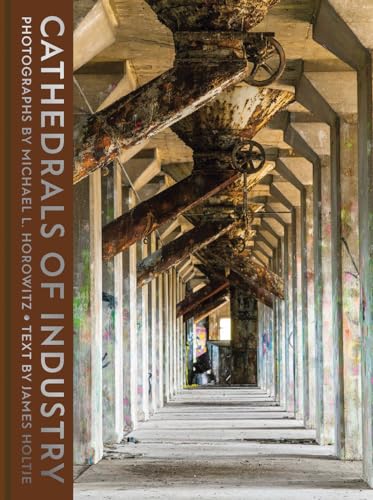

Cathedrals of industry : exploring the factories and infrastructure that made America. / photographs by Michael L. Horowitz ; text by James P. Holtje ; foreword by Joseph E. Stiglitz ; afterword by Stephen Wilkes. txt
Editor: New York : Abbeville Press, 2024Edición: First editionDescripción: 279 p. : ill. ; photo. ; col. ; 32 cmTipo de contenido:- text
- stillimage
- unmediated
- volume
- 9780789214980
- Photography, Industrial
- Abandoned buildings -- United States -- Pictorial works
- Industrial buildings -- United States -- Pictorial works
- Industries -- United States -- History -- Sources
- Photobooks
- Photography, Artistic
- Photography, Industrial
- Pictorial Works
- Art and photography
- Photography, Industrial
- 23/eng/20241202 670.973022/2
- TR706 H67 2024
| Imagen de cubierta | Tipo de ítem | Biblioteca actual | Biblioteca de origen | Colección | Ubicación en estantería | Signatura topográfica | Materiales especificados | Info Vol | URL | Copia número | Estado | Notas | Fecha de vencimiento | Código de barras | Reserva de ítems | Prioridad de la cola de reserva de ejemplar | Reservas para cursos | |
|---|---|---|---|---|---|---|---|---|---|---|---|---|---|---|---|---|---|---|
| Libro Col. General CARIBET | CARIBET Biblioteca Arquitectura Colección General CARIBET | General TR706 H67 2024 (Navegar estantería(Abre debajo)) | 1 | Disponible | 91000000753541 |
Descripciones mejoradas de Syndetics:
Explore America's industrial heritage in this breathtaking--and moving--photo book.
"This book . . . documents better than any economic historian could some of the enormous changes our economy and our society have been going through."
--From the foreword by Joseph E. Stiglitz, Nobel Prize-winning economist
American culture and politics are shot through with nostalgia for the country's industrial past, a time when we actually made things--physical things, not patterns of bits and bytes. But what did this past actually look like? Photographer Michael L. Horowitz has traveled throughout the Northeast in search of its remnants, both heritage businesses that have survived to the present and the ruins of decommissioned factories and infrastructure. The spaces he takes us inside range from the intimate to the vast--from the last silk flower workshop in New York's Garment District to Buffalo's looming grain elevators and the Paterson Great Falls Hydroelectric Plant, in operation since 1914. Horowitz photographs these places with the eye not only of a photographer but of someone who has taken the time to understand their inner workings--an understanding that is extended to the reader through Jim Holtje's lively and carefully researched text.
Cathedrals of Industry will appeal to readers with a variety of interests, including history, architecture, engineering, and urban exploration.
Foreword by Joseph E. Stiglitz 6 --
Introduction 8 --
RAW MATERIALS
1 Klotz Throwing Company, Lonaconing, MD 13 --
CLOSED --
2 Deerskin Tannery, Upstate New York 29 --
OPERATIONAL--
3 Pulp Mill, Naponach, NY 35 --
CLOSED
4 Gain Elevators and Mills, Buffalo 41 --
SOME MILLS STILL ACTIVE --
5 Bethlehem Steel, Lackawanna, NY 67 --
CLOSED --
6 Bethlehem steel, Bethlehem, PA 81 --
CLOSED --
WORKSHOPS AND FACTORIES
7 M&S Schmalberg Silk flowers, Manhattan 91 --
OPERATIONAL --
8 Fearman Cash Register CO., Manhattan 103 --
CLOSED --
9 Brooklyn Seltzer Boys 107 --
OPERATIONAL --
10 Streit’s Lower East Side Matzo Facto 115 --
MOVED UPSTATE--
11 Joyva, Brooklyn 129 --
OPERATIONAL --
12 QRS Music, Buffalo 141 --
OPERATIONAL --
INFRASTRUCTURE
13 Colonel Ward Pumping Station, Buffalo 157 --
OPERATIONAL --
14 Buffalo Central Terminal 177 --
CLOSED --
15 Hoboken Terminal 187 --
OPERATIONAL --
16 IRT Substation, Manhattan 211 --
OPERATIONAL (REFITTED) --
17 Paterson Great Falls Hydroelectric Plant 221 --
OPERATIONAL (REFITTED) --
18C.R Huntley Generating Station, Tonawanda, NY 229 --
CLOSED --
19 Buffalo State Asylum for the Insane 239 --
CLOSED --
20 West Side Piers, Manhattan 261--
CLOSED --
Afterword by Stephen Wilkes 279 --
"Photographs of twenty abandoned and operational industrial sites"-- Provided by publisher
Tabla de contenidos provista por Syndetics
- Foreword(6)
- Introduction(8)
- Raw Materials
- 1 Klotz Throwing Company, Lonaconing, MD(13)
- Closed
- 2 Deerskin Tannery, Upstate New York(29)
- Operational
- 3 Pulp Mill, Naponach, NY(35)
- Closed
- 4 Grain Elevators and Mills, Buffalo(41)
- Some Mills Still Active
- 5 Bethlehem Steel, Lackawanna, NY(67)
- Closed
- 6 Bethlehem Steel, Bethlehem, PA(81)
- Closed
- Workshops and Factories
- 7 M&S Schmalberg Silk Flowers, Manhattan(91)
- Operational
- 8 Faerman Cash Register Co., Manhattan(103)
- Closed
- 9 Brooklyn Seltzer Boys(107)
- Operational
- 10 Streit's Lower East Side Matzo Factory(115)
- Moved Upstate
- 11 Joyva, Brooklyn(129)
- Operational
- 12 QRS Music, Buffalo(141)
- Operational
- Infrastructure
- 13 Colonel Ward Pumping Station, Buffalo(157)
- Operational
- 14 Buffalo Central Terminal(177)
- Closed
- 15 Hoboken Terminal(187)
- Operational
- 16 IRT Substation, Manhattan(211)
- Operational (Refitted)
- 17 Paterson Great Falls Hydroelectric Plant(221)
- Operational (Refitted)
- 18 C. R. Huntley Generating Station, Tonawanda, NY(229)
- Closed
- 19 Buffalo State Asylum for the Insane(239)
- Closed
- 20 West Side Piers, Manhattan(261)
- Closed
- Afterword(279)
Reseñas proporcionadas por Syndetics
Publishers Weekly Review
Photographer Horowitz (Divine New York) and NYU adjunct business professor Holtje (The Power of Storytelling) team up for a perceptive photographic survey of America's industrial landscape. Taken from the 1970s to the present, Horowitz's images showcase the raw materials and infrastructure that have supported U.S. manufacturing: thread spinning machines and grain elevator release valves, hydroelectric plants, and factories both operational (Manhattan's M&S Schmalberg Silk Flowers, in business since 1916) and defunct (the Bethlehem Steel production plant in Lackawanna, N.Y., which shuttered in the 1980s). Enriched by short essays providing historical and geographical context, the images reveal both the grandeur of mid-20th-century manufacturing, "an era that instilled pride and defined the lives of millions of Americans," and how quickly it came to an end. Along the way, Horowitz and Holtje take care not to overlook the "inequality, discrimination, and labor strife" that were also part of the "golden age" of U.S. industry. The results are revealing and often beautiful. Photos. (Nov.)Correction: An earlier version of this review misstated how long M&S Schmalberg Silk Flowers has been in business. It opened in 1916, not the 1940s.Notas de autor provistas por Syndetics
Michael L. Horowitz , a New York-based photographer, has dedicated himself to documenting cultural history in the face of rapid change. His books are Cathedrals of Industry: Exploring the Factories and Infrastructure That Made America and Divine New York: Inside the Historic Churches and Synagogues of Manhattan . His past exhibitions include Landmarks of the Church of St. Francis of Assisi in Italy; Cathedrals of Industry, about the iconic twentieth-century industrial buildings of Buffalo, New York; The Richardson Complex: Behind Closed Doors, on the Buffalo Psychiatric Center; and Revisiting L'Aquila (One Year after the Earthquake). Horowitz is the owner of A Photographer's Place, a custom digital and fine art photo lab.James P. Holtje is an author, speechwriter, and academic. He's an award-winning adjunct professor at Columbia University's School of International and Public Affairs and has published six books on business and public affairs, including The Power of Storytelling and Divided It Stands: Can the United Nations Work? Holtje previously served as speechwriter for the CEOs of IBM, Siemens, and McGraw-Hill. He currently heads Speak Up International, LLC, a speechwriting and delivery coaching consultancy based in New York City.
Joseph E. Stiglitz is a professor of economics at Columbia University and the recipient of a John Bates Clark Medal and a Nobel Prize. He is also the former senior vice president and chief economist of the World Bank. His books include The Road to Freedom: Economics and the Good Society ; People, Power, and Profits: Progressive Capitalism for an Age of Discontent ; and Globalization and Its Discontents Revisited: Anti-Globalization in the Age of Trump . He lives in New York City.
Stephen Wilkes is one of America's most iconic photographers, widely recognized for his fine art, editorial, and commercial work, including the Day to Night project. He is a National Geographic Explorer, a TED speaker, and the recipient of numerous awards and accolades.