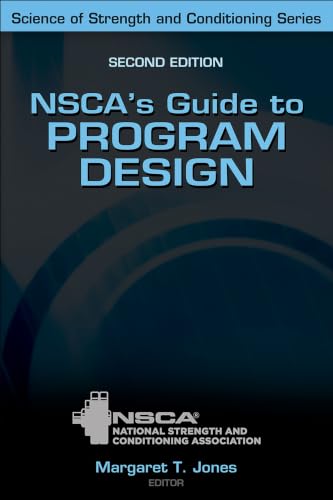

NSCA's guide to program design / National Strength and Conditioning Association, Margaret T. Jones, editor.
Idioma: Inglés Series Science of strength and conditioning seriesEditor: Champaign, Illinois : Human Kinetics, [2025]Edición: Second editionDescripción: vi, 385 pages : illustrations ; 26 cmTipo de contenido:- text
- unmediated
- volume
- 9781718220546
- Guide to program design
- 613.7 23/eng/20240511
- GV711.5 .N37 2025
| Imagen de cubierta | Tipo de ítem | Biblioteca actual | Biblioteca de origen | Colección | Ubicación en estantería | Signatura topográfica | Materiales especificados | Info Vol | URL | Copia número | Estado | Notas | Fecha de vencimiento | Código de barras | Reserva de ítems | Prioridad de la cola de reserva de ejemplar | Reservas para cursos | |
|---|---|---|---|---|---|---|---|---|---|---|---|---|---|---|---|---|---|---|
| Referencia | Biblioteca Encarnación Valdés Sala de Referencia bev | R 613.7 N2771n2 (Navegar estantería(Abre debajo)) | Disponible | 80000002665993 |
Descripciones mejoradas de Syndetics:
NSCA's Guide to Program Design, Second Edition, is the definitive resource for designing scientifically based training programs. Developed by the National Strength and Conditioning Association (NSCA), the second edition provides the latest information and insights from the leading educators, practitioners, and researchers in the field.
Created for strength and conditioning professionals, educators, and candidates preparing for certification, NSCA's Guide to Program Design presents an evidence-based framework for athlete assessment strategies and training principles. This authoritative text moves beyond the simple template presentation of program design to help readers understand the reasons and procedures for sequencing training in a safe, sport-specific manner. In addition to programming for resistance training, the book also addresses how to design training programs for power, endurance, agility, and speed.
Straightforward and accessible, NSCA's Guide to Program Design details the considerations and challenges in developing a program for each key fitness component. It shows you how to begin the process of assessing athlete needs as well as how to select performance tests. Dynamic warm-up and static stretching protocols and exercises are addressed before moving into in-depth programming advice based on a performance goal. The final two chapters help you put it all together with a discussion of training integration, periodization, and implementation.
With sample workouts and training plans for athletes in a variety of sports, technique photos and instructions for select drills, and a sample annual training plan, you will be able to assemble effective and performance-enhancing training programs for all your athletes.
NSCA's Guide to Program Design is part of the Science of Strength and Conditioning series. Developed with the expertise of the National Strength and Conditioning Association (NSCA), this series of texts provides the guidelines for converting scientific research into practical application. The series covers topics such as tests and assessments, program design, and nutrition.
Earn continuing education credits/units! A continuing education exam that uses this book is also available. It may be purchased separately or as part of a package that includes both the book and exam.
Includes bibliographical references and index.
Chapter 1: Athlete needs analysis / Jennifer B. Fields, PhD, CSCS\QQME, Andrew R. Jagim, PhD, CSCS, Margaret T. Jones, PhD, CSCS, FNSCA -- Chapter 2: Athlete assessment and performance evaluation / Jennifer B. Fields, PhD, CSCS, Andrew R. Jagim, PhD, CSCS, Margaret T. Jones, PhD, CSCS, FNSCA -- Chapter 3: Movement preparation / David J. Heikkinen, N. Travis Triplett -- Chapter 4: Resistance training / Nicholas A. Ratamess, PhD, CSCS,*D, FNSCA -- Chapter 5: Power training / Robert U. Newton, PhD, CSCS,*D, FNSCA, William J. Kraemer, PhD, CSCS,*D, FNSCA, Disa L. Hatfield, PhD, CSCS,*D, Tunde K. Szivak, PhD, CSCS,*D, TSAC-F -- Chapter 6: Anaerobic conditioning / Sean Collins -- Chapter 7: Aerobic conditioning / Ludmila Cosio-Lima, PhD, CSCS,*D, USAW, Nicole C. Dabbs, PhD, FNSCA -- Chapter 8: Agility training / Robert G. Lockie, PhD, J. Jay Dawes, PhD, CSCS,*D -- Chapter 9: Speed training / Chelscie K. Greene, Joanette M. Gonzalez, Andrew J. Galpin -- Chapter 10: Anatomical core training / Ronald L. Snarr, Lawrence W. Judge -- Chapter 11: Training integration and periodization / G. Gregory Haff, PhD, ASCC, CSCS,*D, FNSCA, Erin E. Haff, MA -- Chapter 12: Training program integration and implementation / Corey Dulak-Sigler, MS, CSCS, USAW, Michael G. Miller, PhD, EdD, CSCS, FNSCA.
"This book is a dependable and practical resource for guiding the design of scientifically based training programs written for the strength and conditioning professional and educator. The chapters are structured to provide an evidence-based framework for the practical application of well-established athlete assessment strategies and training principles. It details the process of conducting an athlete needs analysis as well as athlete assessment and performance evaluation relative to such needs. Movement preparation, the principles of program design for various types of training, and how to design complete and effective training programs are addressed"--
Tabla de contenidos provista por Syndetics
- Introduction(vi)
- Chapter 1 Athlete Needs Analysis(1)
- Metabolic Demands of the Sport(2)
- Biomechanical Demands of the Sport(6)
- Injury Risks of the Sport(12)
- Integrating the Needs Analysis(18)
- Chapter 2 Athlete Assessment and Performance Evaluation(23)
- Factors That Affect Performance Testing(24)
- Test Selection(26)
- Practical Considerations for Test Administration(28)
- Tests for Needs Assessment and Program Evaluation(32)
- Chapter 3 Movement Preparation(53)
- Warm-Up Concepts(53)
- Static Stretching and Performance(54)
- Balance and Stability Training(56)
- Dynamic Warm-Up and Performance(57)
- Developing a Dynamic Warm-Up Protocol(62)
- Dynamic Warm-Up Exercises(64)
- Chapter 4 Resistance Training(79)
- Adaptations to Resistance Training(80)
- Customizing Resistance Training Programs(82)
- Developing Resistance Training Programs(86)
- Progression(113)
- Chapters 5 Power Training(119)
- Adaptations to Power Training(120)
- Factors Contributing to Power Output(122)
- Targeting Power Development(127)
- Methods for Power Training(133)
- Selecting Load and Velocity for Power Development(142)
- Chapters 6 Anaerobic Conditioning(151)
- Adaptations to Anaerobic Training(151)
- Developing Anaerobic Conditioning Programs(156)
- Methods for Anaerobic Training(158)
- Chapter 7 Aerobic Conditioning(163)
- Adaptations to Aerobic Training(164)
- Factors Contributing to Aerobic Endurance(168)
- Developing Aerobic Training Programs(171)
- Methods for Aerobic Training(176)
- Chapter 8 Agility Training(181)
- Factors Contributing to Agility(182)
- Agility Training Considerations(183)
- Developing Agility Training Programs(186)
- Methods for Agility Training(189)
- Chapter 9 Speed Training(205)
- Adaptations to Speed Training(205)
- Factors Contributing to Speed Training(208)
- Developing Speed Training Programs(209)
- Methods for Speed Training(214)
- Chapter 10 Anatomical Core Training(231)
- Facts and Fallacies of Core Training(232)
- Categories of Core Exercises(234)
- Developing Core Training Programs(235)
- Methods for Core Training(240)
- Chapter 11 Training Integration and Periodization(253)
- Goals of Periodization(255)
- General Principles of Periodization(255)
- Understanding the Periodization Process(261)
- Hierarchical Structures Contained in a Periodized Training Plan(264)
- Sequencing and Integration of the Training Process(279)
- Practical Guidelines(289)
- Chapter 12 Training Program Integration and Implementation(305)
- Programming Strategies(306)
- Prioritizing Programming Theories(309)
- Detraining(312)
- Programming Examples(312)
- References(327)
- Index(366)
- About the Editor(375)
- About the NSCA(376)
- About the Contributors(377)
- Contributors to the Previous Edition(385)
- Earn Continuing Education Credits/Units(386)