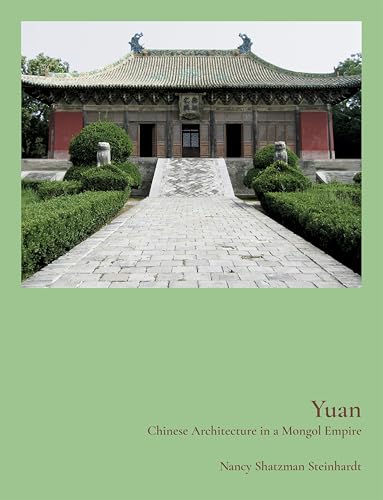

Yuan : Chinese architecture in a Mongol empire / Nancy Shatzman Steinhardt. txt
Editor: Princeton : Princeton University Press, 2024Descripción: x, 322 p. : ill. ; col. ; maps ; plans ; genealogical table ; 30 cmTipo de contenido:- text
- still image
- unmediated
- volume
- 9780691240169
- 0691240167
- Chinese architecture in a Mongol empire
- 960-1368
- Architecture -- China -- History -- Song-Yuan dynasties, 960-1368
- Architecture, Chinese
- Architecture -- Song-Yuan dynasties
- Yuan Dynasty (China)
- ARCHITECTURE / History / General
- Confucian temple
- History
- Illustrated works
- Mongolia and eastern Russia
- Muslim Burial
- Shangdu
- Spaces of the Empire
- Temple to Mani
- Tibetan Pagodas
- Architecture of death
- Tugh Temur
- Architecture of death
- Arzhai
- Bricks
- China Monasteries for Muslim Prayer
- Cloud Terrace at Juyong Pass
- Daidu
- East Asian Archaeologists
- East of China
- Feilaifeng
- Gansu
- Guangsheng Monastery
- Halls to the Gods
- Japan's Buddhist Monasteries
- Longshan
- Metal
- Mongol Century
- Mongol Patrons
- North China
- Observatory in Dengfeng
- Rock-Carved Architecture
- South of Mongolia
- Southeastern China
- Southwestern China
- Stone
- Three Pavilions
- Tranquility Hall
- Two Towers
- Visons of Empire
- Walled Enclosures
- Yonglegong
- Yuan Buildings
- Yuan Wooden Halls
- Yuan-Period
- China -- History -- Yuan dynasty, 1260-1368
- China
- 23 720.9510902
- NA1543.4 S74 2024
| Imagen de cubierta | Tipo de ítem | Biblioteca actual | Biblioteca de origen | Colección | Ubicación en estantería | Signatura topográfica | Materiales especificados | Info Vol | URL | Copia número | Estado | Notas | Fecha de vencimiento | Código de barras | Reserva de ítems | Prioridad de la cola de reserva de ejemplar | Reservas para cursos | |
|---|---|---|---|---|---|---|---|---|---|---|---|---|---|---|---|---|---|---|
| Libro Col. General CARIBET | CARIBET Biblioteca Arquitectura Colección General CARIBET | General NA1543.4 S74 2024 (Navegar estantería(Abre debajo)) | 1 | Disponible | 91000000750208 |
Descripciones mejoradas de Syndetics:
A monumental illustrated survey of the architecture of thirteenth- and fourteenth-century China
The Yuan dynasty endured for a century, leaving behind an architectural legacy without equal, from palaces, temples, and pagodas to pavilions, tombs, and stages. With a history enlivened by the likes of Khubilai Khan and Marco Polo, this spectacular empire spanned the breadth of China and far, far beyond, but its rulers were Mongols. Yuan presents the first comprehensive study in English of the architecture of China under Mongol rule.
In this richly illustrated book, Nancy Shatzman Steinhardt looks at cities such as the legendary Shangdu--inspiration for Samuel Taylor Coleridge's Xanadu--as well as the architecture the Mongols encountered on their routes of conquest. She examines the buildings and monuments of diverse faiths in China during the period, from Buddhist and Daoist to Confucian, Islamic, and Christian, as well as unusual structures such as observatories, archways, stone and metal buildings, and sarcophaguses. Steinhardt dispels long-standing views of the Mongols as destroyers of cities and architecture across Asia, showing how the khans and their families built more than they tore down. She demonstrates that the stipulations of the Chinese building system were powerful and resilient enough to guide the architecture that rose under Mongolian rule.
Drawing on Steinhardt's groundbreaking textual research in numerous languages as well as her pioneering fieldwork at sites across East Asia, Yuan will become the standard reference on this critical period of cultural and artistic exchange.
Includes bibliographical references (pages 267-305) and index.
XI Family tree of Chinggis Khan --
2 Introduction: Mongol Lords, Chinese Architecture Visions of Empire --
10 Chapter One: Wall-Enclosed Spaces --
Spaces of the Empire: Envisioned, Political, Seasonal, Pleasurable --
Four Capitals --
Walled Enclosures before Khubilai --
Mongolia and Eastern Russia --
South of Mongolia --
66 Chapter Two: The Century before the Mongol Century --
Jin --
Song --
104 Chapter Three: Official Yuan Construction --
Virtuous Tranquility Hall --
Observatory in Dengfeng --
Cloud Terrace at Juyong Pass --
Ren Renfa's Sluice --
Three Pavilions --
Two Towers --
116 Chapter Four: Halls to the Gods and of the Populace --
Yonglegong --
Guangsheng Monastery --
Hancheng --
More Yuan Buildings in North China --
Yuan Buildings in Southeastern China --
Yuan Buildings in Southwestern China --
Yuan Wooden Halls Summarized --
Stone, Metal, and Brick --
162 Chapter Five: Architecture of Death, Private Life, and Popular Life --
Architecture of Death --
Architecture of Private Life --
Stages --
Gardens --
188 Chapter Six: Muslim, Tibetan Buddhist, Manichaean, and Christian Architecture --
Chinese Monasteries for Muslim Prayer --
Muslim Burial in Yuan China --
Tibetan Pagodas in Chinese Monasteries --
Temple to Mani --
Churches --
210 Chapter Seven: Rock-Carved Architecture and Freestanding Stone --
Longshan --
Feilaifeng --
Baosheng Monastery --
Arzhai and Gansu --
Rock-Carved Architecture --
in Northwestern Iran --
Yangqunmiao --
224 Chapter Eight: Yuan-Period Construction East of China
Koryo Architecture --
Japan's Buddhist Monasteries --
232 Conclusion: A Revisionist History: Chinese Architecture, Mongol Patrons, European Observers, East Asian Archaeologists --
236 Notes --
267 Bibliography --
306 Character Glossary --
315 Photo and Illustration Credits --
316 Index--
A monumental illustrated survey of the architecture of thirteenth- and fourteenth-century ChinaThe Yuan dynasty endured for a century, leaving behind an architectural legacy without equal, from palaces, temples, and pagodas to pavilions, tombs, and stages. With a history enlivened by the likes of Khubilai Khan and Marco Polo, this spectacular empire spanned the breadth of China and far, far beyond, but its rulers were Mongols. Yuan presents the first comprehensive study in English of the architecture of China under Mongol rule.In this richly illustrated book, Nancy Shatzman Steinhardt looks at cities such as the legendary Shangdu--inspiration for Samuel Taylor Coleridge's Xanadu--as well as the architecture the Mongols encountered on their routes of conquest. She examines the buildings and monuments of diverse faiths in China during the period, from Buddhist and Daoist to Confucian, Islamic, and Christian, as well as unusual structures such as observatories, archways, stone and metal buildings, and sarcophaguses. Steinhardt dispels long-standing views of the Mongols as destroyers of cities and architecture across Asia, showing how the khans and their families built more than they tore down. She demonstrates that the stipulations of the Chinese building system were powerful and resilient enough to guide the architecture that rose under Mongolian rule.Drawing on Steinhardt's groundbreaking textual research in numerous languages as well as her pioneering fieldwork at sites across East Asia, Yuan will become the standard reference on this critical period of cultural and artistic exchange.
Tabla de contenidos provista por Syndetics
- Preface(viii)
- Family Tree of Chinggis Khan(xi)
- Introduction: Mongol Lords, Chinese Architecture, Visions of Empire
- Chapter 1 Wall-Enclosed Spaces(10)
- Spaces of the Empire: Envisioned, Political, Seasonal, Pleasurable
- Four Capitals
- Walled Enclosures before Khubilai
- Mongolia and Eastern Russia
- South of Mongolia
- Chapter 2 The Century before the Mongol Century(66)
- Jin
- Song
- Chapter 3 Official Yuan Construction(104)
- Virtuous Tranquility Hall
- Observatory in Dengfeng
- Cloud Terrace at Juyong Pass
- Ren Renfa's Sluice
- Three Pavilions
- Two Towers
- Chapter 4 Halls to the Gods and of the Populace(116)
- Yonglegong
- Guangsheng Monastery
- Hancheng
- More Yuan Buildings in North China
- Yuan Buildings in Southeastern China
- Yuan Buildings in Southwestern China
- Yuan Wooden Halls Summarized
- Stone, Metal, and Brick
- Chapter 5 Architecture of Death, Private Life, and Popular Life(162)
- Architecture or Death
- Architecture of Private Life
- Stages
- Gardens
- Chapter 6 Muslim, Tibetan Buddhist, Manichaean, and Christian Architecture(188)
- Chinese Monasteries for Muslim Prayer
- Muslim Burial in Yuan China
- Tibetan Pagodas in Chinese Monasteries
- Temple to Mani
- Churches
- Chapter 7 Rock-Carved Architecture and Freestanding Stone(210)
- Longshan
- Feilaifeng
- Baosheng Monastery
- Arzhai and Gansu
- Rock-Carved Architecture in Northwestern Iran
- Yangqunmiao
- Chapter 8 Yuan-Period Construction East of China(224)
- Koryo Architecture
- Japan's Buddhist Monasteries
- Conclusion: A Revisionist History: Chinese Architecture, Mongol Patrons, European Observers, East Asian Archaeologists(232)
- Notes(236)
- Bibliography(267)
- Character Glossary(306)
- Photo and Illustration Credits(315)
- Index(316)