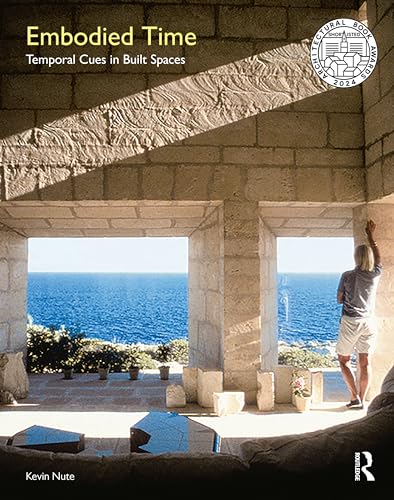

Embodied time : temporal cues in built places / Kevin Nute. txt
Editor: Abingdon, Oxon : Routledge, 2024Descripción: 197 p. : ill. ; plans ; col. ; 29 cmTipo de contenido:- text
- unmediated
- volume
- 9781138390706
- 9781138390713
- 23/eng/20231206 720.1
- NA2543.T56 N88 2024
| Imagen de cubierta | Tipo de ítem | Biblioteca actual | Biblioteca de origen | Colección | Ubicación en estantería | Signatura topográfica | Materiales especificados | Info Vol | URL | Copia número | Estado | Notas | Fecha de vencimiento | Código de barras | Reserva de ítems | Prioridad de la cola de reserva de ejemplar | Reservas para cursos | |
|---|---|---|---|---|---|---|---|---|---|---|---|---|---|---|---|---|---|---|
| Libro Col. General CARIBET | CARIBET Biblioteca Arquitectura Colección General CARIBET | General NA2543.T56 N88 2024 (Navegar estantería(Abre debajo)) | 1 | Disponible | 91000000074468 |
Descripciones mejoradas de Syndetics:
***Shortlisted for the Architectural Book Awards 2024***
The word time occurs more than seven times as often as space in written English, yet in the design of the indoor environments where we now spend most of our lives these priorities are typically reversed, with time often being little more than an afterthought. Embodied Time endeavors to correct that imbalance by demonstrating how built environments can be designed to evoke positive recollections of the past, interactions with the present, and anticipations of the future.
Includes bibliographical references and index.
Foreword Marc Wittmann viii --
Preface Kevin Nute xiv --
Space and Time 2 --
Space as a primary means of understanding time. Critical differences between the two. Prioritization of time in everyday life, and space in building design. Time as a vital personal resource, and its passage as a cause of existential angst. The physically present as the domain where the imagined past and future meet. --
Recollecting 8 --
Built environments as records of past events. History contrasted with memory, and the modernist rejection of both. Nostalgia and the re-creation of familiar places and occasions. Unconscious memories of environmental archetypes. Mementos and their inverse the memory palace. Material surfaces as records of making, use, and the passage of time. Links to the past in built environments as sources of identity, security and indirect experience. --
Interacting 64 --
Built spaces as venues for current events. The present as the domain of physical interaction with the world. The theoretical "punctual present" contrasted with the experience of "now." The notion of the eternal as a refuge from time. Bodily interactions with built environments as sources of mental presence and existential affirmation. --
Anticipating 88 --
Built environments as indicators of potential future events. Anticipatory cues, including visible resources, signs of readiness, and visual prospects, as sources of opportunity, confidence and optimism. --
Temporal Spaces 114 --
Case study temporal analyses. Generally applicable temporal design strategies and their benefits. Temporal cues as potential environmental remedies for the symptoms of memory loss, attention deficit and depression. --
Temporal Essays 152 --
Wind-Generated Movement as a Means to Presence in Indoor Environments 153 --
Looking Forward to the Future: Visual Prospects and Optimism 163 --
Bibliography 176 --
Image Credits 188 --
Index 192 --
"The word time occurs more than seven times as often as space in written English, yet in the design of the indoor environments where we now spend most of our lives, these priorities are typically reversed, with time often being little more than an afterthought. Embodied Time endeavors to correct that imbalance by demonstrating how built environments can be designed to evoke positive recollections of the past, interactions with the present, and anticipations of the future"--
Notas de autor provistas por Syndetics
Kevin Nute is a professor of architecture at the University of Hawai'i at Mānoa. His other books include The Constructed Other (2021), This Here Now (2020), Naturally Animated Architecture (2018), Place, Time and Being in Japanese Architecture (2004), and Frank Lloyd Wright and Japan (1993).