Imagen de Amazon.com

Portada de Syndetics
Imagen de OpenLibrary
| Imagen de cubierta | Tipo de ítem | Biblioteca actual | Biblioteca de origen | Colección | Ubicación en estantería | Signatura topográfica | Materiales especificados | Info Vol | URL | Copia número | Estado | Notas | Fecha de vencimiento | Código de barras | Reserva de ítems | Prioridad de la cola de reserva de ejemplar | Reservas para cursos | |
|---|---|---|---|---|---|---|---|---|---|---|---|---|---|---|---|---|---|---|
| Libro | Biblioteca Mons. Iñaki Mallona (Arecibo) | Ej. | Disponible |
Total de reservas: 0
Descripciones mejoradas de Syndetics:
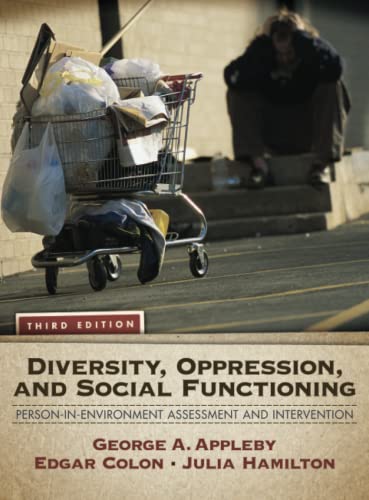
Using the "Person-In-Environment" (PIE) theoretical framework, this diversity practice text teaches students how to think about their personal reactions and assumptions about diversity and what constitutes cultural competent "assessment" and "intervention" when working with a broad range of diverse populations.
The diverse populations presented in the text are described within an ecological, strengths perspective. The authors' thesis is that, in order to work effectively with diverse populations, it is necessary to take into consideration the complex dynamics of social functioning and social oppression. The "Person-In-Environment" theoretical framework provides a basis for analysis of the social, economic, and political reality of these diverse populations. The text presents an affirmative practice approach and builds on the available diversity practice literature. This text can be used in diversity practice courses, courses on working with oppressed populations, and other practice courses (such as advanced practice) that focus on diversity issues.Tabla de contenidos provista por Syndetics
- 1 Framework for Practice with Diverse and Oppressed Clients
- Theory for Practice(p. 5)
- Ecological Framework for Practice(p. 6)
- Diversity and Strengths Perspective(p. 9)
- Value Base for Practice(p. 10)
- Assessment and Intervention Framework(p. 10)
- Conclusion(p. 13)
- References(p. 14)
- 2 Culture, Social Class, and Social Identity Development
- Culture(p. 18)
- Norms(p. 18)
- Values(p. 20)
- Language and Culture(p. 21)
- Cultural Change(p. 23)
- Subcultures(p. 25)
- Social Class(p. 26)
- Education and Social Class(p. 29)
- Social Identity Development(p. 30)
- Social Categorization(p. 30)
- Social Comparison(p. 31)
- Person-in-Environment Classification System(p. 32)
- Conclusion(p. 34)
- References(p. 35)
- 3 Ethnic Identity Development(p. 36)
- Western Models of Identity Development(p. 36)
- Erik Erikson(p. 36)
- James Marcia(p. 38)
- Critique of Western Psychological Theories(p. 40)
- Ethnic Identity(p. 41)
- References(p. 45)
- 4 Risk and Resilience: Impact of Early Trauma on Psychological and Physiological Functioning(p. 47)
- An Ecological Framework: the Person-in-Environment System(p. 47)
- Psychological and Physiological Impacts of Early Trauma(p. 48)
- The Adverse Childhood Experiences Study(p. 49)
- The Stress Response: How Can Stress Translate into Illness?(p. 51)
- Neurobiology of Early Trauma: Understanding the Mind-Body Connection(p. 52)
- Coping Mechanisms and Resilience(p. 55)
- Assessing the Brain-Behavior Connection: Implications for Client Resiliency(p. 57)
- Conclusion(p. 57)
- References(p. 59)
- 5 Dynamics of Oppression and Discrimination(p. 61)
- Oppression and Power(p. 61)
- Sexual Oppression(p. 64)
- Racial Oppression(p. 66)
- Discrimination(p. 66)
- Diversity(p. 67)
- Identity(p. 69)
- Stigma and Stigma Management(p. 70)
- Effects of Stigmatization(p. 71)
- Conclusion(p. 75)
- References(p. 76)
- 6 African-Americans: Consequences of Discrimination(p. 78)
- The African American Community: A Socioeconomic Profile(p. 79)
- Race and Developmental Process(p. 79)
- African American Family Values and Patterns(p. 81)
- The Role of the African American Churches(p. 83)
- Educational Functioning and Achievement(p. 83)
- Effects of Interethnic Interaction(p. 84)
- Ethnicity within the African American Community(p. 84)
- Assessment and the Social Worker's Role(p. 85)
- Case Study(p. 86)
- Conclusion(p. 88)
- References(p. 88)
- 7 Women and Sexist Oppression(p. 90)
- Case Study(p. 92)
- The PIE Classification System for Problems in Social Functioning(p. 93)
- PIE Assessment of Jean(p. 94)
- The Empowerment Framework(p. 95)
- Male Models of Structured Reality(p. 96)
- Madness as a Feminist Construct(p. 98)
- Macro-Analysis: Feminist Epistemologies and the Nature of Knowledge Making(p. 99)
- What Do We Mean by the Oppression of Women?(p. 102)
- Feminization of Poverty(p. 103)
- Conclusion(p. 105)
- Helpful Websites(p. 105)
- References(p. 106)
- 8 A Multi-diversity Perspective on Latinos: Issues of Oppression and Social Functioning(p. 108)
- Who is the Latino/Latina?(p. 108)
- Socio-demographic Profile(p. 110)
- Racial and Ethnic Identity(p. 110)
- Poverty and Social Status(p. 110)
- Labor Force Participation(p. 111)
- Latino Immigration to the United States(p. 111)
- Mexicans(p. 111)
- Puerto Ricans(p. 112)
- Cubans(p. 112)
- Central and South Americans(p. 113)
- Dominicans(p. 113)
- Latino Normative and Cultural Values(p. 114)
- Respect, Dignity, and Personalism(p. 114)
- Help Seeking Behaviors(p. 115)
- Latino Family(p. 115)
- Gender Roles(p. 116)
- Family Support System(p. 116)
- A PIE Perspective of Working with Issues of Oppression and Social Functioning(p. 117)
- Assessing for Social Functioning Problems(p. 117)
- Assessing for Mental Health Problems(p. 118)
- Case Illustration(p. 121)
- Factor I: Problems in Social Functioning(p. 121)
- Factor II: Problems in the Environment(p. 121)
- Conclusion(p. 122)
- References(p. 122)
- 9 Native Americans: Oppression and Social Work Practice(p. 126)
- History of Racism(p. 127)
- Present Day: Social and Health Problems(p. 129)
- Mental Health(p. 130)
- Family, Beliefs, and Rituals(p. 131)
- Values and Traditions(p. 132)
- Spiritual Traditions of Native Americans(p. 133)
- Practice Implications(p. 133)
- Intervention(p. 135)
- The PIE System and Native Americans(p. 136)
- Case Study(p. 137)
- PIE Assessment of Mary(p. 138)
- Conclusion(p. 141)
- References(p. 142)
- 10 Asian Americans: Ethnocentrism and Discrimination(p. 145)
- Immigration and Resettlement Patterns and Consequences(p. 147)
- Chinese(p. 147)
- Japanese(p. 148)
- Filipinos(p. 149)
- Koreans and Asian Indians(p. 150)
- Southeast Asians(p. 150)
- Norms, Beliefs, and Cultural Stereotypes(p. 151)
- Common Beliefs(p. 152)
- Mental Health Problems and Treatment Seeking(p. 155)
- Implications for Social Work Practice(p. 156)
- Summary(p. 157)
- Case Study(p. 158)
- PIE Assessment of Mr.Yee(p. 158)
- Conclusion(p. 159)
- References(p. 159)
- 11 Lesbian, Gay, Bisexual, and Transgender People Confront Heterocentrism, Heterosexism, and Homophobia(p. 162)
- History(p. 166)
- Historical Oppression in Context(p. 170)
- Definitions(p. 170)
- The Roots of Oppression(p. 173)
- Gender Ideology(p. 173)
- Heterosexual Privilege(p. 174)
- Religion(p. 175)
- Psychiatry/Psychology(p. 176)
- Law and Policy(p. 177)
- Violence and Gay Bashing(p. 178)
- Internalized Homophobia(p. 180)
- Conclusion(p. 181)
- References(p. 182)
- 12 Ableism: Social Work Practice with Physically Disabled Individuals(p. 186)
- Historical Overview(p. 188)
- Bioethics(p. 190)
- The Nature of Disability(p. 191)
- Functional Disability versus Socially Imposed Disability(p. 191)
- Early Age of Onset(p. 193)
- Later Age of Onset(p. 196)
- Vulnerabilities and Risk Factors versus Resilience and Protective Factors(p. 197)
- Person-in-Environment Assessment(p. 201)
- Case Study(p. 201)
- The Social Worker's Role(p. 202)
- Intervention(p. 203)
- Conclusion(p. 203)
- References(p. 204)
- 13 Ableism: Mentally and Emotionally Challenged People(p. 206)
- Theoretical Framework(p. 207)
- Mental Disorders as Social Roles(p. 207)
- Self-Concept(p. 212)
- Social Roles/Relationships and Psychiatric Disability(p. 215)
- Case Study(p. 217)
- Theories of Practice: Person-in-Environment Analysis(p. 219)
- PIE Assessment of Steve(p. 220)
- Conclusion(p. 220)
- References(p. 221)
- 14 Social Work Practice with Immigrants(p. 224)
- The Contributions of Social Work to Immigration(p. 224)
- Demographics(p. 225)
- The Outsider(p. 227)
- The Circumstances(p. 228)
- Acculturation versus Adaptation: A Framework(p. 229)
- PIE Analysis(p. 230)
- Case Study 1(p. 231)
- PIE Analysis of Alicia(p. 232)
- Case Study 2(p. 233)
- PIE Analysis of Muny(p. 234)
- Conclusion(p. 235)
- References(p. 236)
- 15 Lookism: Bias Based on Appearance(p. 237)
- Beauty Is and Beauty Does(p. 238)
- Appearance Discrimination in the Workplace(p. 239)
- Consequences of Appearance Discrimination on a Personal Level(p. 240)
- The Law(p. 240)
- Impact of Medical Advances on Appearance Discrimination(p. 242)
- Psychosocial Consequences for the Individual(p. 242)
- Case Study(p. 242)
- PIE Assessment of Patty(p. 243)
- Conclusion(p. 245)
- References(p. 246)
- 16 The "Ghetto Fabulous" Persona Among African American and Latino Youth: Issues of Social Oppression and Social Functioning(p. 247)
- Social Functioning Issues in Inner City Communities(p. 250)
- A Person in Environment for Social Work Practice with African American and Latino Urban Youth(p. 252)
- Case Study(p. 254)
- Conclusion(p. 256)
- References(p. 257)
- 17 Affirmative Practice with People Who Are Culturally Diverse and Oppressed(p. 259)
- A Paradigm for Affirmative Practice(p. 259)
- Culture and Diversity: A Transactional View(p. 259)
- The Power of Personal Experience(p. 260)
- Diversity and Worldviews(p. 260)
- Interrelatedness and Interconnectedness of Human Experience(p. 262)
- Interlocking Systems of Oppression(p. 263)
- Practice Implications: Women(p. 263)
- Practice Implications: Gays and Lesbians(p. 264)
- Practice Implications: Latinos(p. 266)
- Practice Implications: African Americans(p. 267)
- Practice Implications: Native Americans(p. 268)
- Practice Implications: the Chronically Mentally Ill and the Physically Challenged(p. 268)
- Micro Systems Intervention(p. 269)
- Mezzo Intervention(p. 271)
- Cultural Competence and the Profession(p. 272)
- Macro Intervention(p. 272)
- Conclusion(p. 273)
- References(p. 274)
- Appendix A PIE Assessment Forms for Factors I and II
Notas de autor provistas por Syndetics
Dr. Edgar Colon is a Professor of Social Work at Southern Connecticut State University. Dr. Colon received an Master of Science in Social Welfare from Columbia University and a Doctorate in Social Welfare from the City University of New York Graduate Center at the Hunter College School of Social Work. He has served on Faculty of Social Work of several New York City colleges and universities which include Fordham University, Hunter College and The State University of New York at Stony Brook, to name a few.Dr. Colon brings to teaching a total of twenty-one years teaching and practice experience, in the areas of social welfare management, social policy, human behavior, social oppression and diversity issues, and clinical practice with substance abuse problems. His professional areas of scholarly interest include:health and mental health with particular focus on clinical practice, program design, planning and organization development in ethnic minority communities.