
| Imagen de cubierta | Tipo de ítem | Biblioteca actual | Biblioteca de origen | Colección | Ubicación en estantería | Signatura topográfica | Materiales especificados | Info Vol | URL | Copia número | Estado | Notas | Fecha de vencimiento | Código de barras | Reserva de ítems | Prioridad de la cola de reserva de ejemplar | Reservas para cursos | |
|---|---|---|---|---|---|---|---|---|---|---|---|---|---|---|---|---|---|---|
| Libro | Biblioteca Mons. Iñaki Mallona (Arecibo) | Ej. | Disponible |
Descripciones mejoradas de Syndetics:
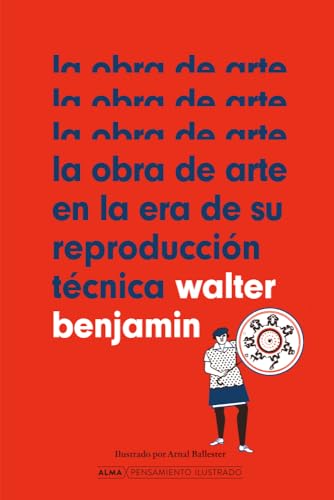
En la obra de Walter Benjamin, fundamental para comprender el siglo ¬¬, destaca esta breve pero contundente reflexión en torno al objeto artístico y la comunicación de masas. Sostiene aquí el pensador que, con las nuevas posibilidades técnicas para su reproducción, el arte puede transformarse en un poderoso instrumento para la revolución política. Una innovación que, a la vez, hará que la obra pierda su carácter único, el «aura», y abrirá, así, una nueva dimensión para el objeto artístico. Un texto fundamental en torno al arte, la reflexión estética y la filosofía de la imagen.
In the work of Walter Benjamin--essential for understanding the 20th century--this brief yet powerful reflection on the art object and mass communication stands out. Here, the thinker argues that with new technical possibilities for reproduction, art can become a powerful tool for political revolution. At the same time, this innovation causes the artwork to lose its uniqueness--its "aura"--thus opening a new dimension for the artistic object. A key text on art, aesthetic reflection, and the philosophy of the image.
Notas de autor provistas por Syndetics
Filósofo, crítico literario, traductor y ensayista alemán de origen judío. Su pensamiento recoge elementos del Idealismo alemán o el Romanticismo, del materialismo histórico y del misticismo judío que le permiten hacer contribuciones perdurables e influyentes en la teoría estética y el marxismo occidental. Su pensamiento se asocia con la Escuela de Fráncfort.Walter Benjamin is a German philosopher, literary critic, translator, and essayist of Jewish origin. His thought integrates elements of German Idealism and Romanticism, historical materialism, and Jewish mysticism, enabling him to make lasting and influential contributions to aesthetic theory and Western Marxism. His work is closely associated with the Frankfurt School.