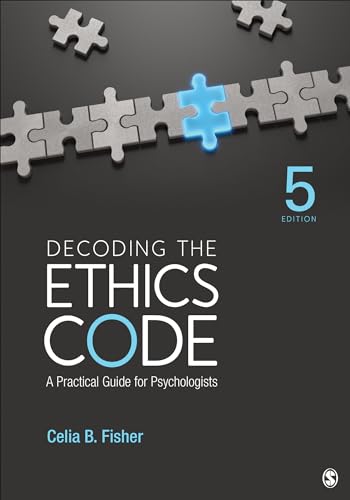

Decoding the ethics code : a practical guide for psychologists / Celia B. Fisher, Center for Ethics Education, Fordham University.
Editor: Los Angeles : SAGE, [2023]Edición: Fifth editionDescripción: xxxii, 577 pages ; 26 cmTipo de contenido:- text
- unmediated
- volume
- 9781544362717
- 174/.915 23
- BF76.4 .F57 2023
| Imagen de cubierta | Tipo de ítem | Biblioteca actual | Biblioteca de origen | Colección | Ubicación en estantería | Signatura topográfica | Materiales especificados | Info Vol | URL | Copia número | Estado | Notas | Fecha de vencimiento | Código de barras | Reserva de ítems | Prioridad de la cola de reserva de ejemplar | Reservas para cursos | |
|---|---|---|---|---|---|---|---|---|---|---|---|---|---|---|---|---|---|---|
| Libro | Biblioteca de Mayagüez Colección General mb | BF76.4 .F57 2023 (Navegar estantería(Abre debajo)) | c. 1 | Disponible | 50000003297800 |
Descripciones mejoradas de Syndetics:
Revised to reflect the latest edition of the American Psychological Association's (APA) Ethical Principles of Psychologists and Code of Conduct, Celia B. Fisher's acclaimed Decoding the Ethics Code Fifth Edition explains and puts into practical perspective the format, choice of wording, aspirational principles, and enforceability of the code. Providing in-depth discussions of the foundation and application of each ethical standard to the broad spectrum of scientific, teaching, and professional roles of psychologists, this unique guide helps practitioners effectively use ethical principles and standards to morally conduct their work, avoid ethical violations, and, most importantly, preserve and protect the fundamental rights and welfare of those whom they serve. This edition covers crucial and timely topics, with new sections on the impact of the COVID-19 pandemic and strategies for applying the social justice and liberation psychology moral frameworks to ethical decision making; addressing personal biases and the prejudices of those with whom psychologists work; and healing and self-care for Black, Indigenous, and People of Color psychologists, students and trainees.
Includes bibliographical references (pages 515-566) and index.
Part I. Introduction and Background -- Chapter 1. A Code of Ethics for Psychology: How Did We Get Here? -- Chapter 2. The Ethics Code Introduction and Preamble, and Relationship to Enforcement and Law. What Do They Mean? -- Chapter 3. General Principles, Ethical Commitment and Virtues in Psychology -- Chapter 4. Ethical Theories and Ethical Decision Making --
Part II. Enforceable Standards -- Chapter 5. Standards for Resolving Ethical Issues -- Chapter 6. Standards on Competence -- Chapter 7. Standards on Human Relations -- Chapter 8. Standards on Privacy and Confidentiality -- Chapter 9. Standards on Advertising and Other Public Statements -- Chapter 10. Standards on Record Keeping and Fees -- Chapter 11. Standards on Education and Training -- Chapter 12. Standards on Research and Publication -- Chapter 13. Standards on Assessment -- Chapter 14. Standards on Therapy.
"Revised to reflect the current status of scientific and professional theory, practices, and debate across all facets of ethical decision making, this latest edition of Celia B. Fisher's acclaimed book demystifies the American Psychological Association's (APA) Ethical Principles of Psychologists and Code of Conduct. The Fifth Edition explains and puts into practical perspective the format, choice of wording, aspirational principles, and enforceability of the code. Providing in-depth discussions of the foundation and application of each ethical standard to the broad spectrum of scientific, teaching, and professional roles of psychologists, this unique guide helps practitioners effectively use ethical principles and standards to morally conduct their work activities, avoid ethical violations, and, most importantly, preserve and protect the fundamental rights and welfare of those whom they serve. This edition retains and expands upon the critical content of the previous editions to help readers apply the Ethics Code to contemporary social issues in the conduct of responsible psychological science and practice"-- Provided by publisher.