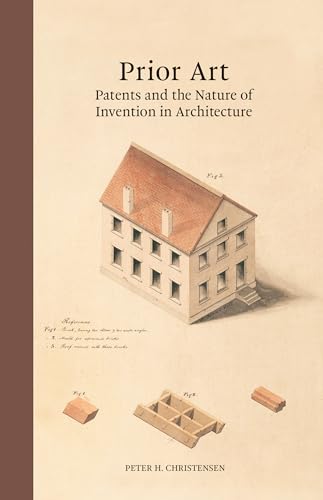

Prior art : patents and the nature of invention in architecture. / Peter H. Christensen. txt
Editor: Cambridge, Massachusetts : The MIT Press, 2023Descripción: 391p. : ill. ; plans ; 25cmTipo de contenido:- text
- unmediated
- volume
- 9780262048958
- 23/eng/20231115 720.2/7
- NA2755 C49 2023
| Imagen de cubierta | Tipo de ítem | Biblioteca actual | Biblioteca de origen | Colección | Ubicación en estantería | Signatura topográfica | Materiales especificados | Info Vol | URL | Copia número | Estado | Notas | Fecha de vencimiento | Código de barras | Reserva de ítems | Prioridad de la cola de reserva de ejemplar | Reservas para cursos | |
|---|---|---|---|---|---|---|---|---|---|---|---|---|---|---|---|---|---|---|
| Libro Col. General CARIBET | CARIBET Biblioteca Arquitectura Colección General CARIBET | General NA2755 C49 2023 (Navegar estantería(Abre debajo)) | 1 | Disponible | 91000000073833 |
Descripciones mejoradas de Syndetics:
A groundbreaking text on the history of the use of patents in architecture.
Although patents existed in Renaissance Italy and even in Confucian thought, it was not until the middle third of the nineteenth century that architects embraced the practice of patenting in significant numbers. Patents could ensure, as they did for architects' engineering brethren, the economic and cultural benefits afforded by exclusive intellectual property rights. But patent culture was never directly translatable to the field of architecture, which tended to negotiate issues of technological innovation in the context of the more abstract issues of artistic influence and formal expression. In Prior Art, scholar Peter Christensen offers the first full-scale monographic treatment of this complex relationship between art and invention.
Christensen's method, a site-oriented approach steeped in multinational and multilingual archival work, is geared toward unifying fractured global histories of architectural patents through the distinct union of architectural, cultural, and legal history. Prior Art offers a record of the marriage of intellectual property and architectural invention-a momentous, understudied, and still underutilized aspect of architectural culture in the nineteenth and twentieth centuries-and the ways in which it influenced how buildings are conceived, designed, engineered, constructed, and promoted.
Includes bibliographical references and index.
Introduction 1 --
1 The Home 25 --
2 The Studio 67 --
3 The Corporate Lab 125 --
4 The Repository 167 --
5 The Patent Office 217 --
6 The Courtroom 255 --
7 The Commons 287 --
Coda 319 --
Acknowledgments 321 --
Notes 323 --
Bibliography 345 --
Image Credits 373 --
Index 375 --
"Prior Art offers the first ever history of the use of patents in architecture, spanning the period 1830 - 1996"--
Tabla de contenidos provista por Syndetics
- Introduction(1)
- 1 The Home(25)
- 2 The Studio(67)
- 3 The Corporate Lab(125)
- 4 The Repository(167)
- 5 The Patent Office(217)
- 6 The Courtroom(255)
- 7 The Commons(287)
- Coda(319)
- Acknowledgments(321)
- Notes(323)
- Bibliography(345)
- Image Credits(373)
- Index(375)