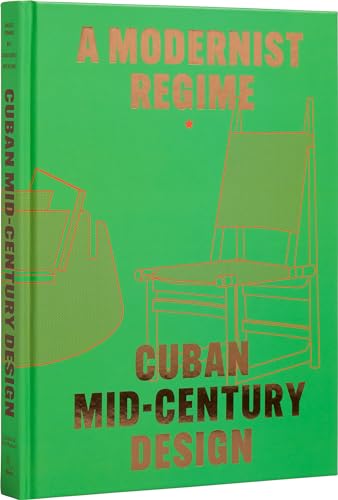

Cuban mid-century design : a modernist regime. / Abel González Fernández, Laura J. Mott, Andrew Satake Blauvelt, Andrew Ruys de Perez. txt
Editor: New York : Rizzoli Electa, 2024Descripción: 239 p. : ill. ; plans ; col. ; portraits ; photo. ; 31 cmTipo de contenido:- text
- unmediated
- volume
- 9780847831401
- 084783140X
- N6603.5.M63 M63 2024
| Imagen de cubierta | Tipo de ítem | Biblioteca actual | Biblioteca de origen | Colección | Ubicación en estantería | Signatura topográfica | Materiales especificados | Info Vol | URL | Copia número | Estado | Notas | Fecha de vencimiento | Código de barras | Reserva de ítems | Prioridad de la cola de reserva de ejemplar | Reservas para cursos | |
|---|---|---|---|---|---|---|---|---|---|---|---|---|---|---|---|---|---|---|
| Libro Col. General CARIBET | CARIBET Biblioteca Arquitectura Colección General CARIBET | General N6603.5.M63 M63 2024 (Navegar estantería(Abre debajo)) | 1 | Disponible | 91000000073452 |
Descripciones mejoradas de Syndetics:
The first book, accompanying a traveling exhibition, dedicated to Cuban mid-century design anchored by an under-acknowledged collection of graphic design, prototypes, and furniture, much of which has never been exhibited outside the island or published.
Primarily focused on the post-revolutionary era of Cuba from the late 1950s through the 1970s, this volumebrings together a prolific cohort of artists, designers, and architects that materialized the ideology of their time, and ultimately narrate the country's arc from revolutionary promise to authoritarian retrenchment.
Design and architecture played an important role in shaping the country's identity and cultural expression during this time period. Consisting of nearly 100 works, including approximately 50 pieces of furniture, the exhibition and accompanying catalogue features seminal objects of functional design, architectural renderings, speculative prototypes for a "design for all" ethos, and key examples of art and graphic design that contributed to the zeitgeist of the era. The book also includes several examples by contemporary Cuban artists and designers who explore how this post-revolutionary aesthetic survives today.
"Published on the occasion of the exhibition A Modernist Regime organized by Cranbook Art Museum, Bloomfield Hills, Michigan, and curated by Abel González Fernández and Laura J. Mott with Andrew Satake Blauvelt and Andrew Ruys de Perez"--Colophon
Catalog of an exhibition held at Cranbrook Art Museum, Bloomfield Hills, Michigan, June 15-September 22, 2024
7 Foreword: A Modernist Regime Andrew Satake Blauvelt --
13 Introduction and Acknowledgements Laura J. Mott --
16 A Modernist Regime: Cuban Mid-Century Design Abel González Fernández --
28 Clara Porset --
34 Contemporary Interior Decoration: Its Adaptation to the Tropics Clara Porset --
48 Gonzalo Córdoba: Dujo Muebles and EMPROVA --
92 Guamá --
Becoming International: Importing Modernism, Exporting Revolution Andrew Satake Blauvelt --
130 OSPAAAL --
156 Raúl Martínez: Quiet Queerness in the Revolution Roar --
162 Coppelia Ice Cream Parlor --
166 The National Schools of Art --
170 Expo 67 --
174 Félix Beltrán --
178 The Ministry of Ligth Industry and the Ten Million Ton Sugar Harvest --
184 Ministry of Ligth Industry Manifesto, 1971 --
186 The Ligth Industry Group: An interview with Reinaldo Togores and María Teresa Muñiz Riva --
208 Towards a Cuban Industrial Design, 1971 The Ministry of Ligth Industry --
212 To Design the Future: Conversations About Havana’s New Industrial Design School, 1971 --
222 La Casa Oruga (The Caterpillar House) --
228 Ahora o Nunca: A Contemporary Lens On Cuban Mid- Century Design Laura J. Mott --
239 Contributors --
"The first book, accompanying a traveling exhibition, dedicated to Cuban mid-century design anchored by an under-acknowledged collection of graphic design, prototypes, and furniture, much of which has never been exhibited outside the island or published. Primarily focused on the post-revolutionary era of Cuba from the late 1950s through the 1970s, this volume brings together a prolific cohort of artists, designers, and architects that materialized the ideology of their time, and ultimately narrate the country's arc from revolutionary promise to authoritarian retrenchment. Design and architecture played an important role in shaping the country's identity and cultural expression during this time period. Consisting of nearly 100 works, including approximately 50 pieces of furniture, the exhibition and accompanying catalogue features seminal objects of functional design, architectural renderings, speculative prototypes for a "design for all" ethos, and key examples of art and graphic design that contributed to the zeitgeist of the era. The book also includes several examples by contemporary Cuban artists and designers who explore how this post-revolutionary aesthetic survives today"--
"This exhibition is the first museum presentation on Cuban mid-century design anchored by an under-acknowledged collection of furniture and furnishings, examples of which have not been exhibited off the island. Focused on the decades immediately following the Cuban Revolution (1959), A Modernist Regime: Cuban Mid-Century Modern Design presents a small but prolific cohort of artists, designers, and architects who responded to the demands of a newly centralized economy, including the material constraints imposed by ensuing embargoes, popular demands for more equitable access to goods, and initial excitement about the role modern design could play in shaping a new society. The exhibition includes the pioneering work of designers such as Clara Porset and the furniture produced through the Dujo brand and its successor line EMPROVA, led by Gonzalo Córdoba and María Victoria Caignet. In the 1960s, Dujo continued the trajectory of pre-revolutionary mid-century design to produce unique pieces that featured indigenous cultural references and materials, such as local woods and fibers, and utilized the country's skilled carpentry workshops. By the mid-1970s, the EMPROVA line of furniture and furnishings utilized modular designs to help fulfill growing domestic demand. The exhibition also features designs and prototypes created by the Light Industry Group led by designers Reinaldo Togores, María Teresa Muníz Riva, Eva Bjõrkland, and Heriberto Duverger, who along with others explored contemporary furniture intended for mass production with an emphasis on modularity, utilizing new techniques and technologies, such as particleboard and flat pack assembly, embracing a design-for-all ethos. Rounding out the exhibition are a presentation of remarkable posters created for OSPAAAL (the Organization of Solidarity with the Peoples of Asia, Africa, and Latin America), as well as examples of modern architecture that emerged after the Revolution--which helped establish Cuba's presence on the international stage. Whether through architecture, graphic design, or furniture, A Modernist Regime: Cuban Mid-Century Design is a fascinating story of how modernism was transformed through its contact with capitalist, socialist, and communist economies by negotiating the local and the global; untangling fact from propaganda; and understanding the forces of innovation and limitation on design." -- Cranbrook Art Museum exhibition page
Notas de autor provistas por Syndetics
Abel González Fernández is a writer and curator based in New York. González Fernández has curated exhibitions in Havana, Berlin, Tokyo, and New York.Laura Mott is chief curator of Cranbrook Art Museum. An accomplished curator and lecturer, Mott joined Cranbrook in 2013 and has curated and co-curated more than 20 projects for the museum.
Andrew Satake Blauvelt is a curator, historian, critic, designer, and educator whose practice spans the fields of art and culture. He is director of Cranbrook Art Museum, leading the institution's transformation into a vibrant and diverse cultural destination and community partner.