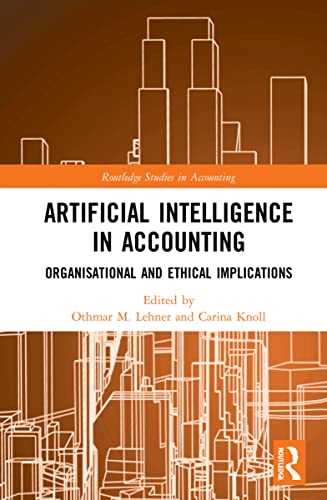

Artificial intelligence in accounting : organisational and ethical implications / Othmar M Lehner and Carina Knoll.
Series Routledge studies in accountingEditor: Abingdon, Oxon ; New York, NY : Routledge, 2023Descripción: 1 online resourceTipo de contenido:- text
- computer
- online resource
- 9781032055626
- 9781032055633
- 174/.9657
- HF5625.15 .L44 2023
| Imagen de cubierta | Tipo de ítem | Biblioteca actual | Biblioteca de origen | Colección | Ubicación en estantería | Signatura topográfica | Materiales especificados | Info Vol | URL | Copia número | Estado | Notas | Fecha de vencimiento | Código de barras | Reserva de ítems | Prioridad de la cola de reserva de ejemplar | Reservas para cursos | |
|---|---|---|---|---|---|---|---|---|---|---|---|---|---|---|---|---|---|---|
| Libro electrónico | Biblioteca de Mayagüez Acceso en línea | HF5625.15 .L44 2023 (Navegar estantería(Abre debajo)) | Ebook | Disponible | 50000003296612 |
Descripciones mejoradas de Syndetics:
Artificial intelligence (AI) and Big Data based applications in accounting and auditing have become pervasive in recent years. However, research on the societal implications of the widespread and partly unregulated use of AI and Big Data in several industries remains scarce despite salient and competing utopian and dystopian narratives.
This book focuses on the transformation of accounting and auditing based on AI and Big Data. It not only provides a thorough and critical overview of the status-quo and the reports surrounding these technologies, but it also presents a future outlook on the ethical and normative implications concerning opportunities, risks, and limits. The book discusses topics such as future, human-machine collaboration, cybernetic approaches to decision-making, and ethical guidelines for good corporate governance of AI-based algorithms and Big Data in accounting and auditing. It clarifies the issues surrounding the digital transformation in this arena, delineates its boundaries, and highlights the essential issues and debates within and concerning this rapidly developing field. The authors develop a range of analytic approaches to the subject, both appreciative and sceptical, and synthesise new theoretical constructs that make better sense of human-machine collaborations in accounting and auditing.
This book offers academics a variety of new research and theory building on digital accounting and auditing from and for accounting and auditing scholars, economists, organisations, and management academics and political and philosophical thinkers. Also, as a landmark work in a new area of current policy interest, it will engage regulators and policy makers, reflective practitioners, and media commentators through its authoritative contributions, editorial framing and discussion, and sector studies and cases.
Includes bibliographical references and index.
Part I. Introduction to Artificial Intelligence and Big Data in Accounting -- 1. Organizational and Ethical Perspectives -- 2. Artificial Intelligence-driven Accounting (AIDA): Future Insights and Organizational Implications -- Part II. Organizacional Implications -- 3. The “Human” Factor in a Digital Accounting World -- 4. Quo Vadis Accountancy? – Future Roles and Responsibilities -- 5. The Need for an Adapted Skillset for Accountants – What Does Accounting Education Literature Tell Us? -- 6. Cybernetic Limits of Artificial Intelligence in Accounting and a Future Research Agenda -- 7. Good Governance of AI and Big Data Processes in Accounting and Auditing -- 8. Cybersecurity in Accounting Research -- Part III. Ethical Implications -- 9. Ethics and the Future of Artificial Intelligence in Auditing -- 10. Ethical Challenges and Normative Thinking in AIDA -- 11. The Promise of Digital Accounting and Auditing: Brave New World or Dystopia? -- Index.
"Artificial intelligence (AI) and Big Data based applications in accounting and auditing have become pervasive in recent years. However, research on the societal implications of the widespread and partly unregulated use of AI- and Big Data in several industries remains scarce despite salient and competing utopian and dystopian narratives. This book focuses on the transformation of accounting and auditing based on AI and Big Data. It not only provides a thorough and critical overview of the status-quo and the reports surrounding these technologies, but also presents a future outlook on the ethical and normative implications concerning opportunities, risks and limits. The book discusses topics such as future, human-machine collaboration, cybernetic approaches to decision making, and ethical guidelines for good corporate governance of AI-based algorithms and Big Data in accounting and auditing. It clarifies the issues surrounding the digital transformation in this arena, delineates its boundaries, and highlights the essential issues and debates within and concerning this rapidly developing field. The authors develop a range of analytic approaches to the subject, both appreciative and sceptical, and synthesise new theoretical constructs that make better sense of human-machine collaborations in accounting and auditing. This book offers academics a variety of new research and theory building on digital accounting and auditing from and for accounting and auditing scholars, economists, organisations and management academics and political and philosophical thinkers. Also, as a landmark work in a new area of current policy interest, it will engage regulators and policy makers, reflective practitioners and media commentators through its authoritative contributions, editorial framing and discussion, and sector studies and cases"-- Provided by publisher.