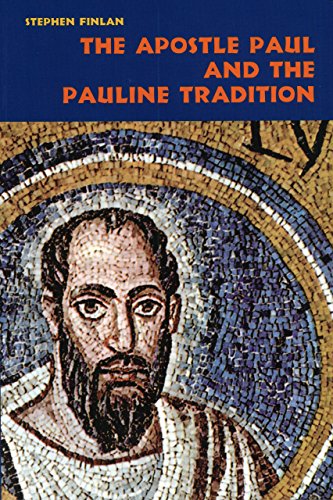

The Apostle Paul and the Pauline tradition / Stephen Finlan.
Detalles de publicación: Collegeville, Minn. : Liturgical Press, ©2008.Descripción: xiv, 229 pages ; 23 cmTipo de contenido:- text
- unmediated
- volume
- 9780814652718 (pbk.)
- 227/.06 22
- BS 2650.52 .F56 2008
| Imagen de cubierta | Tipo de ítem | Biblioteca actual | Biblioteca de origen | Colección | Ubicación en estantería | Signatura topográfica | Materiales especificados | Info Vol | URL | Copia número | Estado | Notas | Fecha de vencimiento | Código de barras | Reserva de ítems | Prioridad de la cola de reserva de ejemplar | Reservas para cursos | |
|---|---|---|---|---|---|---|---|---|---|---|---|---|---|---|---|---|---|---|
| Libro BET | Biblioteca Escuela de Teología Colección General BET | BS 2650.52 .F56 2008 (Navegar estantería(Abre debajo)) | Disponible | 41000000013319 |
Descripciones mejoradas de Syndetics:
Much of the popular understanding of the apostle Paul has been shaped, not by Paul's letters themselves, but by the Acts of the Apostles. This understanding, many believe, leads to misunderstanding Paul's theology. In The Apostle Paul and the Pauline Tradition Stephen Finlan takes a new approach, focusing on the letters themselves. He views the Pauline tradition as including the teachings and writings of Paul himself, the assimilation and often simplification of Paul's ideas by those who followed him and then wrote letters in his name, and the final form of the letters the church has labeled as Paul's. Through this broad, shifting, and expanding notion of tradition, readers will explore with Finlan such questions as:
' What did Paul really think 'and write 'about Jesus, redemption, and the Christian life?' Who were the original audiences that first received these texts?
' How and how much did Paul's followers change his ideas in the letters they wrote for" him?
Finlan is convinced that this educated questioning and investigating becomes a valid part of the life of faith 'not replacing faith, but joined to it. Through his accessibly written text, readers in the end will understand and agree.
Stephen Finlan, PhD, is an adjunct professor at Drew University and has taught at Fordham. He is also author of Problems with Atonement and Options on Atonement in Christian Thought (both published by Liturgical Press) as well as The Background and Content of Paul's Cultic Atonement Metaphors (SBL and Brill, 2004).
""A Michael Glazier book."
Includes bibliographical references (p. 200-207) and indexes.
Introduction: The Pauline Letters -- The SOcial and Literary Settings of the Letters -- An Outline of the Life of Paul -- First and Second Thessalonians -- First Corinthians -- Second Corinthians -- Galatians -- Romans -- Philippians and Philemon -- Colossians and Ephesians -- The Pastoral Epistles -- Hebrews and Other Letters
Much of the popular understanding of the apostle Paul has been shaped not by Paul's letters themselves but by the Acts of Apostles. This understanding, many believe, leads to misunderstanding Paul's theology. In The Apostle Paul and the Pauline Tradition Stephen Finlan takes a new approach, focusing on the letters themselves. He views the Pauline tradition as including the teaching and writings of Paul himself, the assimilation and often simplification of Paul's ideas by those who followed him and then wrote letters in his name, and the final form of the letters the church has labeled as Paul's. Though this broad, shifting, and expanding notion of tradition, readers will explore with Finlan such questions as: What did Paul really think–and write–about Jesus, redemption, and the Christian life? Who were the original audiences that first received these texts? How and how much did Paul's followers change his ideas in the letters they wrote "for" him? Finlan is convinced that this "educated questioning and investigating becomes a valid part of the life of faith–not replacing faith, but joined to it". Through his accessibly written text, readers in the end will understand and agree.