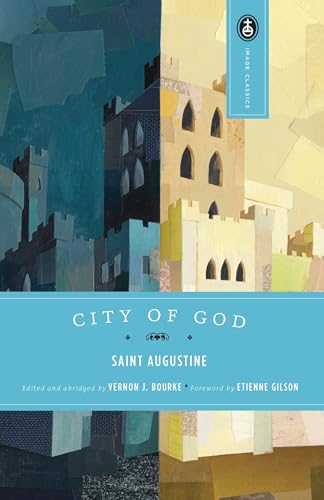

The city of God; an abridged version from the translation by Gerald G. Walsh, Demetrius B. Zema, Grace Monahan. With a condensation of the original foreword by Etienne Gilson. Edited, with an introd., by Vernon J. Bourke.
Idioma: engund Series A Doubleday image book ; D59Detalles de publicación: Garden City, N.Y.: Image Books Doubleday, [1958].Descripción: 551 pages, 21 cmTipo de contenido:- text
- unmediated
- volume
- 0385029101
- 239.3
- BR 65 .A642 1958
| Imagen de cubierta | Tipo de ítem | Biblioteca actual | Biblioteca de origen | Colección | Ubicación en estantería | Signatura topográfica | Materiales especificados | Info Vol | URL | Copia número | Estado | Notas | Fecha de vencimiento | Código de barras | Reserva de ítems | Prioridad de la cola de reserva de ejemplar | Reservas para cursos | |
|---|---|---|---|---|---|---|---|---|---|---|---|---|---|---|---|---|---|---|
| Libro BET | Biblioteca Escuela de Teología Colección General BET | BR 65 .A642 1958 (Navegar estantería(Abre debajo)) | Disponible | 41000000012808 |
Descripciones mejoradas de Syndetics:
No book except the Bible itself had a greater influence on the Middle Ages than City of God . Since medieval Europe was the cradle of today's Western civilization, this work by consequence is vital for understanding our world and how it came into being.
Saint Augustine is often regardarded as the most influential Christian thinker after Saint Paul, and City of God is his materpiece, a cast synthesis of religious and secular knowledge. It began as a reply to the charge that Christian otherworldiness was causing the decline of the Roman Empire. Augustine produced a wealth of evidence to prove that paganism bore within itself the seeds of its own destruction. Then he proceeded to his larger theme, a cosmic interpretation of in terms of the struggle between good and evilL the City of God in conflict with the Earthly City or the City of the Devil. This, the first serious attempt at a philosophy of history, was to have incalculable influence in forming the Western mind on the relations of church and state, and on the Christian's place in the temporal order.
The original City of God contained twenty-two books and filles three regular-sized volumes. This edition has been skillfully abridged for the intelligent general reader by Vernon J. Bourke, author of Augustine's Quest for Wisdom , making the heart of this monumental work available to a wide audience.
Bibliographical footnotes.
Introduction by Vernon J. Bourke -- Foreword by Etienne Gilson -- The Problem of a Universal Society -- The City of God and Universal Society -- Christian Wisdom and a World Society -- Part One: The Pagan Gods and Earthly Happiness -- Christianity Did Not Cause the Fall of Rome -- Pagan Gods Never Protected Men's Souls -- Physical Evils Were Not Prevented by the Gods -- Divine Justice and the Growth of the Roman Empire -- Providence and the Greatness of Rome -- Part Two: The Pagan Gods and Future Happiness -- Eternal Life and the Inadequacy of Polytheism -- Criticism of Pagan Natural Theology -- Classical Philosophy and Refined Paganism -- Pagan Deities, Demons, and Christian Angels --Christian Worship Contrasted with Platonic Theology -- Part Three: The Origin of the Two Cities -- Part Four: The Development of the Two Cities --The Two Cities in Early Biblical History -- The City of God from the Flood to King David -- From the Age of the Prophets to Christ's Birth -- The City of Man in Ancient History -- The Ends of the Two Cities -- Philosophy and Christianity on Man's End -- Separation of the Two Cities in the Last Judgment -- End and Punishment of the Earthly City -- The Eternal Bliss of the City of God
Tabla de contenidos provista por Syndetics
- Introduction(p. 7)
- Foreword(p. 13)
- I. The Problem of a Universal Society(p. 13)
- II. The City of God and Universal Society(p. 21)
- III. Christian Wisdom and a World Society(p. 33)
- Part 1 The Pagan Gods and Earthly Happiness
- Book I. Christianity Did Not Cause the Fall of Rome(p. 39)
- Book II. Pagan Gods Never Protected Men's Souls(p. 66)
- Book III. Physical Evils Were Not Prevented by the Gods(p. 78)
- Book IV. Divine Justice and the Growth of the Roman Empire(p. 84)
- Book V. Providence and the Greatness of Rome(p. 99)
- Part 2 The Pagan Gods and Future Happiness
- Book VI. Eternal Life and the Inadequacy of Polytheism(p. 119)
- Book VII. Criticisms of Pagan Natural Theology(p. 135)
- Book VIII. Classical Philosophy and Refined Paganism(p. 144)
- Book IX. Pagan Deities, Demons, and Christian Angels(p. 172)
- Book X. Christian Worship Contrasted with Platonic Theology(p. 186)
- Part 3 The Origin of the Two Cities
- Book XI. Creation and the Two Societies of Angels(p. 205)
- Book XII. Created Wills and the Distinction of Good and Evil(p. 244)
- Book XIII. Adam's Sin and Its Consequences(p. 269)
- Book XIV. Two Loves Originate Two Different Cities(p. 295)
- Part 4 The Development of the Two Cities
- Book XV. The Two Cities in Early Biblical History(p. 323)
- Book XVI. The City of God from the Flood to King David(p. 363)
- Book XVII. From the Age of the Prophets to Christ's Birth(p. 378)
- Book XVIII. The City of Man in Ancient History(p. 391)
- Part 5 The Ends of the Two Cities
- Book XIX. Philosophy and Christianity on Man's End(p. 427)
- Book XX. Separation of the Two Cities in the Last Judgment(p. 483)
- Book XXI. End and Punishment of the Earthly City(p. 494)
- Book XXII. The Eternal Bliss of the City of God(p. 507)
- Index(p. 546)