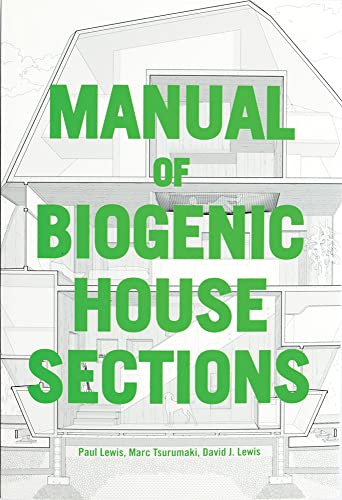

Manual of biogenic house sections / Paul Lewis, Marc Tsurumaki, David J. Lewis. txt
Editor: Novato, California : ORO Editions, 2022Edición: First editionDescripción: 351 p., 1 unnumbered page : ill. ; photo. ; col. ; graphs ; plans ; 28 cmTipo de contenido:- text
- still image
- unmediated
- volume
- 9781957183091
- 1957183098
- Ecological houses -- Design and construction
- Architectural sections
- Sustainable architecture
- Sustainable architecture -- Pictorial works
- Building materials -- Environmental aspects
- Building materials -- Service life
- Bamboo construction
- Bricks
- Plant fibers as building materials
- Stone
- Wood
- Waste products as building materials
- Recycling (Waste, etc.)
- Materials -- Carbon content
- Architectural sections
- Bamboo construction
- Bricks
- Building materials -- Environmental aspects
- Building materials -- Service life
- Plant fibers as building materials
- Recycling (Waste, etc.)
- Stone
- Sustainable architecture
- Waste products as building materials
- Wood
- 23 728/.047
- NA7117.5 L49 2022
| Imagen de cubierta | Tipo de ítem | Biblioteca actual | Biblioteca de origen | Colección | Ubicación en estantería | Signatura topográfica | Materiales especificados | Info Vol | URL | Copia número | Estado | Notas | Fecha de vencimiento | Código de barras | Reserva de ítems | Prioridad de la cola de reserva de ejemplar | Reservas para cursos | |
|---|---|---|---|---|---|---|---|---|---|---|---|---|---|---|---|---|---|---|
| Libro Col. General CARIBET | CARIBET Biblioteca Arquitectura Colección General CARIBET | General NA7117.5 L49 2022 (Navegar estantería(Abre debajo)) | 1 | Disponible | 91000000072025 |
Descripciones mejoradas de Syndetics:
Recognizing that buildings are a major contributor to global warming and the critical role of embodied versus operational carbon, the book focuses on houses built from materials that either sequester carbon (plants), use materials with very low embodied carbon (earth and stone) or reuse substantial amounts of existing materials.
Organized by those materials (wood, bamboo, straw, hemp, cork, earth, brick, stone and re-use), and incorporating life cycle diagrams demonstrating how the raw material is processed into building components, the book shows how the unique properties of each material can transform the ways architects conceive the sections of houses.
The house was selected as the vehicle for these investigations due to its scale, its role as a site of architectural experimentation, and its ubiquity. Building on the techniques of the Manual of Section, the book is comprised of newly generated cross-sectional drawings of fifty-five recent, modestly sized houses from around the world, making legible the tectonics and materials used in their construction. Each house is also shown through exploded axonometric, construction photographs and color photographs of the exterior and interior. Introductory essays set up the importance of embodied carbon, the role of vernacular plant-based construction and the problems of contemporary house construction. Drawing connections between the architecture of the house, environmental systems and material economies, the book seeks to change how we build now and for the future.
Edition statement from page 352.
Includes bibliographical references (pages 27-29) and "Index of architects."
6 Introduction --
30 Standard House --
Materials sections:
36 Wood Frame --
74 Mass timber --
104 Bamboo --
138 Straw --
164 Hemp --
186 Cork --
204 Earth --
230 Brick --
256 Stone --
278 Reuse --
Appendix --
320 Material Assemblies --
334 Embodied Carbon assessment --
336 embodied Carbon by material --
338 Carbon Estimates --
348 Index of Architects --
349 Photography Credits --
350 Acknowledgments --
351 Drawing Credits --
"The book focuses on houses built from materials that either sequester carbon (plants), use materials with very low embodied carbon (earth and stone) or reuse substantial amounts of existing materials. Organized by those materials (wood, bamboo, straw, hemp, cork, earth, brick, stone and re-use), and incorporating life cycle diagrams demonstrating how the raw material is processed into building components, the book shows how the unique properties of each material can transform the ways architects conceive the sections of houses"--Publisher's description.
"Building on 'Manual of section', this book articulates how plant-based and low-carbon materials can produce a profound rethinking of section in houses."--Page 4 of printed paper wrapper.