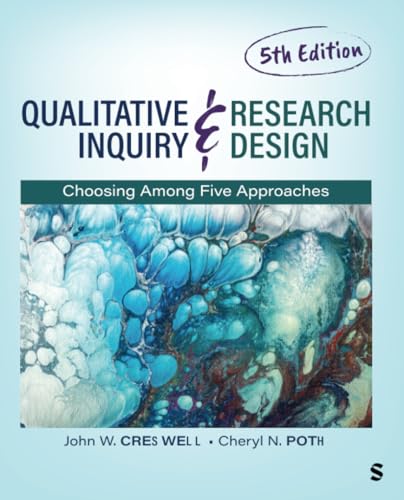

Qualitative inquiry and research design : choosing among five approaches / John W. Creswell, Cheryl N. Poth.
Editor: Thousand Oaks, California : Sage, [2023]Edición: Fifth editionDescripción: 515 pages cmTipo de contenido:- text
- unmediated
- volume
- 9781544398396
- 300.72/1 23/eng/20231213
- H61 .C73 2023
| Imagen de cubierta | Tipo de ítem | Biblioteca actual | Biblioteca de origen | Colección | Ubicación en estantería | Signatura topográfica | Materiales especificados | Info Vol | URL | Copia número | Estado | Notas | Fecha de vencimiento | Código de barras | Reserva de ítems | Prioridad de la cola de reserva de ejemplar | Reservas para cursos | |
|---|---|---|---|---|---|---|---|---|---|---|---|---|---|---|---|---|---|---|
| Libro | Biblioteca Encarnación Valdés Colección General bev | 300.72 C923q5 (Navegar estantería(Abre debajo)) | Disponible | 80000002654658 |
Descripciones mejoradas de Syndetics:
In the Fifth Editionof the bestselling text Qualitative Inquiry and Research Design: Choosing Among Five Approaches, John W. Creswell and Cheryl N. Poth guide researchers in selecting the best option for their studies by exploring, evaluating, and applying five qualitative research approaches: narrative research, phenomenology, grounded theory, ethnography, and case study. For each of these qualitative inquiry traditions, the authors explore the philosophical underpinnings, history, defining features, common data procedures, and writing structures. With expanded content reflecting technological developments in the qualitative research process, more inclusivity and diversity in examples, and updated references, the Fifth Editionis an ideal introduction to the theories, strategies, and practices of qualitative research. Winner of the 2018 Textbook & Academic Authors Association′s The McGuffey Longevity AwardIncluded with this title:LMS Cartridge: Import this title's instructor resources into your school's learning management system (LMS) and save time. Don't use an LMS?You can still access all of the same online resources for this title via the password-protected Instructor Resource Site.
Includes bibliographical references and index.
"We are delighted to offer a fully updated fifth edition of this book. In this newest edition, John along with Cheryl (who joined as a coauthor on the fourth edition) offer updated examples and guidance on designing qualitative research across five approaches. The work on this book spans almost three decades with each edition reflecting evolutions in qualitative research. The primary purpose of this book is to introduce qualitative research and highlight five approaches to inquiry. In this way, readers can see options for conducting research and select the best option for their studies"-- Provided by publisher.
Tabla de contenidos provista por Syndetics
- Preface(xv)
- What Is New in This Edition(xvii)
- About the Authors(xix)
- Acknowledgments(xxi)
- Analytic Table of Contents by Approach(xxiii)
- List of Tables(xxvii)
- List of Figures(xxix)
- List of Examples(xxxi)
- List of "Try This Now" Activities(xxxiii)
- Chapter 1 Introduction to Qualitative Inquiry and Research Design(1)
- Rationale for Our Approach to the Book(2)
- Positioning Ourselves(2)
- Defining Qualitative Research(4)
- Distinguishing Characteristics(5)
- Selection of the Five Approaches(8)
- Key Book Readings(11)
- Narrative Research(11)
- Phenomenology(12)
- Grounded Theory(12)
- Ethnography(12)
- Case Study(13)
- Chapter Check-In(13)
- Summary(13)
- Chapter Key Terms(14)
- Further Readings(14)
- Chapter 2 Philosophical Assumptions and Interpretive Frameworks(17)
- Situating Philosophy and Interpretive Frameworks Within the Research Process(18)
- Philosophical Assumptions(21)
- Why Philosophy is Important(21)
- Four Philosophical Assumptions(22)
- Writing Philosophical Assumptions Into Qualitative Studies(24)
- Interpretive Frameworks(25)
- Postpositivism(26)
- Social Constructivism(27)
- Transformative Frameworks(28)
- Postmodern Perspectives(29)
- Pragmatism(30)
- Feminist Theories(31)
- Critical Theory(32)
- Critical Race Theory(33)
- Postcolonial Theories(34)
- Queer Theory(35)
- Disability Theories(36)
- The Practice of Using Interpretive Frameworks in Qualitative Research(36)
- Linking Philosophy and Interpretive Frameworks in Quatitative Research(40)
- Chapter Check-In(43)
- Summary(43)
- Chapter Key Terms(44)
- Further Readings(44)
- Chapter 3 Designing a Qualitative Study(47)
- When to Use Qualitative Research(48)
- What a Qualitative Study Requires From Us(49)
- The Features of a "Good" Qualitative Study(50)
- The Process of Designing a Qualitative Study(53)
- Preliminary Considerations(53)
- Phases in the Research Process(54)
- Elements in All Phases of the Research(56)
- Practical Guidance for Qualitative Research Ethics(57)
- Ethical Situanons Across the Research Process(58)
- The Design Structures of a Qualitative Research Plan or Proposal(66)
- Design Considerations Useful for Engaging Readers(66)
- General Writing Structures(68)
- Chapter Check-In(70)
- Summary(71)
- Chapter Key Terms(72)
- Further Readings(72)
- Chapter 4 Five Qualitative Approaches to Inquiry(75)
- Deciding Among the Five Approaches(76)
- Narrative Research(78)
- Definition of Narrative Research(78)
- Origins of Narrative Research(78)
- Defining Features of Narrative Studies(79)
- Types of and Variations Within Narrative Research(80)
- Procedures for Conducting Narrative Research(82)
- Challenges and Opportunities in Narrative Research(85)
- Phenomenological Research(87)
- Definition of Phenomenological Research(87)
- Origins of Phenomenological Research(87)
- Defining Features of Phenomenology(89)
- Types of and Variations Within Phenomenology(90)
- Procedures for Conducting Phenomenological Research(91)
- Challenges and Opportunities in Phenomenological Research(94)
- Grounded Theory Research(96)
- Definition of Grounded Theory Research(96)
- Origins of Grounded Theory Research(97)
- Defining Features of Grounded Theory(98)
- Types of and Variations Within Grounded Theory Studies(99)
- Procedures for Conducting Grounded Theory Research(101)
- Challenges and Opportunities in Grounded Theory Research(104)
- Ethnographic Research(106)
- Definition of Ethnographic Research(106)
- Origins of Ethnographic Research(106)
- Defining Features of Ethnographies(107)
- Types of and Variations Within Ethnographies(103)
- Procedures for Conducting an Ethnography(109)
- Challenges and Opportunities in Ethnographic Research(112)
- Case Study Research(114)
- Definition of Case Study Research(114)
- Origins of Case Study Research(115)
- Defining Features of Case Studies(116)
- Types of and Variations Within Case Studies(117)
- Procedures for Conducting a Case Study(118)
- Challenges and Opportunities in Case Study Research(121)
- Comparing the Five Approaches(123)
- Chapter Check-In(128)
- Summary(128)
- Chapter Key Terms(129)
- New Terms Specific to Narrative Research(129)
- New Terms Specific to Phenomenological Research(129)
- New Terms Specific to Grounded Theory Research(130)
- New Terms Specific to Ethnographic Research(130)
- New Terms Specific to Case Study Research(130)
- Further Readings(131)
- Chapter 5 Five Different Qualitative Studies(135)
- A Narrative Study (Chan, 2010; see Appendix A)(136)
- A Phenomenological Study (Chance, 2022; see Appendix B)(139)
- A Grounded Theory Study (Trip et al., 2019; see Appendix C)(141)
- An Ethnographic Study (Mac an Ghaill & Haywood, 2015; see Appendix D)(144)
- A Case Study (Goodrum et al., 2022; see Appendix E)(147)
- Differences Among the Approaches(149)
- Selecting Your Approach(151)
- Chapter Check-in(152)
- Summary(152)
- Further Readings(152)
- Chapter 6 Introducing and Focusing the Study(155)
- Interrelating the Study Problem, Purpose, and Questions Within Research(156)
- The Research Problem Statement(157)
- The Purpose Statement(161)
- The Research Questions(165)
- The Central Question(166)
- Subquestions(169)
- Introducing and Focusing Your Study(172)
- Chapter Check-In(172)
- Summary(173)
- Chapter Key Terms(173)
- Further Readings(173)
- Chapter 7 Data Collection(175)
- The Data Collection Circle(176)
- Ethical Considerations for Data Collection(177)
- Institutional Review Boards(180)
- The Site or Individual(180)
- Self-Study Considerations(182)
- Access and Rapport(183)
- Letter of information(184)
- Documenting Consent(185)
- Purposeful Sampling Strateqies(188)
- Participants in the Sample(189)
- Types of Sampling Strategies(190)
- Sample Size(192)
- Forms of Data(192)
- Interviewing(197)
- Observing(201)
- Recording Information Procedures(203)
- Fieldwork Issues(205)
- Entry and Organizational Access(205)
- Procedures for Participant Observations(206)
- Dynamics Between Interviewer and Interviewee(206)
- Availability of Documents and Audiovisual and Social Media Materials(207)
- Data Storage and Security(208)
- Comparing the Five Approaches in Data Collection(209)
- Chapter Check-In(210)
- Summary(211)
- Chapter Key Terms(211)
- Further Readings(211)
- For Guidance Related to Interviewing(212)
- Chapter 8 Data Analysis and Representation(215)
- Three Analysis Strategies(216)
- The Data Analysis Spiral(218)
- Ethical Considerations in Data Analysis(220)
- Managing and Organizing the Data(221)
- Reading and Memoing Emergent Ideas(221)
- Describing and Classifying Codes into Themes(224)
- Developing and Assessing Interpretations(229)
- Representing and Visualizing the Data(230)
- How to Use Computer Qualitative Data Analysis Software (QDAS)(232)
- Advantages and Disadvantages(233)
- A Sampling of Computer Software for Qualitative Data Analysis(234)
- ATLAS.ti [http://www.atlasti.com](235)
- Dedoose [http://www.dedoose.com](235)
- HyperRESEARCH [http://www.researchware.com](235)
- MAXQDA [http://www.maxqda.com](236)
- NVivo [http://www.qsrinternational.com](236)
- Steps in Using a QDAS Program(236)
- Analysis Within Approaches to Inquiry(238)
- Narrative Research Analysis and Representation(238)
- Phenomenological Analysis and Representation(241)
- Grounded Theory Analysis and Representation(245)
- Ethnographic Analysis and Representation(247)
- Case Study Analysis and Representation(250)
- Comparing the Five Approaches in Data Analysis(252)
- Chapter Check-In(253)
- Summary(254)
- Chapter Key Terms(254)
- Further Readings(254)
- Chapter 9 Writing a Qualitative Study(257)
- Ethical Considerations for Writing(258)
- Several Writing Strategies(259)
- Reflexivity and Representations in Writing(260)
- Audience for Our Writings(262)
- Encoding Our Writings(263)
- Quotes in Our Writings(264)
- Overall and Embedded Writing Strategies(265)
- Narrative Writing Structures(265)
- Overall Structures(267)
- Embedded Structures(269)
- Phenomenological Writing Structures(270)
- Overall Structures(270)
- Embedded Structures(272)
- Grounded Theory Writing Structures(273)
- Overall Structures(273)
- Embedded Structures(275)
- Ethnographic Writing Structures(276)
- Overall Structures(276)
- Embedded Structures(278)
- Case Study Writing Structures(279)
- Overall Structures(280)
- Embedded Structures(281)
- Comparing Writing Structures Across the Five Approaches(282)
- Chapter Check-In(283)
- Summary(283)
- Chapter Key Terms(283)
- Further Readings(284)
- Chapter 10 Standards of Validation and Evaluation(285)
- Validation and Reliability in Qualitative Research(285)
- Perspectives on Validation Within Qualitative Research(286)
- Validation Strategies(291)
- Researcher's Lens(292)
- Participant's Lens(293)
- Reader's or Reviewer's Lens(294)
- Reliability Perspectives and Procedures(296)
- Evaluation Criteria for Qualitative Research(299)
- Evaluation Criteria Specific to Each of the Five Approaches(303)
- Narrative Research(303)
- Phenomenological Research(305)
- Grounded Theory Research(307)
- Ethnographic Research(311)
- Case Study Research(312)
- Comparing Evaluation Standards Across the Five Approaches(314)
- Chapter Check-In(316)
- Summary(316)
- Chapter Key Terms(317)
- Further Readings(317)
- Chapter 11 "Turning the Story" and Conclusion(319)
- Turning the Story Across the Five Approaches(320)
- The Original Story: "Campus Response to a Student Gunman"(320)
- A Case Study(333)
- A Narrative Study(334)
- A Phenomenology(335)
- A Grounded Theory Study(335)
- An Ethnography(336)
- Conclusion: Seven Key Takeaways(338)
- Study Focus(338)
- Interpretive Orientation(338)
- Language Use(339)
- Participant Samples(339)
- Analysis Strategics(339)
- Report Writing(340)
- Research Quality(340)
- Chapter Check-In(340)
- Summary(341)
- Appendix A A Narrative Research Study-"Living in the Space Between Participant and Researcher as a Narrative Inquirer: Examining Ethnic Identity of Chinese Canadian Students as Conflicting Stories to Live By"(345)
- Appendix B Resilient Leadership: A Phenomenologicat Exploration Into How Black Women in Higher Education Leadership Navigate Cultural Adversity(365)
- Appendix C Aging With Intellectual Disabilities in Families: Navigating Ever-Changing Seas-A Theoretical Model(395)
- Appendix D An Ethnography-"British-Born Pakistani and Bangladeshi Young Men: Exploring Unstable Concepts of Muslim, Islamophobia and Racialization"(421)
- Appendix E Learning from Error in Violence Prevention: A School Shooting as an Organizational Accident(443)
- Glossary(471)
- References(485)
- Index(505)
Notas de autor provistas por Syndetics
John W. Creswell, PhD, is a Professor of Family Medicine and Senior Research Scientist of
the Michigan Mixed Methods Program. He has authored numerous articles and 34 books on
mixed methods research, qualitative research, and research design. While at the University of
Nebraska-Lincoln, he held the Clifton Endowed Professor Chair, served as Director of the
Mixed Methods Research Office, co-founded SAGE''s Journal of Mixed Methods Research , and
was an Adjunct Professor of Family Medicine at the University of Michigan and a consultant to
the Veterans Administration Health Services Research Center in Ann Arbor, Michigan. He was
a Senior Fulbright Scholar to South Africa in 2008 and to Thailand in 2012. In 2011, he co-led
a National Institutes of Health working group on the "best practices of mixed methods research
in the health sciences," served as a Visiting Professor at Harvard''s School of Public Health and
received an honorary doctorate from the University of Pretoria, South Africa. In 2014, he was
the founding President of the Mixed Methods International Research Association. In 2015, he
joined the staff of Family Medicine at the University of Michigan to Co-Direct the Michigan
Mixed Methods Program. In 2017, he coauthored the American Psychological Association
"standards" on qualitative and mixed methods research. The fourth edition of this book on
Qualitative Inquiry & Research Design won the 2018 McGuffey Longevity Award from the U.S.
Textbook & Academic Authors Association. During the COVID-19 pandemic, he gave virtual
keynote presentations to many countries from his office in Osaka, Japan. Updates on his work
can be found on his website at johnwcreswell.com.
Cheryl N. Poth, PhD, is a Professor in the Faculty of Education and faculty member of the
research-intensive Centre for Research and Applied Measurement and Evaluation at the
University of Alberta. In this role, she has developed and taught graduate-level research methods
and program evaluation courses in addition to supervising and mentoring students, faculty,
and local as well as global community members in qualitative, quantitative, and mixed methods
research. She is the author of over 50 peer-reviewed journal articles, three books as well as
numerous book chapters. Her work has been recognized by the American Educational Research
Association with the Division D Significant Contributions to Research Methodology Award
in 2023 (with Peggy Shannon-Baker) and by the Textbook & Academic Authors Association
with the Most Promising New Textbook Award in 2020 and the McGuffey Longevity Award
for Qualitative Research book in 2018 (with John Creswell). She served as Editor of the SAGE
Handbook of Mixed Methods Research (2023) and as Guest Coeditor of several journal special
issues, including the International Journal of Qualitative Methods . In addition to more than
40 invited talks and 150 conference presentations, she has led research methods workshops
with diverse audiences on four continents. She served as an Advisory Board Member of the International Institute of Qualitative Methodology (2014-2020); the President of the Mixed
Methods International Research Association (2017-2018); a Research Fellow at the University
of South Africa (2018-2020); a Helen Glass Scholar in the College of Nursing within the Rady
Faculty of Health Sciences at the University of Manitoba (2022); and as a MERIT Visiting
Professor in the Faculty of Health Sciences at McMaster University (2023-2025). In 2009, she
cofounded the interdisciplinary Alberta Clinical and Community-Based Evaluation Research
Team to advance innovative community-university research partnership supports for program
planning and impact assessments of service delivery for individuals with complex needs. She
serves as the Methodologist on several cross-disciplinary research teams and has led federally,
provincially, and locally funded research projects. She is an Associate Editor of the Journal of
Mixed Methods Research and is an editorial board member of several journals. Updates on her
work can be found on her website at https://sites.google.com/ualberta.ca/cheryl-poth/ .