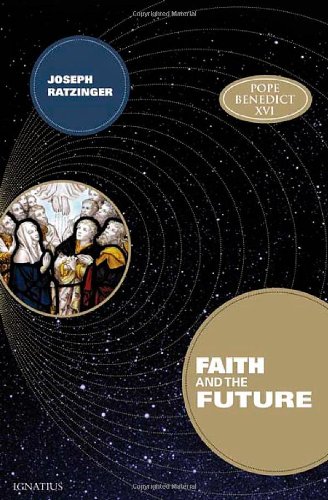

Faith and the future / Joseph Cardinal Ratzinger (Pope Benedict XVI).
Detalles de publicación: [Chicago] : Franciscan Press, 1971.Descripción: 112 pages ; 21 cmTipo de contenido:- text
- unmediated
- volume
- 9781586172190 (alk. paper)
- 234/.23 22
- BT 772 .R3513 2009
| Imagen de cubierta | Tipo de ítem | Biblioteca actual | Biblioteca de origen | Colección | Ubicación en estantería | Signatura topográfica | Materiales especificados | Info Vol | URL | Copia número | Estado | Notas | Fecha de vencimiento | Código de barras | Reserva de ítems | Prioridad de la cola de reserva de ejemplar | Reservas para cursos | |
|---|---|---|---|---|---|---|---|---|---|---|---|---|---|---|---|---|---|---|
| Libro BET | Biblioteca Escuela de Teología Colección General BET | BT 772 .R3513 (Navegar estantería(Abre debajo)) | Disponible | 41000000010844 | ||||||||||||||
| Libro BET | Biblioteca Escuela de Teología Colección General BET | BT 772 .R3513 c.2 (Navegar estantería(Abre debajo)) | Disponible | 41000000010851 |
Descripciones mejoradas de Syndetics:
Increasingly, the future is becoming a theme for theological reflection. In the background we can detect a growing concern among many people for the future of faith. Does faith have any future at all, and, if so, where in all the confusion of today's trends will we discover its embryo? But the problem of the future assails not only the believer. In the ever more rapidly advancing process of historical evolution, man is confronted with enormous opportunities, but also with colossal perils. For him, the future is not only hope, but sorrow-a nightmare, indeed. He cannot avoid asking what part faith can play in building tomorrow's world. Joseph Ratzinger, now Pope Benedict XVI, approaches this problem of universal concern from a variety of angles, bringing his deep personal faith and theological brilliance to bear on these serious questions.
Original English ed. published by Franciscan Herald Press.
Original German ed. ... c1970 by Kösel-Verlag, München, ein Unternernehman derVerlagsgruppe Random House GmbH.
Includes bibliographical references.
Preface -- Faith and knowledge -- Faith and Existence -- Faith and Philosophy -- The Future of the World Through the Hope of Men -- What Wil the Church Look Like in 2000
Joseph Ratzinger is aware of the fact that the most frequently used catchword of modern theological thinking is "hope" rather than "faith". At first glance, Faith and the Future seems to offer an unpretentious corrective. But among all the modern trends, Ratzinger's essay is perhaps the most decisive for it outlines a way of theological thought proper to itself. Behind the speculation about the "future," there is a growing concern about the "future" of faith." Does faith really have a future, and if it has, what bearing does the future, and if it has, what bearing does the future, and if it has, what bearing does the future, have on the modern conflicts of man with man? These questions are not restricted to believers only. The rapidly increasing progress of historical evolution has brought man and a kind of Alpine dream. What role can the faith play in building a world of the future. Faith and the Future attempts to answer that question in five essays which were originally radio talks given during the winter of 1969-1970. In these five treatises the author strikes some chords which must receive attention in the current discussion about the relation in the current discussion about the relation of Christian faith to critical sociological theory and practice. Besides, he proposes two dominant ideas which are a refreshing departure from the present usual tendencies: 1. Faith promises a future. In its relation to the future and to the demands of the Christian promise of salvation, the faith which the author outlines has a completely personal orientation. For man the future must be one of salvation. The promise of the future which takes the one who hopes seriously and meets him in a human way must at the same time be for the believer a liberation and in a radical sense, salvation. These brilliantly written essays are characterized by a directness which possesses unusual theological depth.
Notas de autor provistas por Syndetics
Joseph Ratzinger was born on April 16, 1927 in Marktl am Inn in the state of Bavaria, Germany.Ratzinger entered the minor seminary in Traunstein, in 1939 and in 1943 along with the rest of his seminary class he was drafted into the Flak [anti-aircraft corps]. In 1944 he was released from the Flak and returned home only to be drafted into labor detail under the infamous Austrian Legion.
In the spring of 1945 Ratzinger deserted the army and headed home but when the Americans arrived at his village shortly thereafter, he was identified as a German soldier and incarcerated in a POW camp for a brief time. Following his release he re-entered the seminary.
In 1951 Joseph was ordained into the priesthood and began lectures as a full professor of fundamental theology at the University of Bonn. From 1962-65 Ratzinger was present during all four sessions of the Second Vatican Council as a peritus, or chief theological advisor to Cardinal Joseph Frings of Cologne, Germany.
. In 1977 Joseph Ratzinger was appointed Archbishop of Munich and Freising and on June 27 elevated to Cardinal of Munich by Pope Paul VI. In 1981 Ratzinger accepted Pope John Paul II's invitation to take over as Prefect for the Congregation for the Doctrine of the Faith and in 1986 he was appointed head of a 12-member commission responsible for drafting the Catechism of the Catholic Church.
Cardinal Ratzinger was elected vice dean of the College of Cardinals in 1988. In 2002 Pope John Paul II, approved his election as dean of the College of Cardinals.
On April 8, 2005, Cardinal Ratzinger presided over the funeral of Pope John Paul II. On April 19, 2005, Cardinal Ratzinger was elected Bishop of Rome on the fourth ballot of the conclave and took the name Benedict XVI.
(Bowker Author Biography)