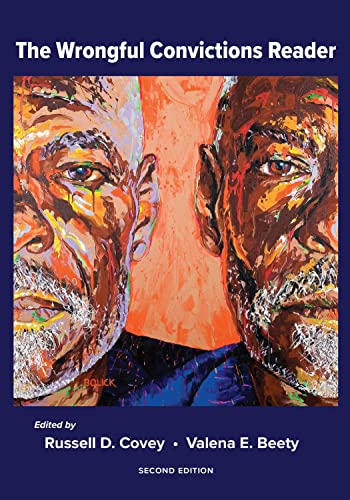

The wrongful convictions reader / edited by Russell D. Covey, Valena E. Beety.
Editor: Durham, North Carolina : Carolina Academic Press, LLC, [2023]Edición: Second editionDescripción: xxxii, 691 pages : illustrations ; 26 cmTipo de contenido:- text
- unmediated
- volume
- 9781531023874
- KF 9756 .W765 2023
| Imagen de cubierta | Tipo de ítem | Biblioteca actual | Biblioteca de origen | Colección | Ubicación en estantería | Signatura topográfica | Materiales especificados | Info Vol | URL | Copia número | Estado | Notas | Fecha de vencimiento | Código de barras | Reserva de ítems | Prioridad de la cola de reserva de ejemplar | Reservas para cursos | |
|---|---|---|---|---|---|---|---|---|---|---|---|---|---|---|---|---|---|---|
| Libro | Biblioteca de Derecho Mons. Fremiot Torres Oliver Colección General biblioteca derecho | KF 9756 .W765 2023 (Navegar estantería(Abre debajo)) | Disponible | 70000000905503 |
Descripciones mejoradas de Syndetics:
Fueled by more than 2,000 exonerations of wrongfully convicted men and women, the "innocence revolution" has shaken the criminal justice system to its core. By gathering the leading research, law, and policy analysis into one volume, The Wrongful Convictions Reader explores the core contributing factors to wrongful convictions: false confessions, witness misidentifications, cognitive bias, junk science, police and prosecutorial misconduct, racial bias, and ineffective assistance of counsel.
The second edition provides an expanded treatment of certain critical topics. The reader now includes an entire chapter devoted to race and wrongful convictions and provides expanded treatment of the intersections between gender, sexual orientation, and disability and wrongful conviction. The addition of these topics in expanded form creates new options for instructors to explore timely topics in the field of compelling concern to many contemporary students. As before, the book remains more than a mere 'reader' of literature in the field, but rather a book that can serve as the principal text in doctrinal as well as experiential courses.
Each chapter is divided into three sections that include: readings, current law overview--which summarizes the key cases in the area; and legal materials, exercises, and media--which provides relevant experiential activities. Examples from the legal materials, exercises, and media sections includes:
Recommended listening and viewing: timed excerpts from podcast episodes, films, and television clips; Oral advocacy exercises: mock bail arguments, parole hearings, testimony before the state legislature, presentations to the state rules committee, appellate oral arguments; Written advocacy exercises: practice motions and comparing state statutes; Issue spotting exercises: transcripts from interrogations and in-court testimony; Review: reflective essays, short answer questions, and true/false questions; Team exercises: plea negotiations; Discussion prompts; and Actual wrongful conviction case documents.Includes bibliographical references and index.
Prologue to wrongful convictions -- Defining innocence and miscarriages of justice -- Overview of the causes of wrongful convictions -- The innocence "myth" and the costs of preventing wrongful convictions -- Eyewitness misidentifications -- False confessions -- Scientific standards, statistical evidence, and the future of forensic science -- DNA and junk science -- Informants and snitches -- Police and prosecutorial misconduct -- Incompetent lawyering -- Cognitive bias and tunnel vision -- Guilty pleas, pretrial procedure, and innocence -- Appellate and post-conviction review of innocence : the cases -- Appellate and post-conviction review of innocence : an assessment -- Intersections : race, gender, sexual orientation and innocence -- Reconsidering innocence : rethinking causes and addressing consequences -- Race and wrongful convictions.
"Fueled by more than 2,000 exonerations of wrongfully convicted men and women, the "innocence revolution" has shaken the criminal justice system to its core. By gathering the leading research, law, and policy analysis into one volume, The Wrongful Convictions Reader explores the core contributing factors to wrongful convictions: false confessions, witness misidentifications, cognitive bias, junk science, police and prosecutorial misconduct, racial bias, and ineffective assistance of counsel. Each chapter is divided into three sections: Readings Current Law Overview-which summarizes the key cases in the area, and Legal Materials, Exercises, and Media-which provides relevant experiential activities. Examples from the Legal Materials, Exercises, and Media sections include: Recommended listening and viewing: timed excerpts from podcast episodes, films, and television clips Oral advocacy exercises: mock bail arguments, parole hearings, testimony before the state legislature, presentations to the state rules committee, appellate oral arguments Written advocacy exercises: practice motions and comparing state statutes Issue spotting exercises: transcripts from interrogations and in-court testimony Review: reflective essays, short answer questions, and true/false questions Team exercises: plea negotiations Discussion prompts Actual wrongful conviction case documents This combination of materials makes the book more than a mere "reader" and makes it ideal for doctrinal as well as experiential courses"--