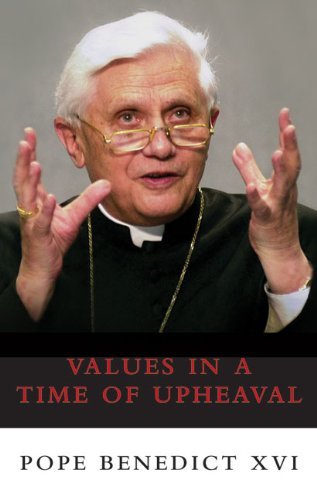

Values in a time of upheaval / Joseph Ratzinger (Pope Benedict XVI) ; translated by Brian McNeil.
Idioma: Inglés Lenguaje original: Alemán Descripción: 172 pages ; 22 cmTipo de contenido:- text
- unmediated
- volume
- 9780824523732 (Crossroad Pub.)
- 0824523733 (Crossroad Pub.)
- 9781586171407 (Ignatius)
- 1586171402 (Ignatius)
- BJ 1249 .B37513 2006
| Imagen de cubierta | Tipo de ítem | Biblioteca actual | Biblioteca de origen | Colección | Ubicación en estantería | Signatura topográfica | Materiales especificados | Info Vol | URL | Copia número | Estado | Notas | Fecha de vencimiento | Código de barras | Reserva de ítems | Prioridad de la cola de reserva de ejemplar | Reservas para cursos | |
|---|---|---|---|---|---|---|---|---|---|---|---|---|---|---|---|---|---|---|
| Libro BET | Biblioteca Escuela de Teología Colección General BET | BJ 1249 .B37513 2006 (Navegar estantería(Abre debajo)) | Disponible | 41000000005414 |
Descripciones mejoradas de Syndetics:
In Values in the Time of Upheaval , Cardinal Ratzinger (now Pope Benedict XVI) brings together his most important views on the crucial question of where we find our values and how we act to put them into practice in our personal and private lives. In chapters on the history and destiny of human life, the author covers such topics as the dangers of secularism, the meaning of truth in a pluralistic world, the basis of human morality, the foundations of a good society, and the Christian basis for true hope and love.
"A Crossroad book."
Includes bibliographical references.
What Rules Should Guide Our Conduct? Politics and Morality -- To Change or to Preserve? Political Visions and Political Praxis -- What Keeps the World Together The Prepolitical Moral Foundations of a Free State -- Freedom, Law, and the Good Moral Principles in Democratic Societies -- What is Truth The Significance of Religious and Ethical values in a Pluralistic Society -- Responsibility For Peace Orientations -- If You Want Peace... Conscience and Truth -- Searching for Peace Tensions and Dangers -- What Must We Do? Christian's Responsibility for Peace -- Acting in the Strength That Come From Remembrance The Grace of Reconciliation -- What is Europe? Foundations and Perspectives -- Europe's Identity Its Intellectual Foundations Yesterday, Today, and Tomorrow -- Common Identity and Common Will Chances and Dangers for Europe -- Epilogue Belief in the Triune God and Peace in the World
In the worldwide best seller Values in a Time of Upheaval, Joseph Ratzinger (now Pope Benedict XVI) passionately defends the role traditional Judeo-Christian values should play in a pluralistic society and multicultural world. He examines such crucial contemporary issues as the moral foundations of a free society, the role of spiritual values in promoting human rights, current challenges to Western culture, and the place of faith and love of God in finding true peace. Joseph Ratzinger proposes a balance of Faith and reason that avoids the extremes of fundamentalist theocracies and secular, relativist states.
Notas de autor provistas por Syndetics
Joseph Ratzinger was born on April 16, 1927 in Marktl am Inn in the state of Bavaria, Germany.Ratzinger entered the minor seminary in Traunstein, in 1939 and in 1943 along with the rest of his seminary class he was drafted into the Flak [anti-aircraft corps]. In 1944 he was released from the Flak and returned home only to be drafted into labor detail under the infamous Austrian Legion.
In the spring of 1945 Ratzinger deserted the army and headed home but when the Americans arrive at his village shortly thereafter, he was identified as a German soldier and incarcerated in a POW camp for a brief time. Following his release he re-entered the seminary.
In 1951 Joseph was ordained into the priesthood and began lectures as a full professor of fundamental theology at the University of Bonn. From 1962-65 Ratzinger was present during all four sessions of the Second Vatican Council as a peritus, or chief theological advisor to Cardinal Joseph Frings of Cologne, Germany.
. In 1977 Joseph Ratzinger was appointed Archbishop of Munich and Freising and on June 27 elevated to Cardinal of Munich by Pope Paul VI. In 1981 Ratzinger accepted Pope John Paul II's invitation to take over as Prefect for the Congregation for the Doctrine of the Faith and in 1986 he was appointed head of a 12-member commission responsible for drafting the Catechism of the Catholic Church.
Cardinal Ratzinger was elected vice dean of the College of Cardinals in 1988. In 2002 Pope John Paul II, approved his election as dean of the College of Cardinals.
On April 8, 2005, Cardinal Ratzinger presided over the funeral of Pope John Paul II. On April 19, 2005, Cardinal Ratzinger was elected Bishop of Rome on the fourth ballot of the conclave and took the name Benedict XVI.
(Bowker Author Biography)