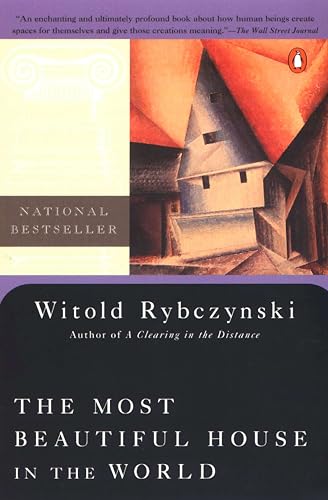
Imagen de portada de Amazon
Imagen de Amazon.com
Imagen de cubierta Syndetics
Portada de Syndetics
Imagen de OpenLibrary

The most beautiful house in the world. / by Witold Rybczynski. txt

Por: New York, New York, U.S.A. : Penguin Books, 1990Descripción: 211 p. : ill. ; 20 cmTipo de contenido:
  • text
Tipo de medio:
  • unmediaded
Tipo de soporte:
  • volume
ISBN:
  • 9780140105667
  • 0140105662
Tema(s): Clasificación CDD:
  • 20 728/.373/092
Clasificación LoC:
  • NA7120 R93 1990
Contenidos:
1. Wind and Water -- 2. The Building Game -- 3. Making Space -- 4. Fitting In -- 5. Just a Barn -- 6. Chrysalis -- 7. The Mind's Eye -- 8. The Most Beautiful House in the World --
Resumen: A cultural history of architecture considering the practical aspects of the art.
Premios: Haga clic para abrir en una nueva ventana
Valoración
    Valoración media: 0.0 (0 votos)
Existencias
Imagen de cubierta Tipo de ítem Biblioteca actual Biblioteca de origen Colección Ubicación en estantería Signatura topográfica Materiales especificados Info Vol URL Copia número Estado Notas Fecha de vencimiento Código de barras Reserva de ítems Prioridad de la cola de reserva de ejemplar Reservas para cursos
Libro CARIBET Biblioteca Arquitectura Colección General CARIBET General NA7120 R93 1990 (Navegar estantería(Abre debajo)) 1 Disponible 91000000067827
Total de reservas: 0

Descripciones mejoradas de Syndetics:

"A winning book, a pleasure to read...a revelation about what architects actually do and how they go about doing it." - Los Angeles Times

Witold Rybezynski takes us on an extraordinary odyssey as he tells the story of designing and building of his own house. Rybezynski's project began as a workshed; through a series of "happy accidents," however, the structure gradually evolved into a full-fledge house.

In tracing this evolution, he touches on matters both theoretical and practical, writing on such diverse topics as the distinguished structural descendants of the humble barn, the ritualistic origins of the elements of classical architecture, and the connections between dress and habitation, and between architecture and gastronomy. Rybezynski discusses feng shui, the Chinese art of placing a home in the landscape, and also considers the theories and work of such architects as Palladio, Le Corbusier, and Frank Lloyd Wright. An eloquent examination of the links between being and building, The Most Beautiful House in the World offers insights into the joys of "installing ourselves in a place, of establishing a spot where it be safe to dream."

"First published in the United States of America by Viking Penguin ... 1989"--T.p. verso.

Winner of Barnes and Noble Discover Great New Writers Award.

Includes bibliographical references (p. 197-203) and index.

1. Wind and Water --
2. The Building Game --
3. Making Space --
4. Fitting In --
5. Just a Barn --
6. Chrysalis --
7. The Mind's Eye --
8. The Most Beautiful House in the World --

A cultural history of architecture considering the practical aspects of the art.

Reseñas proporcionadas por Syndetics

Library Journal Review

Young architect decides to build boat, needs boat house to work in, ends up years later with country place and no boat, and meditates thereon. An extended reflection on the meaning of a house to its inhabitants, this personalized extension of the author's earlier Home ( LJ 9/1/86) does reveal some of what an architect does, albeit when the same person is architect, client, and builder, and it is simply written. More revealing, more detailed, more particular, and preferred is Tracy Kidder's House ( LJ 8/85).-- Jack Perry Brown, Ryerson & Burnham Lib., Art Inst. of Chicago (c) Copyright 2010. Library Journals LLC, a wholly owned subsidiary of Media Source, Inc. No redistribution permitted.

Publishers Weekly Review

As a young architect, Rybczynski felt trapped inside a paper world of blueprints and cardboard models and itched for the nitty-gritty experience of building with his own hands. He soon devised a plan of escape. It was modest enough--to design and build a boatshed--but it was the beginning of a creative journey that questioned the nature of architecture and the architect's role: What makes a cathedral but not, say, a boatshed architecture? When should an architect design iconoclastic solutions to old problems, when to apply traditional principles? As Rybczynski writes of how his concept of a shed evolved into a full-fledged house, he discusses his wide-ranging research, meditates on the varied sources of his inspiration and on the ``game'' of architecture. He also incorporates the kind of historical tidbit that keeps the reader turning pages--the ritualistic origins of the elements of classical architecture; the not-quite-tongue-in-cheek parallels between architecture and gastronomy; the distinguished structural descendants of the humble barn. Written with the easy-going charm that marked his Home: A Short History of an Idea , this delightful ramble through the creative process will beguile architecture buffs and general readers alike. Illustrated. (May) (c) Copyright PWxyz, LLC. All rights reserved

Notas de autor provistas por Syndetics

Witold Rybczynski of Polish parentage, was born in Edinburgh in 1943, raised in Surrey, and attended Jesuit schools in England and Canada. He received Bachelor of Architecture (1960) and Master of Architecture (1972) degrees from McGill University in Montreal. He has written for the Atlantic , New Yorker , New York Review of Books , and the New York Times , and has been architecture critic for Saturday Night , Wigwag , and Slate . His book include Taming the Tiger , Paper Heroes , The Most Beautiful House in the World , Waiting for the Weekend , and Looking Around: A Journey Through Architecture , City Life and Charleston Fancy . He lives with his wife, Shirley Hallam, in Philadelphia and is Emeritus Professor of Urbanism at the University of Pennsylvania.
Compartir
logopucpr-y-vive

Contáctanos

¡Queremos saber de ti!

Tel. 787.841.2000 Ext. 1801

bibliotecavaldes@pucpr.edu

⁣Búscanos en las redes

© 2026 Desarrollado por Ignite Online • All Rights Reserved • Powered by Koha.