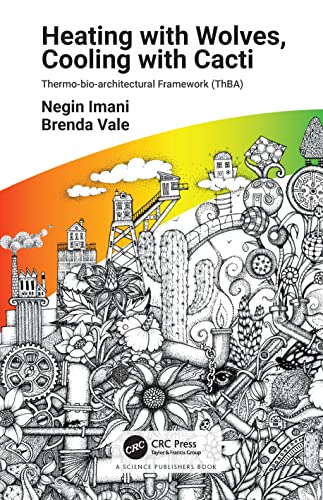

Heating with wolves, cooling with cacti : thermo-bio-architectural framework (ThBA) / Negin Imani, Brenda Vale. txt
Editor: Boca Raton : CRC Press, Taylor & Francis Group, 2022Edición: First editionDescripción: viii, 250 p. ; ill. ; 25 cmTipo de contenido:- text
- unmediated
- volume
- 9780367534387
- 9780367534400
- 23 720/.47
- NA2543.B56 I43 2022
| Imagen de cubierta | Tipo de ítem | Biblioteca actual | Biblioteca de origen | Colección | Ubicación en estantería | Signatura topográfica | Materiales especificados | Info Vol | URL | Copia número | Estado | Notas | Fecha de vencimiento | Código de barras | Reserva de ítems | Prioridad de la cola de reserva de ejemplar | Reservas para cursos | |
|---|---|---|---|---|---|---|---|---|---|---|---|---|---|---|---|---|---|---|
| Libro | CARIBET Biblioteca Arquitectura Colección General CARIBET | General NA2543.B56 I43 2022 (Navegar estantería(Abre debajo)) | 1 | Disponible | 91000000074849 |
Descripciones mejoradas de Syndetics:
This book describes the detailed process behind the development of a comprehensive thermo-bio-architectural framework (the ThBA). This framework systematically connects the thermal performance requirements of a building to relevant solutions found in the natural world. This is the first time that architecture has been connected to biology in this manner. The book provides an in-depth understanding of thermoregulatory strategies in animals and plants and links these to equivalent solutions in architectural design. The inclusion of this fundamental knowledge, along with the systematic process of accessing it, should open up new avenues for the generation of energy efficient and sustainable buildings.
Includes bibliographical references and index.
1. Building Energy Use and Climate Change --
1.1 Climate change --
1.2 Sustainability and climate change --
1.2.1 Ecologically Sustainable Design (ESD) --
1.3 Biomimicry --
2. Thermal Issues and Building Design --
2.1 Design and climate --
2.1.1 Cold winters, cool summers --
2.1.2 Hot summers, cold winters --
2.1.3 Hot, wet climates --
2.1.4 Traditional building --
2.2 Modern buildings --
2.2.1 Passive solar design --
2.2.2 Active solar design --
2.2.3 Passive and active comparisons --
2.3 Zero energy buildings --
3. Biomimicry and Its Approaches to Energy-Efficient Building Design --
3.1 Architecture and nature: an unending dialogue --
3.1.1 Design inspired by nature: its origins and background --
3.1.2 Biomimicry in architecture --
3.1.3 Biomimicry and innovative solutions for building design --
4. Linking Biology and Buildings --
4.1 The search for a link between biomimetic design and building energy efficiency --
4.2 Extraction of useful data --
4.2.1 Animals and insects --
4.2.2 Plants --
4.2.3 Human beings --
4.2.4 Other relevant examples --
4.3 A systematic way of accessing natural examples of thermoregulation --
4.3.1 BioGen (a biomimetic framework for design concept generation) --
4.4 Assessment --
4.4.1 The examples of biomimetic design --
4.4.2 Badarnah's approach to biomimetic design --
4.4.3 The next step --
5. Developing a Structure for the ThBA --
5.1 Environmental adaptation: a leap forward for energy efficiency --
5.2 Literature review --
5.2.1 Step 1: basics of bio-heat transfer --
5.2.2 Step 2: classification measures of biological thermal regulation strategies --
5.2.3 Step 3: thermal physiology of heat regulation in nature --
5.2.4 Similar patterns of thermoregulation in organisms and buildings --
5.2.5 Endothermy and ectothermy as a means of classification --
6. Thermoregulation in Nature --
6.1 Introduction --
6.2 Controlling heat: passive methods of thermal adaptation in animals --
6.2.1 Generating heat --
6.2.2 Controlling heat gain --
6.2.3 Controlling heat loss --
6.3 Controlling heat: active methods of thermal adaptation in animals --
6.3.1 Generating heat --
6.3.2 Controlling heat gain --
6.3.3 Controlling heat loss --
6.4 Controlling heat: thermal adaptation in plants --
6.4.1 Generating heat --
6.4.2 Controlling heat gain --
6.4.3 Controlling heat loss --
6.5 Generating the ThBA --
7. Parallels in Building Design --
7.1 Introduction --
7.2 Passive methods of thermal regulation in buildings --
7.2.1 Generating heat --
7.2.2 Controlling heat gain --
7.2.3 Controlling heat loss --
7.3 Active methods of thermal regulation in buildings --
7.3.1 Generating heat --
7.3.2 Controlling heat gain --
7.3.3 Controlling heat loss --
7.4 Active and passive methods of thermal regulation in buildings (Plants) --
7.4.1 Generating heat --
7.4.2 Controlling heat gain --
7.4.3 Controlling heat loss --
7.5 The hierarchical structure of the first draft of the ThBA --
7.6 Biology to architecture transfer --
7.7 The complementary aspects of thermoregulation --
7.7.1 Systems in organisms --
7.7.2 Interconnection of systems --
7.7.3 HVAC in buildings and circulatory and respiratory systems in organisms --
8. Testing the ThBA --
8.1 Introduction --
8.2 Focus group --
8.3 Identification of thermal issues --
8.4 Building A in Dunedin (using the ThBA Version 01, Test 01): the need to redesign the ThBA --
8.4.1 The process of redesigning the ThBA Version 01 --
8.5 Building A in Dunedin (using the ThBA Version 04, Test 01) --
8.5.1 Inappropriate solutions --
8.5.2 Appropriate solutions --
8.6 Building A in Auckland (using the ThBA version 04, Test 02) --
8.6.1 Action one: decreasing heat gain --
8.6.2 Action two: avoiding heat gain and action three: increasing heat loss --
8.7 Architects know biomimicry by instinct --
8.7.1 Controlling conductive and convective heat gain through temperature gradient --
8.7.2 Controlling convective and conductive heat loss through temperature gradient --
8.7.3 Controlling solar heat gain through transmission and absorption --
8.7.4 Controlling solar heat gain through surface area --
8.7.5 Controlling evaporation through surface area --
8.7.6 Controlling evaporation through air flow --
8.7.7 Controlling conductive and convective heat gain through surface area --
8.7.8 Controlling convective and conductive heat loss and heat gain through heat transfer coefficient --
9. Developing a Framework for Bio-Inspired Energy-Efficient Building Design --
9.1 Introduction --
9.2 The usefulness of the ThBA -
9.2.1 Possible links revealed by the ThBA --
9.3 Does nature hold the answer? --
9.3.1 Trade-offs --
9.3.2 Unknown nature --
9.4 Waiting for new technology --
9.5 What was learned from developing the ThBA --
"The book highlights the absence of a systematic process for problem-based biomimetic architectural design. While existing biomimetic design approaches are metaphorical and non-methodological, this book presents a cross-disciplinary bio-inspired design tool that for the first time connects architecture to biology with the aim of designing biomimetic energy-efficient buildings. The proposed tool is a framework consisting of a comprehensive list of generalised thermal adaptation strategies used by plants and animals. The systematic design process introduced in this book enables those seeking innovative solutions to overcome thermal challenges in buildings to find relevant thermoregulatory strategies in nature"--
Notas de autor provistas por Syndetics
Negin Imaniis a lecturer in Architectural and Building Science at Otago Polytechnic, New Zealand, with a PhD (2020) in Architecture from Victoria University of Wellington. Since 2013, she has been engaged in teaching and supervising research conducted by graduate and postgraduate students. Her research is focused on sustainable architecture and biomimetic energy efficient building design. For the last six years she has been working as a researcher in the Centre for Building Performance Research at Victoria University of Wellington in New Zealand from where she obtained her PhD.
Brenda Valeis a professorial research fellow in the School of Architecture at Victoria University of Wellington. She has extended her life-time interest in low energy and autonomous buildings to also embrace the environmental impact of those that live in them. This interest has led to a number of recent books focused on reducing the impact of buildings and the built environment, some of which, like this current one, have been written with former students.