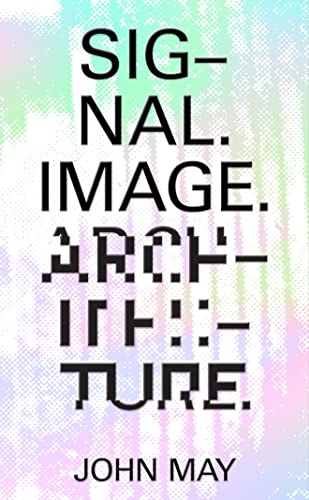

Signal. image. architecture. : everything is already an image. / John May. txt
Editor: New York : Columbia Books on Architecture and the City , 2019Descripción: 143 p. : ill.; photo. ; 19 cmTipo de contenido:- text
- unmediated
- volume
- 9781941332467
- 1941332463
- 23 720.1
- NA2500 M377 2019
| Imagen de cubierta | Tipo de ítem | Biblioteca actual | Biblioteca de origen | Colección | Ubicación en estantería | Signatura topográfica | Materiales especificados | Info Vol | URL | Copia número | Estado | Notas | Fecha de vencimiento | Código de barras | Reserva de ítems | Prioridad de la cola de reserva de ejemplar | Reservas para cursos | |
|---|---|---|---|---|---|---|---|---|---|---|---|---|---|---|---|---|---|---|
| Libro | CARIBET Biblioteca Arquitectura Colección General CARIBET | General NA2500 M377 2019 (Navegar estantería(Abre debajo)) | 1 | Disponible | 91000000066357 |
Descripciones mejoradas de Syndetics:
Architecture is immersed in an immense cultural experiment called imaging. Yet the technical status and nature of that imaging must be reevaluated. What happens to the architectural mind when it stops pretending that electronic images of drawings made by computers are drawings? When it finally admits that imaging is not drawing, but is instead something that has already obliterated drawing? These are questions that, in general, architecture has scarcely begun to pose, imagining that somehow its ideas and practices can resist the culture of imaging in which the rest of life now either swims or drowns. To patiently describe the world to oneself is to prepare the ground for an as yet unavailable politics. New descriptions can, under the right circumstances, be made to serve as the raw substrate for political impulses that cannot yet be expressed or lived, because their preconditions have not been arranged and articulated.
Signal. Image. Architecture. aims to clarify the status of computational images in contemporary architectural thought and practice by showing what happens if the technical basis of architecture is examined very closely, if its technical terms and concepts are taken very seriously, at times even literally. It is not a theory of architectural images, but rather a brief philosophical description of architecture after imaging .
Includes bibliographical references and index.
myelectriceye --
Three axioms x three storage formats --
What orthography was --
Real time : the state of management --
The automatic present (or, The politics of very large numbers) --
Telemasis. --
"Architecture is immersed in an immense cultural experiment called imaging. Yet the technical status and nature of that imaging must be reevaluated. What happens to the architectural mind when it stops pretending that electronic images of drawings made by computers are drawings? When it finally admits that imaging is not drawing, but is instead something that has already obliterated drawing? These are questions that, in general, architecture has scarcely begun to pose, imagining that somehow its ideas and practices can resist the culture of imaging in which the rest of life now either swims or drowns. To patiently describe the world to oneself is to prepare the ground for an as yet unavailable politics. New descriptions can, under the right circumstances, be made to serve as the raw substrate for political impulses that cannot yet be expressed or lived, because their preconditions have not been arranged and articulated. Signal. Image. Architecture. aims to clarify the status of computational images in contemporary architectural thought and practice by showing what happens if the technical basis of architecture is examined very closely, if its technical terms and concepts are taken very seriously, at times even literally. It is not a theory of architectural images, but rather a brief philosophical description of architecture after imaging." --
Notas de autor provistas por Syndetics
John May is a professional advantage player who tours the world beating casinos. He is the author of Baccarat for the Clueless and writes regularly for www.scoblete.com at RGT Online and for The New Chance and Circumstance magazine. He also has his own website - The Card Counters Cafe.(Bowker Author Biography)