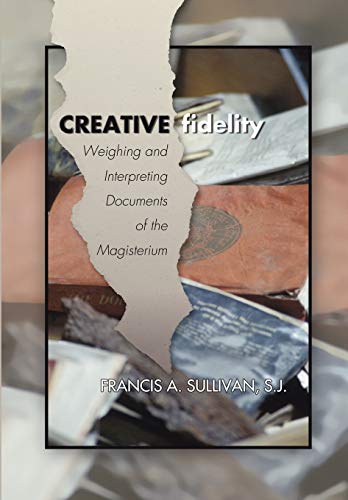

Creative Fidelity: Weighing and Interpreting Documents of the Magisterium / Francis A. Sullivan, S.J.
Wipf & Stock Pub 2003ISBN:- 978-1592442089
- BX 1746 .S798 2003
| Imagen de cubierta | Tipo de ítem | Biblioteca actual | Biblioteca de origen | Colección | Ubicación en estantería | Signatura topográfica | Materiales especificados | Info Vol | URL | Copia número | Estado | Notas | Fecha de vencimiento | Código de barras | Reserva de ítems | Prioridad de la cola de reserva de ejemplar | Reservas para cursos | |
|---|---|---|---|---|---|---|---|---|---|---|---|---|---|---|---|---|---|---|
| Libro BET | Biblioteca Escuela de Teología Colección General BET | BX 1746 .S798 2003 (Navegar estantería(Abre debajo)) | Disponible | 41000000000274 |
Descripciones mejoradas de Syndetics:
An important part of the theologians' task is to make the church's dogmas meaningful to the faithful of their own time. The attitude with which a theologian should undertake this task of communicating a contemporary understanding of the faith is well described as one of creative fidelity.Two basic sources for Catholic theology are scripture and the documents of the Magisterium. Just as Catholic theologians must know how to distinguish among the various literary genres in the bible and how to interpret scriptural texts, they must also know how to determine the relative degree of authority exercised in the various documents issued by popes or councils and how to apply the principles of hermeneutics in interpreting them.This book offers guidelines that will help those interested in Catholic theology to make sound judgments about the authority and meaning of the documents in which the church has expressed its faith over the centuries. Making such judgments requires a knowledge of the correct level of response these documents call for from the faithful and the ability to offer to today's faithful a contemporary understanding of their faith. The task of the interpreter is one of creative fidelity, requiring a delicate balance between being faithful to the original meaning of the text and creative in finding the concepts and terms that make it meaningful today.
Previously publish by Paulist Press, January, 1996.
Weighing and interpreting documents of the magisterium: What is it? Why do it?--Evaluating the level of authority exercised in documents of the magisterium--What is a dogma os faith--Identifying defined dogmas in conciliar decrees: A. Criteria--Identifying defined dogmas in conciliar decrees: B.Application of criteria--Identifying defined dogmas in papal documents--Undefined dogmas--The interpretation of doctrinal texts--Some examples of interpretation--Documents of the ordinary magisterium--Evaluation and interpretation of the documents of Vatican II--Cooperation in a charitable duty.
An important part of the theologians' task is to make the church's dogmas meaningful to the faithful of their own time. The attitude with which a theologian should undertake this task of communicating a contemporary understanding of the faith is well described as one of creative fidelity. Two basic sources for Catholic theology are scripture and the documents of the Magisterium. Just as Catholic theologians must know how to distinguish among the various literary genres in the bible and how to interpret scriptural texts, they must also know how to determine the relative degree of authority exercised in the various documents issued by popes or councils and how to apply the principles of hermeneutics in interpreting them. This book offers guidelines that will help those interested in Catholic theology to make sound judgments about the authority and meaning of the documents in which the church has expressed its faith over the centuries. Making such judgments requires a knowledge of the correct level of response these documents call for from the faithful and the ability to offer to today's faithful a contemporary understanding of their faith. The task of the interpreter is one of creative fidelity, requiring a delicate balance between being faithful to the original meaning of the text and creative in finding the concepts and terms that make it meaningful today. --Back cover