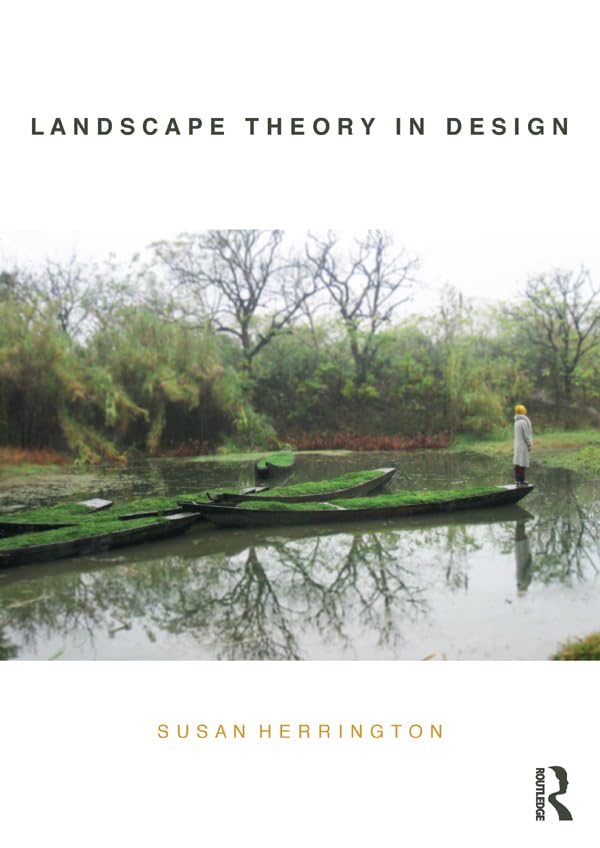

Landscape theory in design / Susan Herrington.
Editor: New York, NY : Routledge, 2017Descripción: 1 online resourceTipo de contenido:- text
- computer
- online resource
- 9781315470764
- 1315470764
- 23 712.01
- SB472.45 H47 2017
| Imagen de cubierta | Tipo de ítem | Biblioteca actual | Biblioteca de origen | Colección | Ubicación en estantería | Signatura topográfica | Materiales especificados | Info Vol | URL | Copia número | Estado | Notas | Fecha de vencimiento | Código de barras | Reserva de ítems | Prioridad de la cola de reserva de ejemplar | Reservas para cursos | |
|---|---|---|---|---|---|---|---|---|---|---|---|---|---|---|---|---|---|---|
| Libro electrónico | Biblioteca de Mayagüez Acceso en línea | SB472.45 H47 2017 (Navegar estantería(Abre debajo)) | Ebook c. 1 | Disponible | 50000003288098 | |||||||||||||
| Libro Electrónico CARIBET | CARIBET Biblioteca Arquitectura Libros Electrónicos CARIBET | Electrónico SB472.45 H47 2017 (Navegar estantería(Abre debajo)) | Disponible | caribet297557 |
Descripciones mejoradas de Syndetics:
Phenomenology, Materiality, Cybernetics, Palimpsest, Cyborgs, Landscape Urbanism, Typology, Semiotics, Deconstruction - the minefield of theoretical ideas that students must navigate today can be utterly confusing, and how do these theories translate to the design studio?
Landscape Theory in Design introduces theoretical ideas to students without the use of jargon or an assumption of extensive knowledge in other fields, and in doing so, links these ideas to the processes of design. In five thematic chapters Susan Herrington explains: the theoretic groundings of the theory of philosophy, why it matters to design, an example of the theory in a work of landscape architecture from the twentieth and twenty-first centuries, debates surrounding the theory (particularly as they elaborate modern and postmodern thought) and primary readings that can be read as companions to her text. An extensive glossary of theoretical terms also adds a vital contribution to students' comprehension of theories relevant to the design of landscapes and gardens.
Covering the design of over 40 landscape architects, architects, and designers in 111 distinct projects from 20 different countries, Landscape Theory in Design is essential reading for any student of the landscape.
Includes bibliographical references and index.
Introduction -- 1. Forming -- 2. Spatial practices -- 3. Material matters -- 4. Language -- 5. Systems logic -- Glossary -- Bibliography -- Index.
Phenomenology, Materiality, Cybernetics, Palimpsest, Cyborgs, Landscape Urbanism, Typology, Semiotics, Deconstruction - the minefield of theoretical ideas that students must navigate today can be utterly confusing, and how do these theories translate to the design studio? Landscape Theory in Design introduces theoretical ideas to students without the use of jargon or an assumption of extensive knowledge in other fields, and in doing so, links these ideas to the processes of design. In five thematic chapters Susan Herrington explains: the theoretic groundings of the theory of philosophy, why it matters to design, an example of the theory in a work of landscape architecture from the twentieth and twenty-first centuries, debates surrounding the theory (particularly as they elaborate modern and postmodern thought) and primary readings that can be read as companions to her text. An extensive glossary of theoretical terms also adds a vital contribution to students'comprehension of theories relevant to the design of landscapes and gardens. Covering the design of over 40 landscape architects, architects, and designers in 111 distinct projects from 20 different countries, Landscape Theory in Design is essential reading for any student of the landscape.
Print version record.
Notas de autor provistas por Syndetics
Susan Herrington is Professor in the School of Architecture and Landscape Architecture at the University of British Columbia, Vancouver, Canada, where she teaches in the landscape architecture and architecture programmes. She is author of On Landscapes (Routledge) and Cornelia Hahn Oberlander: Making the Modern Landscape . She is also a licensed landscape architect in the State of Connecticut.