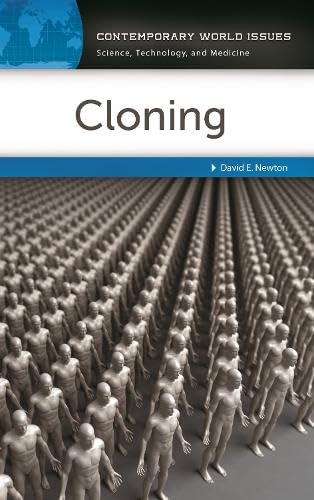

Cloning : a reference handbook / David E. Newton.
Series Contemporary world issuesEditor: Santa Barbara, California : ABC-CLIO, LLC, [2015]Descripción: 1 online resource (326 pages)Tipo de contenido:- text
- computer
- online resource
- 9781610696944
- 1610696948
- 571.8 23
- QH442.2 .N495 2015
| Imagen de cubierta | Tipo de ítem | Biblioteca actual | Biblioteca de origen | Colección | Ubicación en estantería | Signatura topográfica | Materiales especificados | Info Vol | URL | Copia número | Estado | Notas | Fecha de vencimiento | Código de barras | Reserva de ítems | Prioridad de la cola de reserva de ejemplar | Reservas para cursos | |
|---|---|---|---|---|---|---|---|---|---|---|---|---|---|---|---|---|---|---|
| Libro electrónico | Biblioteca de Mayagüez Acceso en línea | QH442.2 .N495 2015 (Navegar estantería(Abre debajo)) | Ebook c. 1 | Disponible | 50000003283354 | |||||||||||||
| Libro electrónico | Biblioteca Encarnación Valdés Acceso en línea | 571.8 (Navegar estantería(Abre debajo)) | Disponible | ocn916449456 |
Descripciones mejoradas de Syndetics:
This book provides a detailed introduction to the cloning of both plants and animals and discusses the important social, ethical, political, technical, and other issues related to the practice. The history of cloning experiments dates back more than a century, but advances in technology in recent decades have multiplied the potential applications of cloning-and expanded the controversies surrounding these possibilities. Cloning: A Reference Handbook provides an accessible description of the development of plant and animal cloning from the early stages of human civilization to the present day and coherently covers the science and technology involved. It reviews the essential controversies that have arisen about cloning-particularly applications involving human DNA-as researchers have advanced and extended the tools for cloning organisms. Additionally, the book discusses public opinion about cloning and the legislative and administration actions that have been taken with regard to the practice.This single-volume work provides a broad treatment of the subject, going back further in history than is the case with most texts, covering plant cloning and providing a thorough overview of the nature of animal cloning and related issues. Examples of the topics covered include the natural "cloning" processes of regeneration in plants and animals; crucial research breakthroughs on animal cloning by Robert Briggs and Thomas King, John Gurdon, Gail Martin, James Till and Earnest McCulloch, and others; and the laws that regulate which types of cloning are allowed and prohibited in the United States and in other countries.
Includes bibliographical references and index.
1. Background and History -- 2. Problems, Controversies, and Solutions -- 3. Perspectives -- 4. Profiles -- 5. Data and Documents -- 6. Resources for Further Research -- 7. Chronology -- Glossary -- Index.
The history of cloning experiments dates back more than a century, but advances in technology in recent decades have multiplied the potential applications of cloning—and expanded the controversies surrounding these possibilities. Cloning: A Reference Handbook provides an accessible description of the development of plant and animal cloning from the early stages of human civilization to the present day and coherently covers the science and technology involved. It reviews the essential controversies that have arisen about cloning—particularly applications involving human DNA—as researchers have advanced and extended the tools for cloning organisms. Additionally, the book discusses public opinion about cloning and the legislative and administration actions that have been taken with regard to the practice.This single-volume work provides a broad treatment of the subject, going back further in history than is the case with most texts, covering plant cloning and providing a thorough overview of the nature of animal cloning and related issues. Examples of the topics covered include the natural'cloning'processes of regeneration in plants and animals; crucial research breakthroughs on animal cloning by Robert Briggs and Thomas King, John Gurdon, Gail Martin, James Till and Earnest McCulloch, and others; and the laws that regulate which types of cloning are allowed and prohibited in the United States and in other countries.
Print version record.