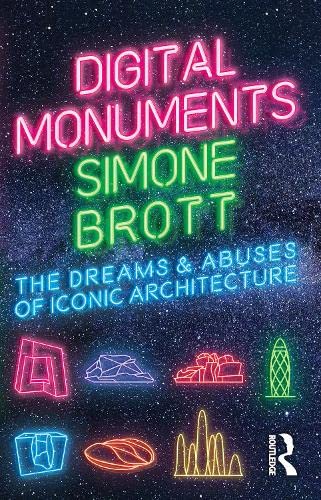

Digital Monuments : The Dreams and Abuses of Iconic Architecture / Simone Brott.
Editor: Milton : Taylor & Francis Group, 2019Fecha de copyright: ©2020Descripción: 1 online resource (209 pages)Tipo de contenido:- text
- computer
- online resource
- 9780429521829
- 720.103
- NA2543 .F35 .B76 2020
| Imagen de cubierta | Tipo de ítem | Biblioteca actual | Biblioteca de origen | Colección | Ubicación en estantería | Signatura topográfica | Materiales especificados | Info Vol | URL | Copia número | Estado | Notas | Fecha de vencimiento | Código de barras | Reserva de ítems | Prioridad de la cola de reserva de ejemplar | Reservas para cursos | |
|---|---|---|---|---|---|---|---|---|---|---|---|---|---|---|---|---|---|---|
| Libro electrónico | Biblioteca de Mayagüez Acceso en línea | NA2543.F35 B76 2020 (Navegar estantería(Abre debajo)) | Ebook c. 1 | Disponible | 50000003285607 | |||||||||||||
| Libro electrónico | Biblioteca Mons. Iñaki Mallona (Arecibo) Acceso en línea | 1 | Disponible | 60000010176789 | ||||||||||||||
| Libro Electrónico CARIBET | CARIBET Biblioteca Arquitectura Libros Electrónicos CARIBET | Electrónico NA2543.F35 B76 2020 (Navegar estantería(Abre debajo)) | 1 | Disponible | caribet297234 |
Descripciones mejoradas de Syndetics:
Digital Monuments radically explodes "iconic architecture" of the new millennium and its hijacking of the public imagination via the digital image. Hallucinatory constructions such as Rem Koolhaas's CCTV headquarters in Beijing, Frank Gehry's Guggenheim Museum in Bilbao and Zaha Hadid's Performing Arts Centre in Abu Dhabi are all introduced to the world by immortal digital imagery that floods the internet--yet comes to haunt the actualised buildings.
Like holograms, these "digital monuments," which violently push physics and engineering to their limits, flicker eerily between the real and the unreal--invoking fantasies of omnipotence, immortality and utopian cities. But this experience of iconic architecture as a digital dream on the ground conceals from the urban spectator the social reality of the buildings and the rigidity of their ideology.
In 18 micro-essays, Digital Monuments exposes the stereotypes of iconic architecture while depicting the savagery of the industry, from the Greek and Spanish crises triggered by financialised iconic development to mass labour-deaths on construction sites in the UAE.
Cover -- Praise -- Half Title -- Title Page -- Copyright Page -- Dedication -- Table of Contents -- Acknowledgements -- Introduction: architecture's fake left -- Definitions -- Notes -- Chapter 1: Digital ghost -- Notes -- Chapter 2: Modernity's opiate -- Notes -- Chapter 3: Anti-iconic -- Notes -- Chapter 4: Reflections from damaged modernity -- Notes -- Chapter 5: Elysium -- Notes -- Chapter 6: Loop -- Notes -- Chapter 7: Sacrifice -- Debt repayment -- Notes -- Chapter 8: How iconic architecture triggered the Greek crisis -- Notes -- Chapter 9: The look of money -- Notes -- Chapter 10: Futurist iconic -- Notes -- Chapter 11: The architect-financier -- Notes -- Chapter 12: The abuses of iconic architecture -- Notes -- Chapter 13: The Zaha Hadid scandal -- Moral distance -- Notes -- Chapter 14: Iconic dystopias and moral law -- Just say no -- Why does architecture get a pass? -- Notes -- Chapter 15: The moral contents of the digital image -- Note -- Chapter 16: Vagina stadium -- Notes -- Chapter 17: Autonomy and vanity -- Chapter 18: After iconic architecture -- Georges Teyssot -- Marko Jobst -- Wolf D. Prix -- Ben van Berkel -- Joseph Young -- David Gianotten -- Simon Sadler -- Notes -- Select bibliography -- Index.
Digital Monuments radically explodes "iconic architecture" of the new millennium and its hijacking of the public imagination via the digital image. Hallucinatory constructions such as Rem Koolhaas's CCTV headquarters in Beijing, Frank Gehry's Guggenheim Museum in Bilbao and Zaha Hadid's Performing Arts Centre in Abu Dhabi are all introduced to the world by immortal digital imagery that floods the internet--yet comes to haunt the actualised buildings. Like holograms, these "digital monuments," which violently push physics and engineering to their limits, flicker eerily between the real and the unreal--invoking fantasies of omnipotence, immortality and utopian cities. But this experience of iconic architecture as a digital dream on the ground conceals from the urban spectator the social reality of the buildings and the rigidity of their ideology. In 18 micro-essays, Digital Monuments exposes the stereotypes of iconic architecture while depicting the savagery of the industry, from the Greek and Spanish crises triggered by financialised iconic development to mass labour-deaths on construction sites in the UAE.
Description based on publisher supplied metadata and other sources.
Electronic reproduction. Ann Arbor, Michigan : ProQuest Ebook Central, 2021. Available via World Wide Web. Access may be limited to ProQuest Ebook Central affiliated libraries.
Notas de autor provistas por Syndetics
Simone Brott is an architect and theorist, and Senior Lecturer in Architecture at Queensland University of Technology. Educated at Yale University and The University of Melbourne, she writes on the politics of the digital image in architectural production and the contemporary city. Her books include Architecture for a Free Subjectivity: Deleuze and Guattari at the Horizon of the Real (Routledge, 2011) and Architecture Post Mortem: The Diastolic Architecture of Decline, Dystopia, and Death (New editions, Routledge, 2016). A regular contributor to Log (Anycorp, New York), Brott has also written for AD Architectural Design (Wiley, London); Thresholds : Journal of the MIT Department of Architecture; Architectural Theory Review : Journal of the Department of Architecture, The University of Sydney; Journal of Public Space (City Space, Italy); and The Journal of Architecture and Urbanism . She has lectured at Yale University, Harvard University, Boston University, the University of Michigan, KTH Royal Institute of Technology, Stockholm, Strathclyde University, Glasgow, and the University of Melbourne. Brott is currently working on a new project about the financialisation of cities.