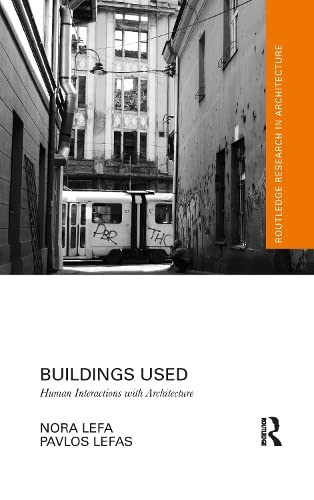

Buildings Used : Human Interactions with Architecture / Nora Lefa and Pavlos Lefas.
Series Routledge Research in Architecture SerEditor: Milton : Taylor & Francis Group, 2020Fecha de copyright: ©2020Descripción: 1 online resource (189 pages)Tipo de contenido:- text
- computer
- online resource
- 9781000690699
- 720.103
- NA2542.4 .L443 2020
| Imagen de cubierta | Tipo de ítem | Biblioteca actual | Biblioteca de origen | Colección | Ubicación en estantería | Signatura topográfica | Materiales especificados | Info Vol | URL | Copia número | Estado | Notas | Fecha de vencimiento | Código de barras | Reserva de ítems | Prioridad de la cola de reserva de ejemplar | Reservas para cursos | |
|---|---|---|---|---|---|---|---|---|---|---|---|---|---|---|---|---|---|---|
| Libro electrónico | Biblioteca de Mayagüez Acceso en línea | NA2542.4 .L443 2020 (Navegar estantería(Abre debajo)) | Ebook c. 1 | Disponible | 50000003284238 | |||||||||||||
| Libro Electrónico CARIBET | CARIBET Biblioteca Arquitectura Libros Electrónicos CARIBET | Electrónico NA2542.4 L443 2020 (Navegar estantería(Abre debajo)) | Disponible | caribet297233 |
Descripciones mejoradas de Syndetics:
Buildings Used takes the reader on an exploration into the impact of use on buildings and users. While most histories and theories of architecture focus on a building's conception, design, and realization, this book argues that its identity is formed after its completion through use; and that the cultural and psychological effects of its use on those inhabiting it are profound. Across eight investigative chapters, authors Nora Lefa and Pavlos Lefas propose that use should not be understood merely as function. Instead, this book argues that we also use buildings by creating, destroying or appropriating them, and discusses a series of philosophical, cultural and design issues related to use. Buildings Used would appeal to students and scholars in architectural theory, history and cultural studies.
Cover -- Half Title -- Series Page -- Title -- Copyright -- Contents -- Introduction -- PART I Use as function -- 1 A historical perspective -- Form and use I -- Form and use in the passage of time -- Perceived use -- The name of use -- The persistence of form -- Form versus use -- The persistence of use -- 2 Aspects of use -- Traces of use -- The body of users -- Form and perception -- Use and narrative -- Perception and identity -- The question of ontology: the anthropological approach -- The question of ontology: signification -- Architecture: signification and identity -- Identity and creators -- Evaluation issues -- 3 Some philosophical considerations -- Echoes of the theory of signification in architecture - the theory of intention -- Echoes of the theory of signification in architecture - the theory of reflection -- Echoes of the theory of signification in architecture - the theory of construction I -- Echoes of the theory of signification in architecture - the theory of construction II -- The ontological character of the use -- 4 Use and architectural design -- The instrumentalisation of buildings: from Vitruvius to modernism -- Function and form in history: the origins -- Function and form in history: the modern era -- The disengagement of function from form -- Forms for every use: digital morphogenesis -- PART II Use as attitude -- 5 Users and use -- Form and use II -- Use and acting subject -- Use as cultural phenomenon -- The roots of our interest in the use of buildings -- Us and the others -- The beautiful and the mediocre -- Personification of edifices -- The life circle -- 6 Destruction -- Buildings in themselves, and buildings as symbols -- The varying motives for destruction -- Destruction: ideological and political motives -- Destruction: psychological motives -- Destruction: practical motives -- A different kind of destruction.
7 Creation -- The motives for creation -- The act and the product I -- The act and the product II -- Use as creation -- Reuse -- Creativity and aggression -- Beyond creation: the quest for the new -- 8 Disregard and appropriation -- Disregard -- Appropriation I -- Appropriation and immortality -- Appropriation and nation-building -- Buildings and artworks as trophies -- Appropriation II -- Restoration as appropriation -- Restoration and authenticity -- Some psychological and ideological aspects of restoration -- The unholy exchange -- Afterword -- Referenced bibliography -- Index.
Buildings Used takes the reader on an exploration into the impact of use on buildings and users. While most histories and theories of architecture focus on a building's conception, design, and realization, this book argues that its identity is formed after its completion through use; and that the cultural and psychological effects of its use on those inhabiting it are profound. Across eight investigative chapters, authors Nora Lefa and Pavlos Lefas propose that use should not be understood merely as function. Instead, this book argues that we also use buildings by creating, destroying or appropriating them, and discusses a series of philosophical, cultural and design issues related to use. Buildings Used would appeal to students and scholars in architectural theory, history and cultural studies.
Description based on publisher supplied metadata and other sources.
Electronic reproduction. Ann Arbor, Michigan : ProQuest Ebook Central, 2021. Available via World Wide Web. Access may be limited to ProQuest Ebook Central affiliated libraries.
Notas de autor provistas por Syndetics
Nora Lefa, MSc, MA, PhD, is an architect and visual artist. She is an Adjunct Lecturer at the School of Architecture, University of Sarajevo.
Pavlos Lefas is a Professor in History and Theory of Architecture at the Department of Architecture, University of Patras, Greece.