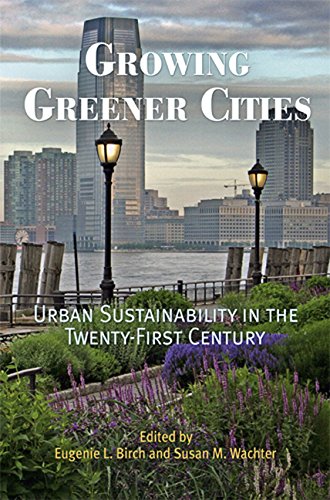

Growing Greener Cities : Urban Sustainability in the Twenty-First Century / edited by Eugenie L. Birch and Susan M. Wachter.
Series The City in the Twenty-First Century Ser | The City in the Twenty-First Century SerEditor: Philadelphia : University of Pennsylvania Press, 2008Descripción: 1 online resource (421 pages)Tipo de contenido:- text
- computer
- online resource
- 9780812204094
- 307.76
- HT241 .G76 2008
| Imagen de cubierta | Tipo de ítem | Biblioteca actual | Biblioteca de origen | Colección | Ubicación en estantería | Signatura topográfica | Materiales especificados | Info Vol | URL | Copia número | Estado | Notas | Fecha de vencimiento | Código de barras | Reserva de ítems | Prioridad de la cola de reserva de ejemplar | Reservas para cursos | |
|---|---|---|---|---|---|---|---|---|---|---|---|---|---|---|---|---|---|---|
| Libro electrónico | Biblioteca de Mayagüez Acceso en línea | HT241 .G76 2008 (Navegar estantería(Abre debajo)) | Ebook c. 1 | Disponible | 50000003287223 | |||||||||||||
| Libro Electrónico CARIBET | CARIBET Biblioteca Arquitectura Libros Electrónicos CARIBET | Electrónico HT241 G76 2008 (Navegar estantería(Abre debajo)) | 1 | Disponible | caribet297087 |
Descripciones mejoradas de Syndetics:
Nineteenth-century landscape architect Frederick Law Olmsted described his most famous project, the design of New York's Central Park, as "a democratic development of highest significance." Over the years, the significance of green in civic life has grown. In twenty-first-century America, not only open space but also other issues of sustainability--such as potable water and carbon footprints--have become crucial elements in the quality of life in the city and surrounding environment. Confronted by a U.S. population that is more than 70 percent urban, growing concern about global warming, rising energy prices, and unabated globalization, today's decision makers must find ways to bring urban life into balance with the Earth in order to sustain the natural, economic, and political environment of the modern city.
In Growing Greener Cities , a collection of essays on urban sustainability and environmental issues edited by Eugenie L. Birch and Susan M. Wachter, scholars and practitioners alike promote activities that recognize and conserve nature's ability to sustain urban life. These essays demonstrate how partnerships across professional organizations, businesses, advocacy groups, governments, and individuals themselves can bring green solutions to cities from London to Seattle. Beyond park and recreational spaces, initiatives that fall under the green umbrella range from public transit and infrastructure improvement to aquifer protection and urban agriculture.
Growing Greener Cities offers an overview of the urban green movement, case studies in effective policy implementation, and tools for measuring and managing success. Thoroughly illustrated with color graphs, maps, and photographs, Growing Greener Cities provides a panoramic view of urban sustainability and environmental issues for green-minded city planners, policy makers, and citizens.
Includes bibliographical references.
Introduction: Urban Greening and the Green City Ideal -- Part I: Greening at Every Scale: Nation to Roof Tops -- Chapter 1. Taking the Initiative: Why Cities Are Greening Now -- Chapter 2. Growing Greener Regions -- Chapter 3. The Inter-Regional Dimension: The Greening of London and the Wider South East -- Chapter 4. Greening Cities: A Public Realm Approach -- Chapter 5. Growing Greener, New York Style -- Chapter 6. Greener Homes, Greener Cities: Expanding Affordable Housing and Strengthening Cities Through Sustainable Residential Development -- Part II: Getting Greening Done -- Chapter 7. Urban Stream Restoration: Recovering Ecological Services in Degraded Watersheds -- Chapter 8. The Role of Citizen Activists in Urban Infrastructure Development -- Chapter 9. Blue-Green Practices: Why They Work and Why They Have Been So Difficult toImplement Through Public Policy -- Chapter 10. The Roots of the Urban Greening Movement -- Chapter 11. Leveraging Media for Social Change -- Chapter 12. Transformation Through Greening -- Chapter 13. Community Development Finance and the Green City -- Chapter 14. Growing Edible Cities -- Part III: Measuring Urban Greening -- Chapter 15. Ecosystem Services and the Green City -- Chapter 16. Metro Nature: Its Functions, Benefits, andValues -- Chapter 17. Green Investment Strategies: How They Matter for Urban Neighborhoods -- Chapter 18. Measuring the Economic Impacts of Greening: The Center for Neighborhood Technology Green Values Calculator -- Chapter 19. What Makes Today's Green City? -- Afterword -- Notes -- List of Contributors -- Acknowledgments -- Plates follow Chapter 6.
This thoroughly illustrated collection of essays, written by scholars as well as practitioners of urban policy, gives a panoramic view of sustainability and environmental issues for green-minded city planners, policy makers, researchers, and citizens.
Description based on publisher supplied metadata and other sources.
Electronic reproduction. Ann Arbor, Michigan : ProQuest Ebook Central, 2021. Available via World Wide Web. Access may be limited to ProQuest Ebook Central affiliated libraries.
Tabla de contenidos provista por Syndetics
- Preface: Common Ground, Common Good
- Introduction Urban Greening and the Green City Ideal
- Pt. I Greening At Every Scale: Nation To Roof Tops
- 1 Taking the Initiative: Why Cities Are Greening Now
- 2 Growing Greener Regions
- 3 The Inter-Regional Dimension: The Greening of London and the Wider South East
- 4 Greening Cities: A Public Realm Approach
- 5 Growing Greener, New York Style
- 6 Greener Homes, Greener Cities: Expanding Affordable Housing and Strengthening Cities Through Sustainable Residential Development
- Pt. II Getting Greening Done
- 7 Urban Stream Restoration: Recovering Ecological Services in Degraded Watersheds
- 8 The Role of Citizen Activists in Urban Infrastructure Development
- 9 Blue-Green Practices: Why They Work and Why They Have Been So Difficult to Implement Through Public Policy
- 10 The Roots of the Urban Greening Movement Victor Rubin Rubin, Victor(p. 187)
- 11 Leveraging Media for Social Change Harry Wiland Wiland, Harry Dale Bell Bell, Dale(p. 207)
- 12 Transformation Through Greening J. Blaine Bonham, Jr. Bonham, J.Blaine, Jr. Patricia L. Smith Smith, Patricia L.(p. 227)
- 13 Community Development Finance and the Green City Jeremy Nowak Nowak, Jeremy(p. 244)
- 14 Growing Edible Cities Domenic Vitiello Vitiello, Domenic(p. 259)
- Pt. III Measuring Urban Greening
- 15 Ecosystem Services and the Green City
- 16 Metro Nature: Its Functions, Benefits, and Values
- 17 Green Investment Strategies: How They Matter for Urban Neighborhoods
- 18 Measuring the Economic Impacts of Greening: The Center for Neighborhood Technology Green Values Calculator
- 19 What Makes Today's Green City?
- Afterword
- Notes
- List of Contributors