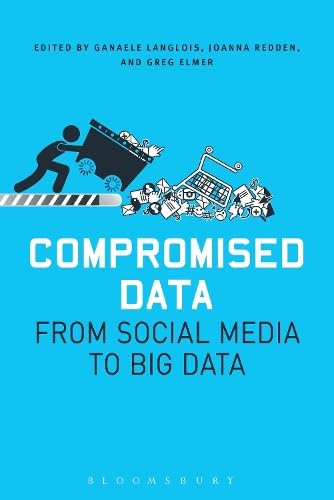
Imagen de portada de Amazon
Imagen de Amazon.com
Imagen de cubierta Syndetics
Portada de Syndetics
Imagen de OpenLibrary

Compromised Data : From Social Media to Big Data / edited by Greg Elmer, Ganaele Langlois, and Joanna Redden.

Colaborador(es): Editor: New York : Bloomsbury Academic & Professional, 2015Fecha de copyright: ©2015Edición: First editionDescripción: 1 online resource (297 pages)Tipo de contenido:
  • text
Tipo de medio:
  • computer
Tipo de soporte:
  • online resource
ISBN:
  • 9781501306525
Tema(s): Género/Forma: Formatos físicos adicionales: Print version:: Compromised DataClasificación CDD:
  • 006.3/12
Clasificación LoC:
  • QA76.9 .D343  C4785 2015
Contenidos:
Intro -- Title Page -- Copyright Page -- Contents -- Notes on Contributors -- Chapter 1 Introduction: Compromised Data-From Social Media to Big Data -- The mineable social -- Big social data and governance -- Compromised data -- Rebuilding the social -- References -- Part One: Data, Power, and Politics -- Chapter 2 Big Data as System of Knowledge: Investigating Canadian Governance -- Introduction -- Method -- Findings -- Conclusion -- References -- Chapter 3 Data Mining Research and the Disintegration of Society: The "Project X" Haren Riots -- Understanding the "Accidental" Haren riots -- The mediated suppression of social despair and disintegration -- The rioters as technocratic "war machines" -- Fatalities: The ghostly return of the humanist spirit -- References -- Chapter 4 Look at the Man Behind the Curtain: Computational Management in "Spontaneous" Citizen Political Campaigning -- Introduction -- Change.org to the rescue: Trayvon Martin and "GOTP" campaign techniques -- MoveOn.org effect 2, electric boogaloo -- We The People's neutral administrative logic -- Comparative affordances -- A week in the life of a distributed petition site -- Stability -- Signature growth -- Additional trends -- Conclusion: Divergent logics and escaping the warehouse metaphor -- References -- Part Two: Data Limit(ed) -- Chapter 5 Easy Data, Hard Data: The Politics and Pragmatics of Twitter Research After the Computational Turn -- The implications of the computational turn -- Platform politics and regimes of access -- The changing scientific affordances of twitter data -- Conclusions -- References -- Chapter 6 Scraping the First Person -- Scraper analytics -- Screen and interface scraping -- Crawler scraping-index and content -- API scraping -- Conclusions -- References.
Chapter 7 Openness Compromised? Questioning the Role of Openness in Digital Methods and Contemporary Critical Praxis -- Introduction -- Digital methods and the value of opening -- Digital methods and the exploit -- Opening up the black box of the Web: Web archiving and its praxis -- The convenience of open data for the digital enclosure -- Platform studies and me-centricity -- Is openness still relevant? -- References -- Chapter 8 Critical Reverse Engineering: The Case of Twitter and TalkOpen -- Introduction -- Reverse engineering and the humanities -- The pragmatic orientation -- The genealogical orientation -- The legal orientation -- The normative orientation -- Reverse engineering twitter: The case of TalkOpen -- Pragmatic -- Genealogical -- Legal -- Normative -- What went wrong with TalkOpen? -- Conclusion: Critical reverse engineering as a bridge between engineering and humanities -- References -- Part Three: Alt-Data -- Chapter 9 Mapping Movements-Social Movement Research and Big Data: Critiques and Alternatives -- Introduction -- Big data and social movements -- The ethics of social movement research -- New biases in data collection and analysis -- Mapping big data methodologies for social movement research? -- Concluding thoughts and directions forward -- References -- Chapter 10 Data Activism -- Introduction -- Transindividuation and data activism: Socio-technical and political considerations -- Occupy Streams: Data and social media platform politics -- Occupy Data: Data visualization and knowledge production -- Creative data activism -- Conclusions -- References -- Chapter 11 A Contribution to the Political Economy of Personal Archives -- Introduction -- The archive after decentralization -- Archive and milieu -- Objects and care -- Conclusion -- References -- Chapter 12 The Haunted Life of Data.
Introduction: A case for small data -- The Bargh controversy -- Hans the horse: Scene 1-Refraction -- Bargh's retort: Scene 2-Resurrection and the work of interference -- Letting the horse lie: Scene 3-Resurrecting ghosts and diffractive reading -- Denouement: Setting the record straight -- Acknowledgments -- References -- Index.
Resumen: There has been a data rush in the past decade brought about by online communication and, in particular, social media (Facebook, Twitter, Youtube, among others), which promises a new age of digital enlightenment. But social data is compromised: it is being seized by specific economic interests, it leads to a fundamental shift in the relationship between research and the public good, and it fosters new forms of control and surveillance. Compromised Data: From Social Media to Big Data explores how we perform critical research within a compromised social data framework. The expert, international lineup of contributors explores the limits and challenges of social data research in order to invent and develop new modes of doing public research. At its core, this collection argues that we are witnessing a fundamental reshaping of the social through social data mining.
Valoración
    Valoración media: 0.0 (0 votos)
Existencias
Imagen de cubierta Tipo de ítem Biblioteca actual Biblioteca de origen Colección Ubicación en estantería Signatura topográfica Materiales especificados Info Vol URL Copia número Estado Notas Fecha de vencimiento Código de barras Reserva de ítems Prioridad de la cola de reserva de ejemplar Reservas para cursos
Libro electrónico Biblioteca de Mayagüez Acceso en línea QA76.9 .D343 C4785 2015 (Navegar estantería(Abre debajo)) Ebook c. 1 Disponible 50000003284345
Libro electrónico Biblioteca Encarnación Valdés Acceso en línea 006.3/12 (Navegar estantería(Abre debajo)) Disponible EBC2077089
Total de reservas: 0

Descripciones mejoradas de Syndetics:

There has been a data rush in the past decade brought about by online communication and, in particular, social media (Facebook, Twitter, Youtube, among others), which promises a new age of digital enlightenment. But social data is compromised: it is being seized by specific economic interests, it leads to a fundamental shift in the relationship between research and the public good, and it fosters new forms of control and surveillance. Compromised Data: From Social Media to Big Data explores how we perform critical research within a compromised social data framework. The expert, international lineup of contributors explores the limits and challenges of social data research in order to invent and develop new modes of doing public research. At its core, this collection argues that we are witnessing a fundamental reshaping of the social through social data mining.

Intro -- Title Page -- Copyright Page -- Contents -- Notes on Contributors -- Chapter 1 Introduction: Compromised Data-From Social Media to Big Data -- The mineable social -- Big social data and governance -- Compromised data -- Rebuilding the social -- References -- Part One: Data, Power, and Politics -- Chapter 2 Big Data as System of Knowledge: Investigating Canadian Governance -- Introduction -- Method -- Findings -- Conclusion -- References -- Chapter 3 Data Mining Research and the Disintegration of Society: The "Project X" Haren Riots -- Understanding the "Accidental" Haren riots -- The mediated suppression of social despair and disintegration -- The rioters as technocratic "war machines" -- Fatalities: The ghostly return of the humanist spirit -- References -- Chapter 4 Look at the Man Behind the Curtain: Computational Management in "Spontaneous" Citizen Political Campaigning -- Introduction -- Change.org to the rescue: Trayvon Martin and "GOTP" campaign techniques -- MoveOn.org effect 2, electric boogaloo -- We The People's neutral administrative logic -- Comparative affordances -- A week in the life of a distributed petition site -- Stability -- Signature growth -- Additional trends -- Conclusion: Divergent logics and escaping the warehouse metaphor -- References -- Part Two: Data Limit(ed) -- Chapter 5 Easy Data, Hard Data: The Politics and Pragmatics of Twitter Research After the Computational Turn -- The implications of the computational turn -- Platform politics and regimes of access -- The changing scientific affordances of twitter data -- Conclusions -- References -- Chapter 6 Scraping the First Person -- Scraper analytics -- Screen and interface scraping -- Crawler scraping-index and content -- API scraping -- Conclusions -- References.

Chapter 7 Openness Compromised? Questioning the Role of Openness in Digital Methods and Contemporary Critical Praxis -- Introduction -- Digital methods and the value of opening -- Digital methods and the exploit -- Opening up the black box of the Web: Web archiving and its praxis -- The convenience of open data for the digital enclosure -- Platform studies and me-centricity -- Is openness still relevant? -- References -- Chapter 8 Critical Reverse Engineering: The Case of Twitter and TalkOpen -- Introduction -- Reverse engineering and the humanities -- The pragmatic orientation -- The genealogical orientation -- The legal orientation -- The normative orientation -- Reverse engineering twitter: The case of TalkOpen -- Pragmatic -- Genealogical -- Legal -- Normative -- What went wrong with TalkOpen? -- Conclusion: Critical reverse engineering as a bridge between engineering and humanities -- References -- Part Three: Alt-Data -- Chapter 9 Mapping Movements-Social Movement Research and Big Data: Critiques and Alternatives -- Introduction -- Big data and social movements -- The ethics of social movement research -- New biases in data collection and analysis -- Mapping big data methodologies for social movement research? -- Concluding thoughts and directions forward -- References -- Chapter 10 Data Activism -- Introduction -- Transindividuation and data activism: Socio-technical and political considerations -- Occupy Streams: Data and social media platform politics -- Occupy Data: Data visualization and knowledge production -- Creative data activism -- Conclusions -- References -- Chapter 11 A Contribution to the Political Economy of Personal Archives -- Introduction -- The archive after decentralization -- Archive and milieu -- Objects and care -- Conclusion -- References -- Chapter 12 The Haunted Life of Data.

Introduction: A case for small data -- The Bargh controversy -- Hans the horse: Scene 1-Refraction -- Bargh's retort: Scene 2-Resurrection and the work of interference -- Letting the horse lie: Scene 3-Resurrecting ghosts and diffractive reading -- Denouement: Setting the record straight -- Acknowledgments -- References -- Index.

There has been a data rush in the past decade brought about by online communication and, in particular, social media (Facebook, Twitter, Youtube, among others), which promises a new age of digital enlightenment. But social data is compromised: it is being seized by specific economic interests, it leads to a fundamental shift in the relationship between research and the public good, and it fosters new forms of control and surveillance. Compromised Data: From Social Media to Big Data explores how we perform critical research within a compromised social data framework. The expert, international lineup of contributors explores the limits and challenges of social data research in order to invent and develop new modes of doing public research. At its core, this collection argues that we are witnessing a fundamental reshaping of the social through social data mining.

Description based on publisher supplied metadata and other sources.

Electronic reproduction. Ann Arbor, Michigan : ProQuest Ebook Central, 2021. Available via World Wide Web. Access may be limited to ProQuest Ebook Central affiliated libraries.

Reseñas proporcionadas por Syndetics

CHOICE Review

The digital age provides society with many advantages in the areas of communication and information on a personal, social, or political level. Here, more then ten international scholars who have examined the importance and complexity of social data and big data issues address the dangers that may occur in surveillance of online sites, including how and by whom this social data may be transformed and eventually controlled. Under the best scenario, data collection and analysis help society further the common good. However, the results of social data analysis can often be compromised. Avenues such as Facebook and Twitter allow users to share personal information, but often these sites are compromised by marketers who may use this information for profit. Clicking on a link frequently gives researchers worthwhile information, but even an innocuous click can be problematic. In addition, privacy is a major issue. Individuals innocently list information about their age, where they work and live, what their interests and concerns are, where they travel, etc., not realizing the potential adverse effects of their actions. Selected information from data collected online can lead to issues related to social profiling and guilt or innocence, as well as flag persons of interest. Overall, a thought-provoking book for all online users. Summing Up: Recommended. All readership levels. --Deborah J. Gougeon, University of Scranton

Notas de autor provistas por Syndetics

Ganaele Langlois is Assistant Professor at York University, Canada, and Associate Director of the Infoscape Centre for the Study of Social Media, Toronto Metropolitan University, Canada. Her research focuses on new media theory, software studies and technoculture. Joanna Redden is Assistant Professor of Critical Media Studies at the University of Calgary, Canada. Her work investigates how digital technologies influence political, media, and protest practices specifically as related to poverty, inequality, and governance. Greg Elmer is Bell Globemedia Research Chair and Director of the Infoscape Centre for the Study of Social Media at Toronto Metropolitan University, Canada. His research and teaching focus on new media and politics, theories and methods in social media studies, surveillance theory, and media globalization.
Compartir
logopucpr-y-vive

Contáctanos

¡Queremos saber de ti!

Tel. 787.841.2000 Ext. 1801

bibliotecavaldes@pucpr.edu

⁣Búscanos en las redes

© 2026 Desarrollado por Ignite Online • All Rights Reserved • Powered by Koha.