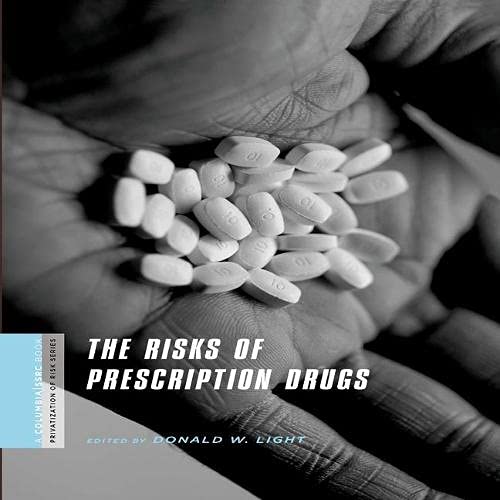

The Risks of Prescription Drugs / edited by Donald Light.
Series A Columbia / SSRC Book (Privatization of Risk)Editor: New York : Columbia University Press, 2010Fecha de copyright: ©2010Descripción: 1 online resource (178 pages)Tipo de contenido:- text
- computer
- online resource
- 9780231519267
- 615.7042
- RA401 .A3 R57 2010
| Imagen de cubierta | Tipo de ítem | Biblioteca actual | Biblioteca de origen | Colección | Ubicación en estantería | Signatura topográfica | Materiales especificados | Info Vol | URL | Copia número | Estado | Notas | Fecha de vencimiento | Código de barras | Reserva de ítems | Prioridad de la cola de reserva de ejemplar | Reservas para cursos | |
|---|---|---|---|---|---|---|---|---|---|---|---|---|---|---|---|---|---|---|
| Libro electrónico | Biblioteca de Mayagüez Acceso en línea | RA401 .A3 R57 2010 (Navegar estantería(Abre debajo)) | Ebook c. 1 | Disponible | 50000003295598 | |||||||||||||
| Libro electrónico | Biblioteca Encarnación Valdés Acceso en línea | 615.7042 (Navegar estantería(Abre debajo)) | Disponible | EBC908738 |
Descripciones mejoradas de Syndetics:
Few people realize that prescription drugs have become a leading cause of death, disease, and disability. Adverse reactions to widely used drugs, such as psychotropics and birth control pills, as well as biologicals, result in FDA warnings against adverse reactions.
The Risks of Prescription Drugs describes how most drugs approved by the FDA are under-tested for adverse drug reactions, yet offer few new benefits. Drugs cause more than 2.2 million hospitalizations and 110,000 hospital-based deaths a year. Serious drug reactions at home or in nursing homes would significantly raise the total. Women, older people, and people with disabilities are least used in clinical trials and most affected.
Health policy experts Donald Light, Howard Brody, Peter Conrad, Allan Horwitz, and Cheryl Stults describe how current regulations reward drug companies to expand clinical risks and create new diseases so millions of patients are exposed to unnecessary risks, especially women and the elderly. They reward developing marginally better drugs rather than discovering breakthrough, life-saving drugs.
The Risks of Prescription Drugs tackles critical questions about the pharmaceutical industry and the privatization of risk. To what extent does the FDA protect the public from serious side effects and disasters? What is the effect of giving the private sector and markets a greater role and reducing public oversight? This volume considers whether current rules and incentives put patients' health at greater risk, the effect of the expansion of disease categories, the industry's justification of high U.S. prices, and the underlying shifts in the burden of risk borne by individuals in the world of pharmaceuticals. Chapters cover risks of statins for high cholesterol, SSRI drugs for depression and anxiety, and hormone replacement therapy for menopause. A final chapter outlines six changes to make drugs safer and more effective.
Suitable for courses on health and aging, gender, disability, and minority studies, this book identifies the Risk Proliferation Syndrome that maximizes the number of people exposed to these risks.
Additional Columbia / SSRC books on the privatization of risk and its implications for Americans:
Bailouts: Public Money, Private ProfitEdited by Robert E. Wright
Disaster and the Politics of InterventionEdited by Andrew Lakoff
Health at Risk: America's Ailing Health System-and How to Heal ItEdited by Jacob S. Hacker
Laid Off, Laid Low: Political and Economic Consequences of Employment InsecurityEdited by Katherine S. Newman
Pensions, Social Security, and the Privatization of RiskEdited by Mitchell A. Orenstein
1. Bearing the Risks of Prescription Drugs -- 2. The Food and Drug Administration: Inadequate Protection from Serious Risks -- 3. The Commercialization of Medical Decisions: Physicians and Patients at Risk -- 4. Pharmaceuticals and the Medicalization of Social Life -- 5. Medicalization and Risk Scares: The Case of Menopause and HRT -- Epilogue: Toward Safer Prescribing and Better Drugs -- Contributors.
Calling on a diverse range of experts, this book tackles critical questions about the pharmaceutical industry and the privatization of risk. To what extent does the FDA protect the public from serious side effects and possible disasters? What is the impact of giving greater roles to the private sector and markets and reducing public oversight? This volume considers whether current rules and incentives put patients at greater risk; the effect of the expansion of disease categories; the industry's justification of high U. S. prices and the financial risk they must bear; and the underlying shifts in the burdens of risks borne by individuals in the world of pharmaceuticals.
Description based on publisher supplied metadata and other sources.
Electronic reproduction. Ann Arbor, Michigan : ProQuest Ebook Central, 2021. Available via World Wide Web. Access may be limited to ProQuest Ebook Central affiliated libraries.