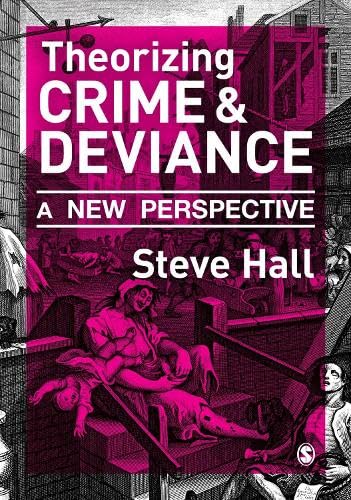

Theorizing Crime and Deviance : A New Perspective / Steve Hall.
Editor: London : SAGE Publications, 2012Fecha de copyright: ©2012Edición: First editionDescripción: 1 online resource (305 pages)Tipo de contenido:- text
- computer
- online resource
- 9781446258675
- 364.01
- HV6025 .H35 2012
| Imagen de cubierta | Tipo de ítem | Biblioteca actual | Biblioteca de origen | Colección | Ubicación en estantería | Signatura topográfica | Materiales especificados | Info Vol | URL | Copia número | Estado | Notas | Fecha de vencimiento | Código de barras | Reserva de ítems | Prioridad de la cola de reserva de ejemplar | Reservas para cursos | |
|---|---|---|---|---|---|---|---|---|---|---|---|---|---|---|---|---|---|---|
| Libro electrónico | Biblioteca de Mayagüez Acceso en línea | HV6025 .H35 2012 (Navegar estantería(Abre debajo)) | Ebook c. 1 | Disponible | 50000003293338 | |||||||||||||
| Libro electrónico | Biblioteca Encarnación Valdés Acceso en línea | 364.01 (Navegar estantería(Abre debajo)) | Disponible | EBC880841 |
Descripciones mejoradas de Syndetics:
"Anything that takes away from the terminally off key karaoke of so much that passes for theory in criminology is to be welcomed, and this is a fine effort to connect the study of crime and control to an innovative set of theoretical possibilities. A rip-roaring read that slaughters some sacred cows while throwing the odd baby out with the bath water."
- Richard Hobbs, University of Essex
"Boldly tackles big questions that the discipline has lately been unable or unwilling to confront. Steve Hall′s compelling and original book should help to restart a crucial discussion about the connections between crime and an increasingly volatile and predatory global social order."
- Elliott Currie, University of California, Irvine
"This erudite and original book synthesizes a dazzling array of thought and evidence to interrogate criminological theory′s dominant conservative and liberal perspectives... This reviewer is left with a sense of criminological theory′s tiredness of intellectual ambition and scope, while Hall′s book leaves a sense of rejuvenation and excitement."
- Colin Webster, British Journal of Criminology
"A beautifully written, accessible and yet theoretically rigorous piece of writing that should be read by everyone interested in crime, law and social order. The book should be read with an open mind and as a genuine response to the suffocating inability of criminology to free itself from the century old slanging-match between its liberal and conservative wings."
- Simon Winlow, University of York
Steve Hall uses cutting-edge philosophy and social theory to analyse patterns of crime and harm and illuminate contemporary criminological issues. He provides a fresh, relevant critique of the philosophical and political underpinnings of criminological theory and the theoretical canon′s development during the twentieth century, and applies new Continental philosophy to the criminological problem.
Unmatched in its sophistication yet written in a clear, accessible style, this dynamic and highly engaging book is essential reading for all students, researchers and academics working in criminology, sociology, social policy, politics and the social sciences in general.
Includes bibliographical references and index.
1. INTRODUCTION -- 2. HISTORICAL PATTERNS OF CRIME IN ENGLAND -- 3. CRIME TRENDS IN THE NEOLIBERAL AGE -- 4. SOCIAL THEORY AND CRIMINOLOGY: THE UNDERLYING LIBERAL NARRATIVE -- 5. TWENTIETH-CENTURY CRIMINOLOGICAL THEORY: FROM AETIOLOGY TO CONTROLOLOGY -- 6. LIVING WITH THE UNDEAD: THE FAILURE OF LIBERAL-LEFT THEORY -- 7. THE RETURN OF THE DIALECTIC -- 8. THE TRANSCENDENTALMATERIALIST SUBJECT -- 90 ON THE STIMULATION AND PACIFICATION OF POPULATIONS -- 10.CONCLUSION -- REFERENCES -- INDEX.
"Anything that takes away from the terminally off key karaoke of so much that passes for theory in criminology is to be welcomed, and this is a fine effort to connect the study of crime and control to an innovative set of theoretical possibilities. A rip-roaring read that slaughters some sacred cows while throwing the odd baby out with the bath water." - Richard Hobbs, University of Essex "Boldly tackles big questions that the discipline has lately been unable or unwilling to confront. Steve Hall′s compelling and original book should help to restart a crucial discussion about the connections between crime and an increasingly volatile and predatory global social order." - Elliott Currie, University of California, Irvine "This erudite and original book synthesizes a dazzling array of thought and evidence to interrogate criminological theory′s dominant conservative and liberal perspectives... This reviewer is left with a sense of criminological theory′s tiredness of intellectual ambition and scope, while Hall′s book leaves a sense of rejuvenation and excitement." - Colin Webster, British Journal of Criminology "A beautifully written, accessible and yet theoretically rigorous piece of writing that should be read by everyone interested in crime, law and social order. The book should be read with an open mind and as a genuine response to the suffocating inability of criminology to free itself from the century old slanging-match between its liberal and conservative wings." - Simon Winlow, University of York Steve Hall uses cutting-edge philosophy and social theory to analyse patterns of crime and harm and illuminate contemporary criminological issues. He provides a fresh, relevant critique of the philosophical and political underpinnings of criminological theory and the theoretical canon′s development during the twentieth century, and applies new Continental philosophy to the criminological problem. Unmatched in its sophistication yet written in a clear, accessible style, this dynamic and highly engaging book is essential reading for all students, researchers and academics working in criminology, sociology, social policy, politics and the social sciences in general.
Description based on publisher supplied metadata and other sources.
Electronic reproduction. Ann Arbor, Michigan : ProQuest Ebook Central, 2021. Available via World Wide Web. Access may be limited to ProQuest Ebook Central affiliated libraries.