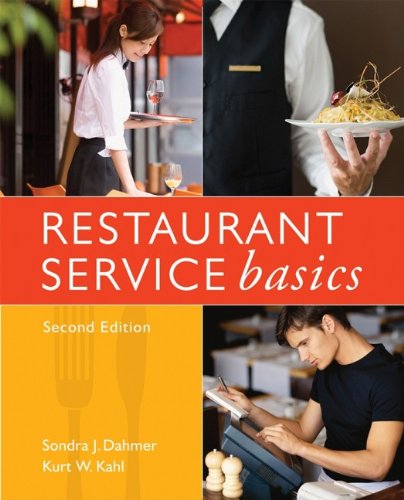

Restaurant Service Basics / Kurt W. Kahl and Sondra J. Dahmer.
Editor: New York : John Wiley & Sons, Incorporated, 2008Fecha de copyright: ©2009Edición: Second editionDescripción: 1 online resource (210 pages)Tipo de contenido:- text
- computer
- online resource
- 9780470370117
- 642/.6
- TX925 .D33 2009
| Imagen de cubierta | Tipo de ítem | Biblioteca actual | Biblioteca de origen | Colección | Ubicación en estantería | Signatura topográfica | Materiales especificados | Info Vol | URL | Copia número | Estado | Notas | Fecha de vencimiento | Código de barras | Reserva de ítems | Prioridad de la cola de reserva de ejemplar | Reservas para cursos | |
|---|---|---|---|---|---|---|---|---|---|---|---|---|---|---|---|---|---|---|
| Libro electrónico | Biblioteca de Mayagüez Acceso en línea | TX925 .D33 2009 (Navegar estantería(Abre debajo)) | Ebook c. 1 | Disponible | 50000003290623 | |||||||||||||
| Libro electrónico | Biblioteca Encarnación Valdés Acceso en línea | 642/.6 (Navegar estantería(Abre debajo)) | Disponible | EBC362073 |
Descripciones mejoradas de Syndetics:
An excellent training tool for both hospitality programs and working restaurant managers, Restaurant Service Basics, 2nd Edition considers the entire dining experience in situations ranging from formal to casual. Step-by-step instructions guide readers through service functions. Different types of service French, American, English, Russia, Family-style, and Banquet are explained in detail, along with universally important safety, sanitation, and emergency procedures. This Second Edition features end-of-chapter projects that incorporate real-life situations, as well as enhanced coverage of point-of-service and other technology use in restaurants.
Intro -- Restaurant Service Basics, 2nd Edition -- Contents -- Preface -- Chapter 1: The Server -- Objectives -- Service and Hospitality -- Advantages of Being a Server -- Qualifications for the Job -- Personal Appearance on the Job -- Your Role in the Restaurant Organization -- Teamwork with Coworkers and Supervisors -- Issues Regarding Restaurant Employment -- Chapter 2: Types of Establishments, Types of Service, and Table Settings -- Objectives -- Types of Establishments -- Types of Table Service -- Chapter 3: Before the Guests Arrive -- Objectives -- Station Assignments -- Reservations -- Dining Room Preparation -- Studying the Menu -- Closing the Dining Room -- Chapter 4: Initiating the Service -- Objectives -- Seating Guests -- Approaching the Guests -- Taking Orders -- Appropriate Topics of Conversation -- Answering Questions -- Making Suggestions and Increasing Sales -- Timing the Meal -- Placing Orders in the Kitchen -- Picking up Orders from the Kitchen -- Chapter 5: Serving the Meal -- Objectives -- Serving Tables and Booths -- Efficiency When Serving -- Handling Unusual Circumstances -- The Guest Check and Payment -- Receiving the Tip -- Chapter 6: Safety, Sanitation, and Emergency Procedures -- Objectives -- Safety: Preventing Accidents -- Food Safety and Sanitation Responsibilities -- Emergency Procedures -- Chapter 7: Handling Service Using Technology -- Objectives -- Computers in Restaurants -- Components of a POS System -- Taking Orders Using a POS System -- Getting Orders to and from the Bar and Kitchen -- Completing Each Transaction -- Closing at the End of the Day -- Advantages of a POS System -- Advantages and Disadvantages of Handheld Order Terminals -- Restaurant Reservations and Table Management -- Advantages of Restaurant Reservation and Table Management Software -- Guest Paging -- Advantages of Guest Paging.
Chapter 8: Wine and Bar Service -- Objectives -- Significance of Serving Wine, Beer, and Liquor -- The Concern about Serving Alcohol in Restaurants -- Wine Service -- Beer Service -- Liquor Service -- Nonalcoholic Drinks -- Resource A: Definitions of Key Terms from the Text -- Resource B: Definitions of Menu and Service Terms -- Resource C: Recommended Resources for Further Information -- Index.
An excellent training tool for both hospitality programs and working restaurant managers, Restaurant Service Basics, 2nd Edition considers the entire dining experience in situations ranging from formal to casual. Step-by-step instructions guide readers through service functions. Different types of service French, American, English, Russia, Family-style, and Banquet are explained in detail, along with universally important safety, sanitation, and emergency procedures. This Second Edition features end-of-chapter projects that incorporate real-life situations, as well as enhanced coverage of point-of-service and other technology use in restaurants.
Description based on publisher supplied metadata and other sources.
Electronic reproduction. Ann Arbor, Michigan : ProQuest Ebook Central, 2021. Available via World Wide Web. Access may be limited to ProQuest Ebook Central affiliated libraries.
Tabla de contenidos provista por Syndetics
- Preface
- Chapter 1 The Server
- Objectives
- Service and Hospitality
- Advantages of Being a Server
- Qualifications for the Job
- Personal Appearance on the Job
- Your Role in the Restaurant Organization
- Teamwork with Coworkers and Supervisors
- Issues Regarding Restaurant Employment
- Key Terms
- Review
- Projects
- Case Problem
- Chapter 2 Types of Establishments, Types of Service, and Table Settings
- Objectives
- Types of Establishments
- Types of Table Service
- Key Terms
- Review
- Projects
- Case Problem
- Chapter 3 Before the Guests Arrive
- Objectives
- Station Assignments
- Reservations
- Dining Room Preparation
- Studying the Menu
- Closing the Dining Room
- Key Terms
- Review
- Projects
- Case Problem
- Chapter 4 Initiating the Service
- Objectives
- Seating Guests
- Approaching the Guests
- Taking Orders
- Appropriate Topics of Conversation
- Answering Questions
- Making Suggestions and Increasing Sales
- Timing the Meal
- Placing Orders in the Kitchen
- Picking up Orders from the Kitchen
- Key Terms
- Review
- Projects
- Case Problem
- Chapter 5 Serving theMeal
- Objectives
- Serving Tables and Booths
- Efficiency When Serving
- Handling Unusual Circumstances
- The Guest Check and Payment
- Receiving the Tip
- Key Terms
- Review
- Projects
- Case Problem
- Chapter 6 Safety, Sanitation, and Emergency Procedures
- Objectives
- Safety
- Food Safety and Sanitation Responsibilities
- Emergency Procedures
- Key Terms
- Review
- Projects
- Case Problem
- Chapter 7 Handling Service Using Technology
- Objectives
- Computers in Restaurants
- Components of a POS System
- Taking Orders Using a POS System
- Getting Orders to and from the Bar and Kitchen
- Completing Each Transaction
- Closing at the End of the Day
- Advantages of a POS System
- Advantages and Disadvantages of Handheld Order Terminals
- Restaurant Reservations and Table Management
- Advantages of Restaurant Reservation and Table Management Software
- Guest Paging
- Advantages of Guest Paging
- Key Terms
- Review
- Projects
- Case Problem
- Chapter 8 Wine and Bar Service
- Objectives
- Significance of Serving Wine, Beer, and Liquor
- The Concern about Serving Alcohol in Restaurants
- Wine Service
- Beer Service
- Liquor Service
- Nonalcoholic Drinks
- Key Terms
- Review
- Projects
- Case Problem
- Resource A Definitions of Key Terms from the Text
- Resource B Definitions ofMenu and Service Terms
- Resource C Recommended Resources for Further Information
- Index
Notas de autor provistas por Syndetics
SONDRA J. DAHMER has taught at numerous hospitality and foodservice programs.
KURT W. KAHL, MS, RD, CD, LD, is a Registered Consultant Dietitian and trainer in the areas of foodservice and nutrition. Together, Dahmer and Kahl have trained waitstaff on service skills and have helped experienced servers polish their skills.