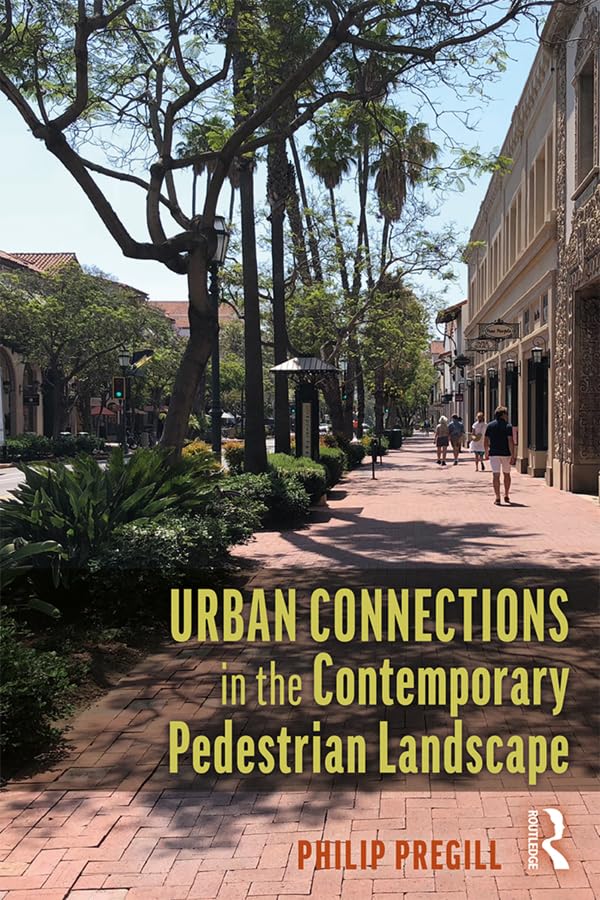

Urban connections in the contemporary pedestrian landscape / Phillip Pregill. txt
Editor: New York : Routledge, 2020Descripción: 174 p. photo.; 24 cmTipo de contenido:- text
- unmediated
- volume
- 9780815355588
- 9780815355601
- 9781351129640
- 23 717
- NA9074 P74 2020
| Imagen de cubierta | Tipo de ítem | Biblioteca actual | Biblioteca de origen | Colección | Ubicación en estantería | Signatura topográfica | Materiales especificados | Info Vol | URL | Copia número | Estado | Notas | Fecha de vencimiento | Código de barras | Reserva de ítems | Prioridad de la cola de reserva de ejemplar | Reservas para cursos | |
|---|---|---|---|---|---|---|---|---|---|---|---|---|---|---|---|---|---|---|
| Libro | CARIBET Biblioteca Arquitectura Colección General CARIBET | General NA9074 P74 2020 (Navegar estantería(Abre debajo)) | 1 | Disponible | 91000000062919 |
Descripciones mejoradas de Syndetics:
Urban Connections in the Contemporary Pedestrian Landscape explores the significant physical and cultural changes in our urban areas following the implementation of design strategies and increased pedestrian activity. Beginning with a history of the urban grid, the book then discusses experiential factors of pedestrianized urban landscapes in three scales, arterials, collectors and locals, with an emphasis on inductive and deductive design alternatives. It closely examines elements derived from current urban pedestrian experiences including form, scale, surfaces and identity and provides alternative design solutions for the future.
Uniquely focusing on a hierarchical discussion of the quality of contemporary landscape design applications within the urban grid, and with illustrated examples throughout the text, this will be useful recommended reading for academics, researchers and postgraduate students on urban landscape and design courses.
Includes bibliographical references and index.
List of figures; Introduction; 1 Contexts and connections; 1.1 Physical and cultural factors; 1.2 Connections: history and function; 1.3 Function and opportunities; 1.4 Influences: from form to places; 1.5 Complexity and coherence: legibility and orientation; 1.6 Aesthetics and identity; 1.7 Contexts and contemporary sources; 1.8 From contexts to experience; 2 Connections and pedestrian experience; 2.1 Contexts and primary factors; 2.2 Connection affordance: sources and opportunities; 2.3 Gestalt, ecological, and predictive coding influences 2.4 Contexts and sources intention and experience; 2.5 Location, movement, and time; 2.6 Preferences and standards; 2.7 Inductive and deductive applications; 2.8 Aesthetics and identity; 2.9 Arterial, collector, and local connections; 3 Arterials: conveyance and access; 3.1 Structure and function; 3.2 Orientation and connection; 3.3 Standards and preferences; 3.4 Walkability: intersections and crosswalks; 3.5 Medians: functions and applications; 3.6 Complete streets and urban greening; 3.7 Tactical urbanism: inductive and deductive opportunities 3.8 Contemporary applications and opportunities4 Collectors: diversity and focus; 4.1 Midway connections: structure and function; 4.2 Pedestrian preferences and standards; 4.3 Intersections and cross-connections; 4.4 Crosswalks: edges and places; 4.5 Contemporary applications and effects; 4.6 Places and interventions; 4.7 Green avenues and smart streets; 4.8 Inductive and deductive applications: aesthetics and identity; 4.9 Contemporary applications and prospects; 5 Local connections: scale and places; 5.1 Scale and enclosure: surfaces and places; 5.2 Function and standards 5.3 Interior transitions: places and details5.4 Contemporary applications: permanent and temporary; 5.5 Green alleys and places; 5.6 Guerrilla gardening: tactical urbanism; 5.7 Experience, aesthetics, and identity; 5.8 Issues, strategies, and prospects; 6 Contemporary connections: resources and initiatives; 6.1 Community vision and outcomes; 6.2 Connections and walkability; 6.3 Connections and livability; 6.4 Contemporary applications: public and independent; 6.5 Urban greening: connections and places; 6.6 Smart Cities, smart streets, Complete Streets 6.7 Information technology and holistic streets6.8 Opportunities: working with the context; 6.9 Inductive and deductive responses; 6.10 Pedestrian experience, urban identity; 7 Future connections; 7.1 Community vision; 7.2 Safe streets; 7.3 Walkability and livability; 7.4 Shared streets; 7.5 Complete Streets; 7.6 Aesthetics and identity; 7.7 Preferences: safety and walkability; 7.8 Edges and amenities; 7.9 Inductive and deductive influences and identity; 7.10 Strategies and initiatives; 7.11 Downtown contexts; 7.12 Connections and prospect; Index
Urban Connections in the Contemporary Pedestrian Landscape explores the significant physical and cultural changes in our urban areas following the implementation of design strategies and increased pedestrian activity. Beginning with a history of the urban grid, the book then discusses experiential factors of pedestrianized urban landscapes in three scales, arterials, collectors and locals, with an emphasis on inductive and deductive design alternatives. It closely examines elements derived from current urban pedestrian experiences including form, scale, surfaces and identity and provides alternative design solutions for the future. Uniquely focusing on a hierarchical discussion of the quality of contemporary landscape design applications within the urban grid, and with illustrated examples throughout the text, this will be useful recommended reading for academics, researchers and postgraduate students on urban landscape and design courses.
Notas de autor provistas por Syndetics
Philip Pregillis Professor in the Department of Landscape Architecture at California State Polytechnic University, Pomona. From 2000 to 2008, he was Chair of the department at Cal Poly, Pomona. Previous employment in education included a tenured Associate Professor position in the Department of Landscape Architecture, Texas A&M University, College Station Texas.